
A roof replacement quote is not ready to approve just because the total price looks reasonable. Before signing, check whether the estimate explains tear-off, decking repairs, underlayment, flashing, ventilation, permits, cleanup, payment timing, and warranty coverage.
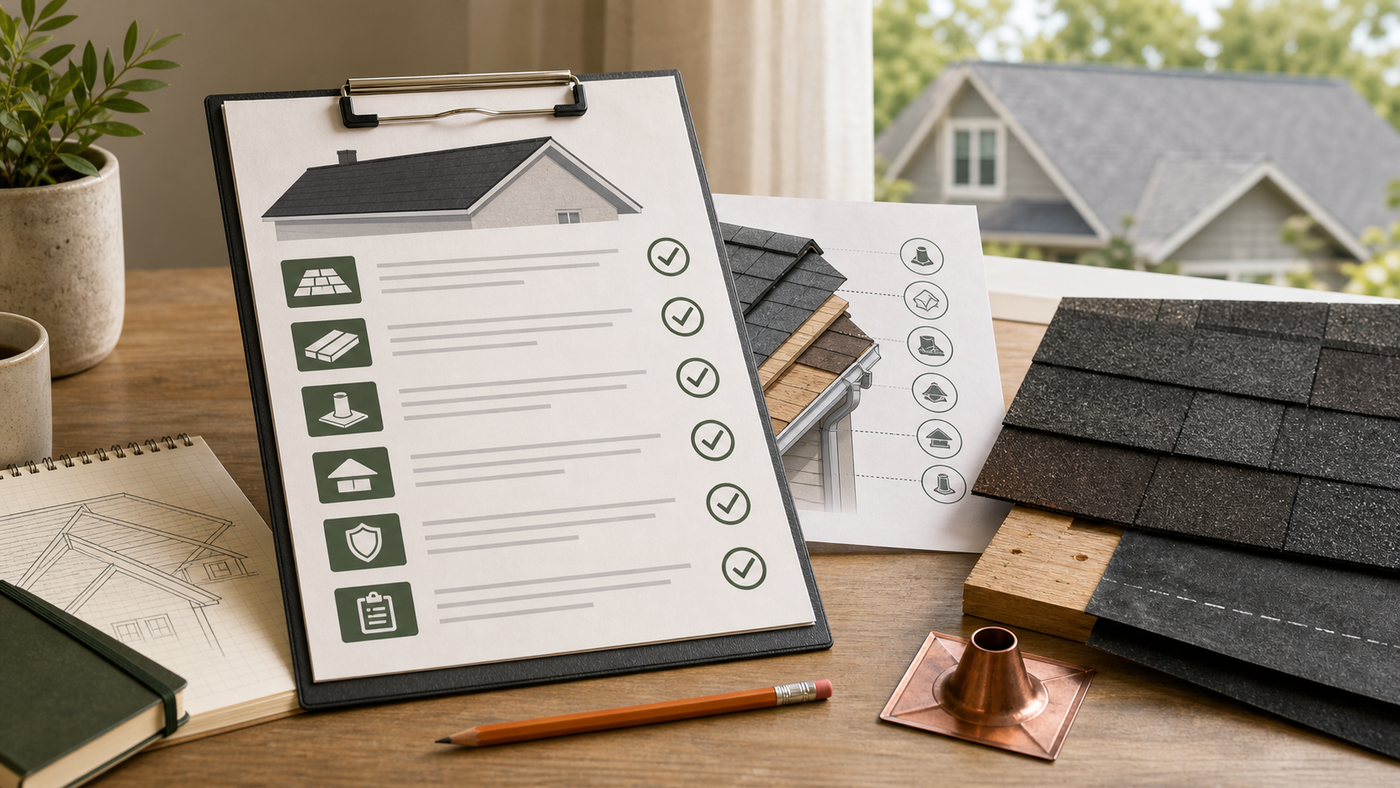
A roof price can look simple from the kitchen table: one roof, one contractor, one number. The problem is that a roof is a system, not a single product. Two contractors can both say “architectural shingles” and still be quoting different work if one includes full tear-off, drip edge, flashing details, disposal, and possible decking replacement while the other leaves those lines vague.
This guide is not a local price calculator. Your home size, roof pitch, material choice, location, labor market, access, code requirements, and weather timing can all change the price. Use this as a quote-reading checklist so you can ask sharper questions before you approve the work.
The Price Is Only Useful After The Scope Is Clear
Start by asking what the roof replacement number actually buys. A useful roofing estimate should identify the roof covering, the manufacturer or product line, the color or grade, the included materials, the installation method, the tear-off plan, the flashing work, the ventilation work, the start and completion window, payment terms, and warranty coverage.
If those details are missing, the total price is weak information. A lower quote may simply be missing work that another contractor included. A higher quote may include a better scope, better access protection, or a more complete cleanup plan. You cannot compare either one fairly until the line items are visible.
1. Roof Size, Pitch, And Access Change Labor
Most homeowners think first about the square footage of the house. Roofers usually think in roof area, slope, number of planes, height, access, staging, and how much time the crew will need to work safely. A steep roof, multiple valleys, dormers, skylights, chimneys, and limited driveway access can add labor even when the home’s floor area is not large.
Ask the contractor how the roof was measured. If the estimate only says “replace roof” without the number of squares or an explanation of roof complexity, ask for the measurement basis. You do not need to become an estimator, but you should know whether the contractor measured the actual roof or guessed from the ground.
2. Tear-Off And Disposal Should Not Be Assumed
One major cost difference is whether the existing roof is removed down to the sheathing or whether a new layer is installed over an old layer where code and conditions allow it. A full tear-off exposes hidden decking problems, adds disposal labor, and creates a cleaner view of the roof deck before new materials go on.
Your quote should say what is being removed, how many existing layers are included, how disposal is handled, whether the contractor uses magnetic cleanup for nails, and whether gutters or landscaping need special protection. “Includes cleanup” is better than nothing, but it is not as strong as a line that explains debris handling and site protection.
3. Decking Repairs Need A Written Unit Price
Decking damage is one of the most common reasons a roof replacement changes price after work begins. The contractor may not know how much plywood or sheathing needs replacement until the old roof is removed. That is understandable. What is not helpful is a contract that says decking will be “extra” without saying how the extra work will be priced and approved.
Ask for a written unit price for decking replacement, such as a price per sheet or per linear/area unit depending on how the contractor prices it. Also ask how photos will be shared before replacement and who must approve the change order. This protects both sides: the contractor can fix real damage, and the homeowner can see why the final bill changed.
4. Underlayment, Drip Edge, Flashing, And Valleys Matter
The visible shingles get attention, but the details under and around them often decide whether the roof performs well. Underlayment, ice-and-water membrane where appropriate, drip edge, starter strip, valley treatment, pipe boots, wall flashing, chimney flashing, skylight flashing, and ridge caps should be described clearly enough that you know what is included.
Flashing is especially important because water often enters at edges, penetrations, walls, chimneys, and transitions rather than in the middle of a clean roof plane. If the quote does not mention flashing, ask whether existing flashing will be reused, replaced, or evaluated during tear-off. Reusing flashing may be reasonable in some cases, but it should be a conscious decision, not a hidden assumption.
5. Ventilation Can Affect Warranty And Roof Life
Attic ventilation is not just an upsell word. It can affect moisture, heat, ice dam risk in colder climates, and sometimes manufacturer warranty conditions. A good quote should say whether ridge vents, soffit intake, static vents, or other ventilation work is included and whether the system is balanced for the home.
If one contractor includes ventilation changes and another does not, the two quotes may not describe the same roof system. Ask each contractor to explain the ventilation plan in plain language: what exists now, what changes, and why the change is or is not needed.
6. Permits, Code, And Inspection Responsibility Should Be Named
Permit rules vary by location, but the responsibility should never be fuzzy. The contract should say whether a permit or inspection is needed, who obtains it, who pays for it, and whether the price includes it. If a contractor tells you to handle required permits yourself, slow down and check local rules before signing.
For storm, wind, coastal, wildfire, or historic-district areas, local code requirements can change the scope. The homeowner does not need to memorize code, but the quote should identify any known code-related work that affects the price.
7. Warranty Language Should Separate Product And Workmanship
Roofing warranty language can sound stronger than it is. There is usually a difference between the manufacturer’s product warranty and the contractor’s workmanship warranty. The quote should explain what is covered, how long each warranty lasts, what paperwork you receive after completion, and what actions can void coverage.
Ask whether the product warranty requires specific installation details, ventilation, registered paperwork, or approved accessories. Also ask how workmanship problems are handled if a leak appears after the project. A contractor who can explain the warranty plainly is easier to compare than one who only says “lifetime shingles.”
8. Payment Timing Is Part Of The Risk Review
A reasonable deposit can be normal. Paying the entire project up front is not. Before signing, compare the payment schedule with the work schedule. The agreement should show deposit, progress payments if any, final payment timing, and what must be completed before the final payment is due.
Be especially careful with pressure tactics, same-day discounts, cash-only demands, blank spaces in contracts, and offers that require you to use a lender arranged by the contractor. The safer path is a written contract, multiple estimates, license and insurance checks, and final payment after the job is complete and you are satisfied.
Side-By-Side Quote Review Worksheet
When you have two or three roofing estimates, do not compare them by total price first. Compare the scope columns first.
| Quote area | What to look for | Question to ask |
|---|---|---|
| Measurement | Roof squares, pitch, planes, access notes | How was the roof measured? |
| Tear-off | Layers removed, disposal, cleanup | Is full tear-off included? |
| Decking | Unit price and approval process | How will hidden damage be priced? |
| Water details | Underlayment, valleys, flashing, pipe boots | What flashing is replaced? |
| Ventilation | Ridge, soffit, static vents, balance | What changes from the current roof? |
| Warranty | Product vs workmanship terms | What paperwork do I receive? |
Copy-Paste Message To Send Before Signing
Use this before paying a deposit:
Before I approve the roof replacement quote, can you confirm in writing the number of roof squares, tear-off scope, disposal and cleanup plan, underlayment, flashing, ventilation work, permit responsibility, decking replacement unit price, payment schedule, and product/workmanship warranty terms?
If the contractor answers clearly, the conversation becomes easier. If the answer is rushed, vague, or hostile, that is useful information before money changes hands.
Related Home Repair & Remodel Guides
- Exterior Painting Scope Guide: Key Line Items Before Approval
- Evaluating Basement Waterproofing Bids: Sump Systems, Discharge, and Wall Prep
- Solar-Ready Roof Preparation Quote: Structure, Flashing, Conduit, And Records
- Interactive Contractor Quote & Scope Comparison Calculator
FAQ
What affects roof replacement cost the most?
The largest factors are roof size, pitch, access, material choice, tear-off, decking repairs, flashing details, ventilation work, disposal, permits, labor market, and warranty requirements.
Should I choose the lowest roof replacement quote?
Not automatically. A lower quote can be a good deal if it covers the same scope. It can also be missing tear-off, flashing, ventilation, disposal, permit, or warranty details.
What should a roofing estimate include?
It should include materials, scope of work, removal or replacement of the existing roof, flashing, ventilation, installation method, start and completion timing, payment terms, warranty coverage, and change-order rules.
How should hidden decking damage be handled?
The contract should include a unit price or clear pricing method, photo documentation, and a written approval process before extra decking work is billed.
Sources Checked
This guide was written as a quote-reading checklist, not a local price estimate. Sources reviewed include National Roofing Contractors Association roofing resources, FTC home improvement scam guidance, Homewyse May 2026 asphalt shingle installation assumptions, and Journal of Light Construction’s 2025 asphalt shingle roof replacement scope example.
Bottom Line
A roof replacement quote is ready for serious comparison when the scope is visible. If the estimate explains the roof area, tear-off, disposal, decking change orders, underlayment, flashing, ventilation, permits, payment timing, and warranty terms, you can compare it against another quote with less guesswork. If those lines are missing, ask for clarification before you sign.