
Short answer: Before approving a kitchen range hood venting quote, confirm the hood type, duct route, duct size and material, exterior termination, airflow and noise assumptions, makeup air review, cabinet and wall cuts, electrical work, permit responsibility, cleanup, and warranty.
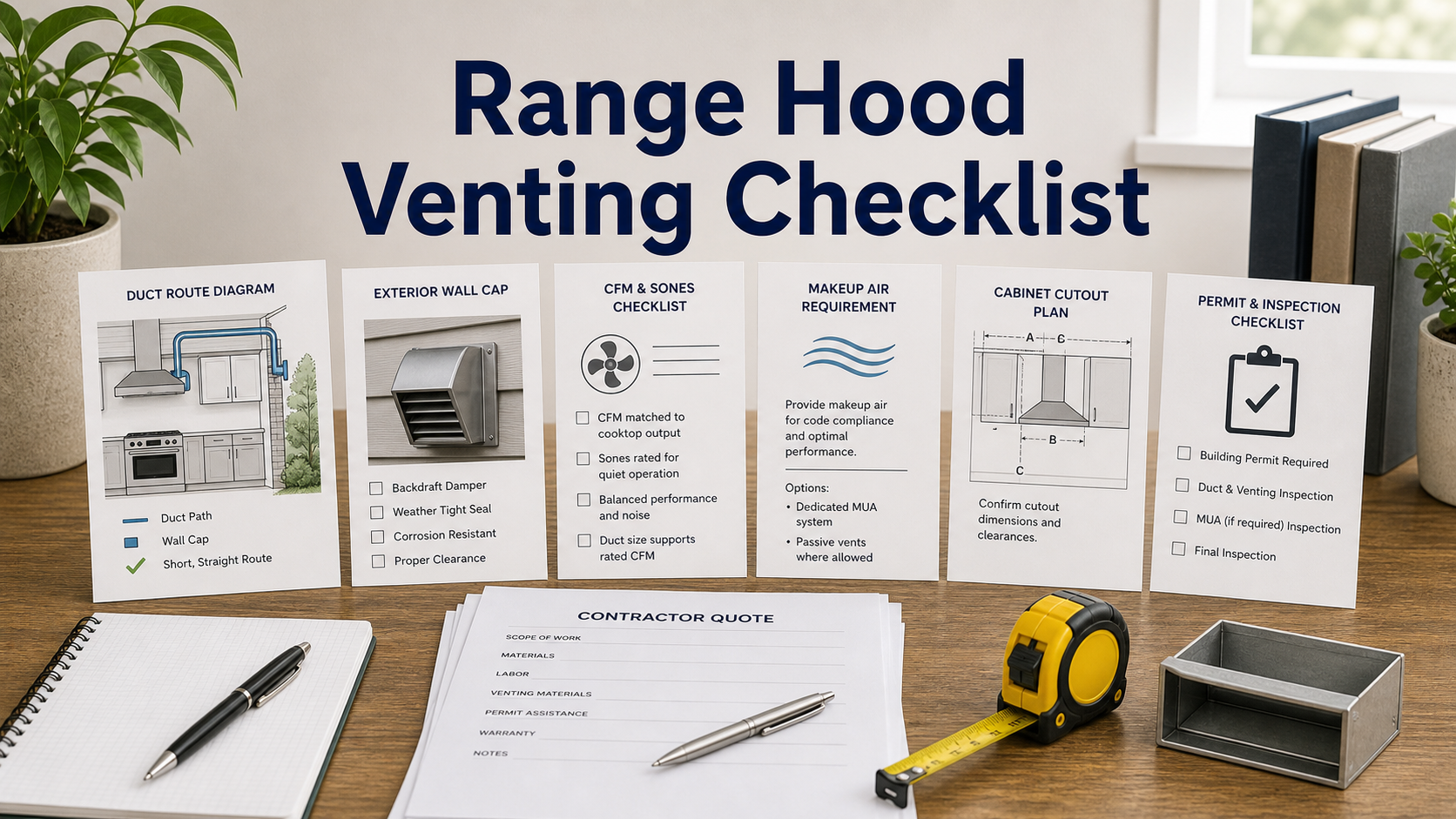
A vented range hood can improve kitchen air removal only if the duct path, fan capacity, exterior cap, and installation details match the space. A quote that only lists hood installation may hide carpentry, electrical, duct routing, and code-related decisions.
The low quote may exclude cutting cabinets, opening walls, upgrading electrical, adding a roof or wall cap, sealing ducts, makeup air review, permits, or repairing finishes after duct installation.
Start With The Actual Venting Path
Ask for a duct route diagram from hood to exterior termination. The quote should state whether the duct goes through a wall, roof, soffit, cabinet, attic, or chase and whether elbows, transitions, or long runs are included.
EPA indoor air resources highlight the importance of ventilation for reducing indoor pollutants. For a range hood quote, that means the fan and duct path should move air outdoors rather than simply recirculate through a filter unless that is the clearly accepted scope.
Compare Airflow, Noise, And Duct Size Together
Ask for CFM, noise rating, duct diameter, duct material, and any manufacturer requirements that control the installation. Higher airflow is not automatically better if the duct is undersized, too long, too noisy, or creates makeup air issues.
HVI resources are often used to compare ventilation ratings. Whether or not your selected hood is HVI-certified, the quote should make airflow and noise assumptions visible so you are not buying a fan you will avoid using.
Ask About Makeup Air And Combustion Appliances
Large range hoods can depressurize a home, especially in tighter houses. Ask whether makeup air review is required by local code or recommended because of hood capacity, gas appliances, fireplaces, or other combustion equipment.
The contractor should state whether makeup air is included, excluded, or handled by another trade. If it is excluded, the quote should not imply the job is fully code-ready without that review.
Include Cabinets, Electrical, And Finish Repair
Range hood venting can require cabinet cutouts, wall openings, ceiling patches, roof flashing, siding penetrations, backsplash changes, and electrical adjustments. Ask which trades are included and who repairs finishes after the duct is installed.
If the quote assumes existing electrical or cabinet dimensions, require those assumptions in writing. Small fit issues can turn a straightforward install into a change order.
Confirm Permits, Termination, And Warranty
Ask who checks permits and inspection requirements. The quote should also identify the exterior wall cap or roof cap, backdraft damper, pest screen if appropriate, weather sealing, and distance from openings or other terminations as required locally.
Warranty should cover workmanship around duct leaks, exterior water intrusion, fan mounting, vibration, and finish repair caused by the installation. Product warranty and labor warranty are separate items.
Range Hood Venting Quote Items To Confirm
| Quote area | What to confirm | Why it matters |
|---|---|---|
| Hood scope | Ducted or recirculating scope and hood model assumptions stated | A ducted installation is a different project from a filter-only install. |
| Duct route | Wall, roof, attic, cabinet, or chase path shown | Route complexity drives labor, finish repair, and performance. |
| Duct specs | Diameter, material, elbows, transitions, sealing, and length included | Undersized or leaky ducts reduce performance and increase noise. |
| Airflow and noise | CFM and sones or comparable rating assumptions listed | A loud or mismatched fan may not be used consistently. |
| Makeup air | Code review, combustion appliance concern, and inclusion/exclusion stated | High-capacity hoods can affect house pressure and safety. |
| Exterior termination | Wall cap or roof cap, damper, flashing, and sealing listed | The termination protects against water, pests, and backdrafts. |
| Other trades | Cabinet, drywall, siding, roofing, electrical, and finish repair assigned | Vent work often touches more than one trade. |
| Permits and warranty | Permit, inspection, product warranty, and labor warranty separated | Documentation matters if ventilation or water intrusion issues appear later. |
Questions To Ask Before Approval
- Is this quote for ducted outdoor exhaust or a recirculating hood?
- What exact duct route, duct size, material, and termination are included?
- How were CFM, noise rating, duct length, and elbows considered?
- Does this hood require makeup air review under local rules?
- Who handles cabinet cuts, wall repair, roof or siding penetrations, and electrical work?
- What warranty covers duct leaks, vibration, exterior water intrusion, and finish repair?
Red Flags In This Quote
The quote says install range hood but does not state where the air exhausts.
Duct size, route, exterior termination, and finish repair are missing from the scope.
A high-CFM hood is quoted without makeup air or combustion appliance review.
The contractor assumes existing cabinet and electrical fit without checking dimensions or circuit needs.
Source Links
- EPA indoor air quality ventilation resources
- Home Ventilating Institute consumer ventilation resources
- ENERGY STAR ventilation fan product guidance
FAQ
Should a range hood vent outside?
If you are paying for venting, the quote should clearly state that air exhausts outdoors through a defined duct route. Recirculating hoods are a different scope.
What duct details should be in the quote?
Ask for duct diameter, material, route, elbows, transitions, sealing, exterior cap, damper, and any wall, roof, or cabinet penetrations.
Why does makeup air matter?
High-capacity hoods can change house pressure. Local code or safety conditions may require makeup air review, especially around combustion appliances.
Who repairs cabinets or walls after installation?
The quote should assign cabinet cutting, drywall, siding, roofing, backsplash, and painting responsibility before work starts.
Is a quiet hood worth discussing in the quote?
Yes. Ask about noise rating and how duct design affects sound. A hood that is too loud may not be used when cooking.
What warranty should I ask for?
Ask about product warranty, labor warranty, duct leaks, vibration, exterior water intrusion, electrical work, and finish repair caused by the installation.
Related Contractor Quote Guide Guides
- Gas Line Installation Quote Checklist Before Permit
- Outdoor Lighting Installation Quote Checklist Before Wiring
- Window Replacement Quote Checklist Before Ordering
A range hood venting quote should make the air path visible from appliance to exterior, including duct details, makeup air review, finish repair, permit duties, and warranty.