
Short answer: a kitchen remodel allowance is a placeholder, not a finished decision. Before signing, confirm what each allowance covers, what is excluded, who chooses the item, when selections are due, whether labor and delivery are included, how overages are approved, and how substitutions are handled if products are delayed or discontinued.
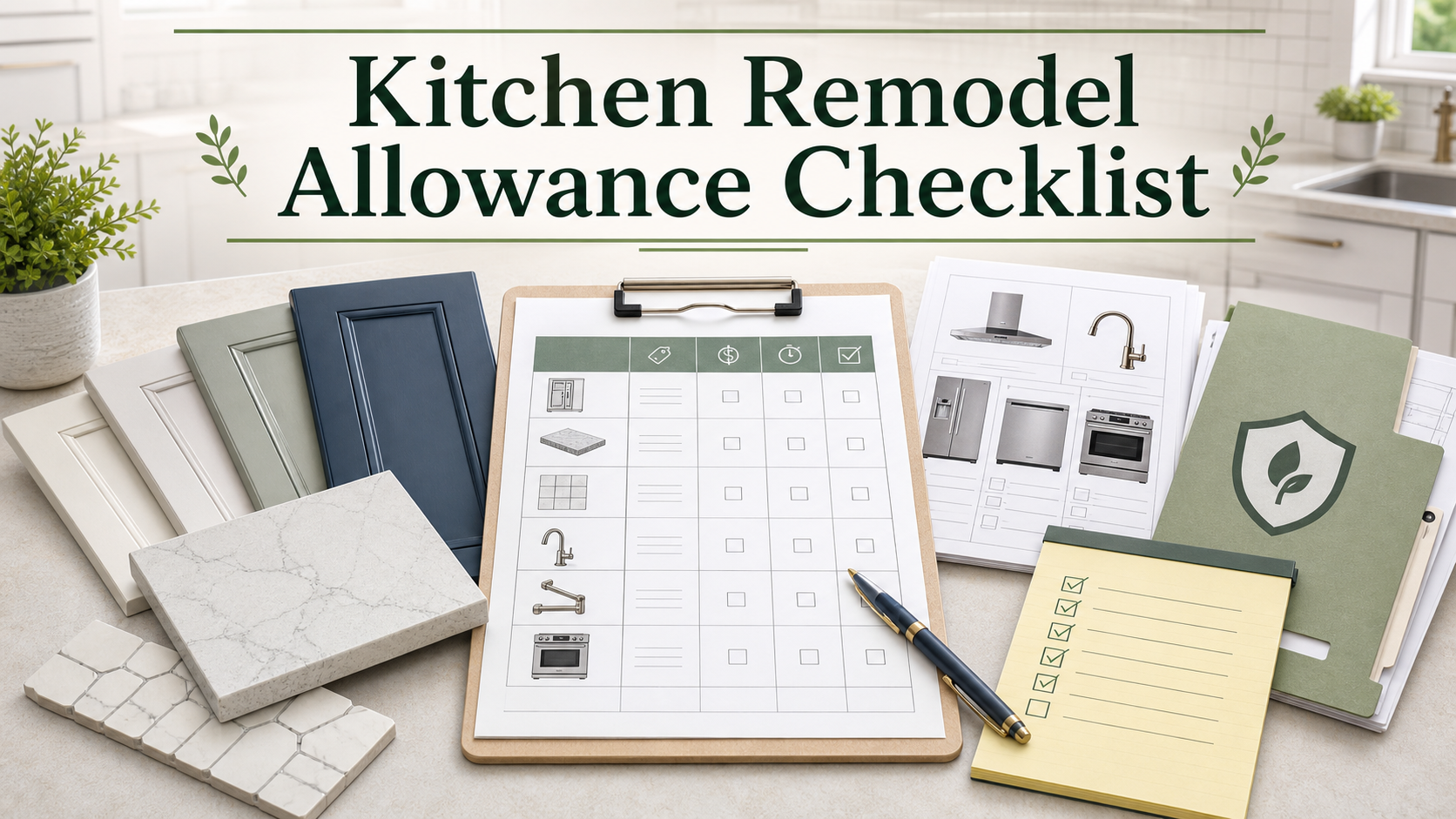
A kitchen remodel quote can look complete while hiding several decisions inside one word: allowance. The homeowner sees a line for cabinets, counters, tile, fixtures, lighting, or appliances and assumes the quote includes a real finished kitchen.
Sometimes it does. Sometimes the allowance only covers a basic material budget, and the first showroom visit turns the contract into a stack of overages. This checklist helps you inspect allowances before they become surprises.
Understand What An Allowance Really Means
An allowance is a budget placeholder for an item that has not been fully selected or priced. It is common in remodeling because homeowners may not choose every faucet, drawer pull, backsplash tile, or appliance before the contractor prepares the first quote.
The problem is not the allowance itself. The problem is a vague allowance. A useful allowance names the category, selection standard, quantity assumption, included labor, delivery, taxes or fees if applicable, markup treatment, and approval process.
Separate Product Allowances From Labor
Ask whether the allowance covers only the product or both product and installation. A tile allowance may cover the tile itself but not pattern complexity, substrate prep, edge trim, grout, waterproofing, or extra labor for small-format tile.
The same issue applies to countertops, cabinets, lighting, plumbing fixtures, flooring, backsplashes, and appliances. If labor is outside the allowance, the quote should still explain how labor will be priced once the final selection is made.
| Allowance category | Ask this before signing | Risk if unclear |
|---|---|---|
| Cabinets | Does it include boxes, doors, panels, fillers, trim, hardware, delivery, assembly, and installation? | Layout changes, finish upgrades, and missing panels can create late overages. |
| Countertops | Does it include material, templating, fabrication, edge profile, sink cutout, delivery, and install? | A slab selection can look covered until fabrication and cutouts are added. |
| Tile and backsplash | Does the allowance assume tile size, pattern, trim, grout, prep, and waste factor? | Labor changes quickly when the design moves from simple field tile to detailed patterns. |
| Appliances | Who buys them, who verifies dimensions, and who handles delivery, hookups, and haul-away? | Late appliance decisions can break cabinet dimensions, electrical plans, and schedule. |
| Fixtures and hardware | Are faucet, sink, disposal, cabinet pulls, lighting trim, and accessories each listed? | Small items become expensive when they are discovered after the contract is signed. |
Cabinet Allowances Need Layout Detail
Cabinets are not just a material selection. They affect walls, electrical locations, appliance clearances, countertop measurements, floor transitions, trim, and schedule.
The quote should state whether the cabinet allowance is based on a measured design, a cabinet supplier estimate, a placeholder layout, or a simple budget range. Ask whether it includes crown, toe kick, fillers, side panels, decorative ends, pullouts, lazy susans, trash pullouts, soft-close hardware, and finished sides.
Countertop Allowances Should Include Fabrication Assumptions
A countertop line should not stop at the material name. Ask whether the allowance includes templating, fabrication, edge profile, sink and cooktop cutouts, seams, supports, delivery, install, and removal of old surfaces.
If the contractor cannot price fabrication until slabs are selected, ask how that price will be approved and whether the cabinet schedule depends on the countertop lead time.
Tile Allowances Should Name Pattern And Prep
A backsplash allowance based on simple rectangular tile may not cover handmade tile, herringbone, mosaic sheets, stone, metal trim, niche details, or uneven wall prep. Ask what pattern, tile size, grout type, trim profile, and wall preparation are assumed.
Also ask who orders extra material for waste, repairs, or future touch-ups. A shortage during installation can delay the project or force a visible substitution.
Appliance Allowances Can Affect The Whole Kitchen
ENERGY STAR and DOE both point homeowners toward efficiency labels and product information when shopping for appliances. In a remodel quote, the first concern is practical: appliance choices must fit the cabinet design, ventilation plan, electrical capacity, plumbing rough-ins, and delivery path.
Ask whether appliances are contractor-supplied or owner-supplied. Then ask who confirms model numbers, dimensions, clearances, power requirements, water lines, gas lines, venting, delivery date, installation responsibility, and haul-away.
Older Homes May Need Lead-Safe Planning
If the kitchen is in a pre-1978 home, ask whether painted surfaces will be disturbed. EPA’s Renovation, Repair and Painting program requires lead-safe certified firms for covered renovation work in pre-1978 housing and child-occupied facilities.
The quote should say whether lead-safe practices, containment, cleanup, testing, or documentation are included. Do not leave this as a later discussion if demolition, wall opening, window work, sanding, or trim removal is part of the kitchen scope.
Selection Deadlines Should Be In The Schedule
Allowances only work when selections are made on time. Ask for a selection schedule that ties cabinets, appliances, sink, faucet, lighting, tile, flooring, counters, hardware, and paint decisions to the construction calendar.
A good quote makes the homeowner’s decision deadlines visible. It also states what happens if a selection is late, backordered, discontinued, or incompatible with the current design.
Markup And Credits Should Be Transparent
Ask how the contractor handles the difference between the allowance and the final selected item. If the selection costs more than the allowance, how is the overage calculated? If it costs less, does the homeowner receive a credit?
Also ask whether contractor markup, sales tax, delivery, freight, restocking fees, and storage are inside or outside the allowance. You do not need a fake number. You need the formula before the decision is made.
Owner-Supplied Items Need Boundaries
Some homeowners buy fixtures, tile, appliances, or hardware directly. That can work, but the contract should define responsibility for ordering, shipping damage, missing parts, wrong dimensions, delays, returns, warranty handling, and storage.
If an owner-supplied appliance arrives late or damaged, the contractor may need to reschedule trades. Ask how that delay would be handled before making the purchase yourself.
Change Orders Should Be Written Before Work Changes
The FTC recommends written contracts and careful contractor review for home improvement work. For kitchen allowances, the quote should require written approval before upgrades, substitutions, layout changes, hidden condition work, or design-driven labor changes proceed.
Do not rely on verbal showroom decisions. Ask whether the change order will include product name, labor change, schedule impact, credit or overage, and revised total before the item is ordered.
Before You Sign, Ask These Questions
- Which line items are fixed prices, and which are allowances?
- Does each allowance include product only, or product plus labor?
- What quantity, brand tier, finish level, or design assumption was used?
- Who makes each selection, and by what date?
- How are overages, credits, freight, tax, and markup handled?
- What happens if a selected item is delayed or discontinued?
- Are owner-supplied items allowed, and who carries the risk?
- Does the quote address permits, inspections, lead-safe work, and cleanup?
- How will changes be documented before products are ordered?
FAQ
Is a kitchen remodel allowance a bad sign?
No. Allowances can be normal when selections are not final. The risk is a vague allowance that does not say what product level, labor, delivery, markup, or approval process is included.
Should I choose all materials before signing?
Choose the high-impact items early: cabinets, appliances, countertop material, sink, faucet, flooring, backsplash, and lighting. If some selections remain open, make the allowance rules specific in the contract.
Can I buy appliances myself?
Often yes, but the quote should state who verifies dimensions, delivery, installation, hookups, damage, missing parts, warranty, and schedule impact. Owner-supplied items can create delays if responsibilities are unclear.
What is the most common allowance dispute?
The most common dispute is assuming the allowance includes installation or upgraded selection labor when it only covered a basic product placeholder. Ask each allowance to separate product, labor, delivery, and markup.
Sources
- FTC: How To Avoid a Home Improvement Scam
- EPA: Lead Renovation, Repair and Painting Program
- Department of Energy: Shopping for Appliances and Electronics
- ENERGY STAR: Energy Efficient Products