
Short answer: Compare an asbestos-cement siding removal quote by requiring an independent material determination, applicable state and local rule review, contractor and worker qualifications, a written low-breakage work plan, protection of residents and neighbors, controlled removal and cleanup, lawful packaging and disposal, daily weather protection, substrate and flashing repairs, replacement-siding coordination, and closeout records that identify what was removed and what remains.
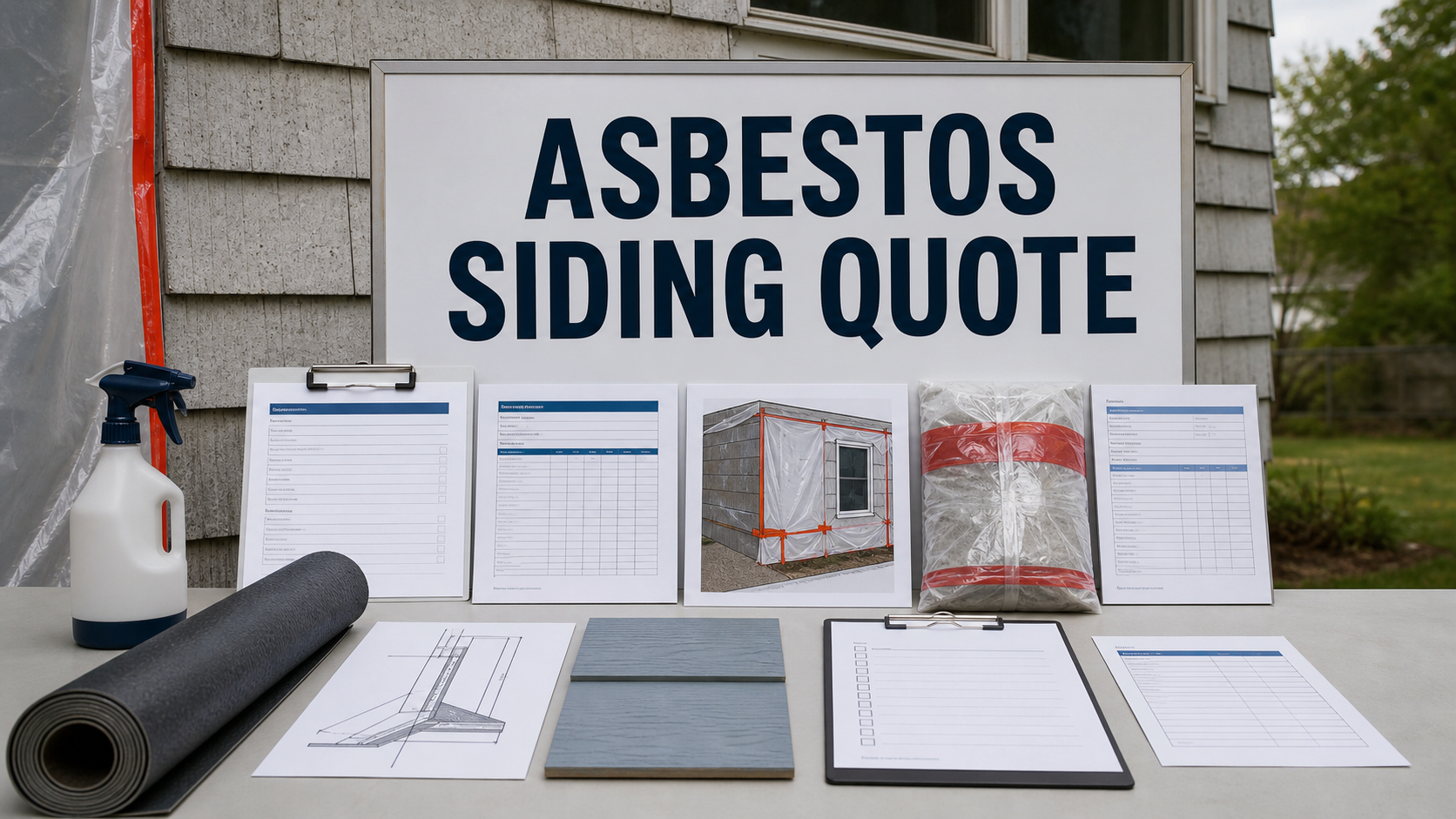
Cement siding cannot be confirmed as asbestos-containing by appearance alone. Project risk also changes with material condition, fastening, height, nearby windows and HVAC intakes, landscaping, weather, occupied areas, wall damage, and whether the new siding crew is separate from the abatement contractor.
Do not compare bids by square footage alone. One quote may include sampling, notifications, qualified supervision, scaffolding, controlled removal, cleanup, disposal, weather barrier, substrate repairs, permits, and replacement coordination while another covers only removal labor and bags.
Confirm The Material Before Pricing Removal
Use a trained and appropriately qualified inspector or laboratory process to identify suspect siding and related materials such as underlayment, caulk, panels, soffits, roofing transitions, or insulation that may be disturbed. Record sample locations, laboratory results, condition, and areas assumed to contain asbestos.
EPA advises that asbestos-containing material generally cannot be identified by sight alone and that trained and accredited professionals should handle repair or removal when material is damaged or will be disturbed. Keep the inspector's scope independent from a sales promise that every exterior component needs removal.
Identify The Rules And Qualified Parties
The proposal should identify federal applicability and the specific state, local, labor, building, waste, transport, and neighborhood notification requirements that control this residence. EPA notes that state or local requirements may apply even where a homeowner project is not covered by a federal renovation rule.
List contractor, supervisor, worker, transporter, and disposal qualifications; license or accreditation numbers; insurance; medical and respiratory program responsibility where applicable; permit and notification owner; and the agency or inspector contact for unresolved questions.
Write A Low-Breakage Removal Plan
Describe access, scaffolding, fall protection, wet methods, fastener release, hand lowering, limits on cutting or breaking, damaged-piece handling, work direction, daily quantities, stop conditions, and the response if concealed friable material or unexpected debris is found.
Protect windows, doors, air intakes, walkways, neighboring property, soil, decks, plants, vehicles, and occupied rooms. Define work zones, signs, barriers, shutdowns, resident and pet restrictions, weather limits, and daily security.
Control Debris, Cleanup, And Disposal
Specify ground and surface protection, wet cleanup, HEPA methods where appropriate, visible-debris inspection, tool and scaffold decontamination, worker exit, packaging thickness and labeling, locked staging, transport, approved disposal facility, and manifest or receipt chain.
Do not allow dry sweeping, uncontrolled dropping, grinding, or debris left in soil and gutters. The contract should assign cleanup if a package tears, material breaks, wind changes, rain enters, or debris crosses the work boundary.
Keep The House Weather-Tight
State how many wall sections may be exposed, same-day dry-in requirements, temporary sheathing or membrane, window and door flashing, utility penetrations, roof-to-wall transitions, insect and water control, and emergency response for wind or rain.
Name responsibility for hidden sheathing rot, missing flashing, damaged trim, lead-painted components, insulation, structural repairs, and code-required water-resistive barrier details. Use unit prices or a written approval rule for concealed repairs.
Coordinate Replacement Siding And Closeout
Define the handoff condition to the siding installer: clean substrate, fastener removal, repaired sheathing, approved weather barrier, flashing, trim, clearances, penetrations, photographs, and inspection. Avoid a gap where each contractor says the wall belongs to the other.
Collect test reports, notifications, qualifications, daily logs, photographs, waste manifests, disposal receipts, inspection or clearance records required for the project, a remaining-material map, permits, warranties, replacement handoff, and a final clean-property walk-through.
Review The Quote As Two Connected Projects
Project One: Safe Removal
Verify Evidence And Rules
Match laboratory findings, condition, work areas, applicable agencies, qualifications, notifications, methods, resident protections, and disposal records before work starts.
Limit Breakage And Spread
Require wet low-breakage handling, protected access, controlled lowering, weather limits, cleanup methods, locked waste staging, and a response for unexpected material.
Project Two: A Weather-Ready Wall
Define The Handoff
State the substrate, fasteners, sheathing repairs, membrane, flashing, photos, inspection, and moisture condition required before replacement siding begins.
Close The Record
Tie payment to manifests, receipts, required inspection or clearance, remaining-material map, clean-site acceptance, finish restoration, and warranties.
Asbestos-Cement Siding Quote Comparison
| Quote area | What to confirm | Why it matters |
|---|---|---|
| Material determination | Inspector, samples, laboratory, chain of custody, condition, related materials, assumed areas, and report | Separates evidence from visual guesswork |
| Rules and qualifications | Federal applicability, state and local rules, permits, notifications, licenses, training, insurance, and responsible supervisor | Connects the method to the jurisdiction and qualified parties |
| Removal method | Access, wetting, fastener release, breakage limits, lowering, weather, stop conditions, barriers, and resident restrictions | Controls fiber release and project disruption |
| Cleanup and waste | Surface protection, HEPA or wet cleanup, inspection, packaging, labels, staging, transporter, facility, manifests, and spill response | Provides a traceable path from wall to disposal |
| Weather and substrate | Daily dry-in, membrane, flashing, sheathing, rot, trim, penetrations, hidden-damage unit rates, and approvals | Prevents abatement from creating water damage |
| Replacement handoff | Clean substrate standard, photos, inspection, moisture, responsible trade, schedule, finish restoration, and warranty | Closes the gap between removal and re-siding |
Questions To Ask Before Approval
- Which materials were sampled, which laboratory confirmed them, and which areas remain assumed?
- Which federal, state, local, labor, transport, and disposal rules apply to this specific home?
- Which qualifications and insurance cover the contractor, supervisor, workers, transporter, and disposal facility?
- How will intact shingles be wetted, released, lowered, packaged, and kept from breaking?
- How are neighbors, soil, windows, air intakes, landscaping, walkways, residents, and pets protected?
- What cleanup, visible inspection, waste manifest, and disposal receipt prove controlled completion?
- How will exposed walls stay dry and who prices sheathing, flashing, trim, or hidden damage?
- What exact condition must be met before the replacement siding contractor accepts the wall?
- Which removed and remaining materials are documented in the final record?
Red Flags In This Quote
A contractor who identifies asbestos by appearance and skips sampling or documented assumptions is replacing evidence with a sales conclusion.
Dry breaking, dropping, sweeping, or unspecified waste disposal can spread debris and leave the homeowner without a defensible chain of records.
Removal without same-day weather protection and a written replacement handoff can exchange an exposure problem for a water-damaged wall.
Source Links
- EPA guidance on asbestos concerns during re-siding and re-roofing
- EPA Protect Your Family from Exposures to Asbestos
- EPA asbestos-containing materials and demolition guidance
- FTC guidance for home improvement estimates and contracts
FAQ
Can I tell asbestos-cement siding by looking at it?
No. EPA advises that suspect material generally cannot be confirmed by appearance alone. Use appropriate inspection and laboratory analysis or treat the material as assumed asbestos-containing under the applicable plan.
Do federal asbestos rules apply to every single-family siding project?
Not always, but state and local requirements may still apply. The quote should identify the rules and agencies that govern this property and scope rather than making a blanket claim.
Can intact asbestos-cement siding be covered instead of removed?
That is a project-specific design, condition, fastening, moisture, code, warranty, and future-work decision. Compare a documented enclosure option with removal and record what remains.
What happens if siding breaks during removal?
The written plan should define wet handling, collection, cleanup, packaging, boundary inspection, notification, and stop-work response for unexpected breakage or friable material.
Who repairs rotten sheathing found behind the siding?
The contract should assign investigation, unit pricing or approval, material and flashing standards, photographs, inspection, schedule effect, and the responsible trade before the wall is closed.
Which records should I keep?
Keep test reports, qualifications, notifications, daily logs, photos, manifests, disposal receipts, required inspection or clearance, remaining-material map, permits, handoff acceptance, and warranties.
Related Contractor Quote Guide Guides
An asbestos-siding quote is ready when material evidence, qualified work, low-breakage controls, waste records, weather protection, and the replacement-wall handoff form one continuous scope.