
Sign a basement waterproofing quote only after it identifies the water source, separates exterior drainage from interior water management, specifies sump pump and backup power, lists demolition and restoration, addresses mold and drying risk, explains discharge location, and states exactly what the warranty excludes.
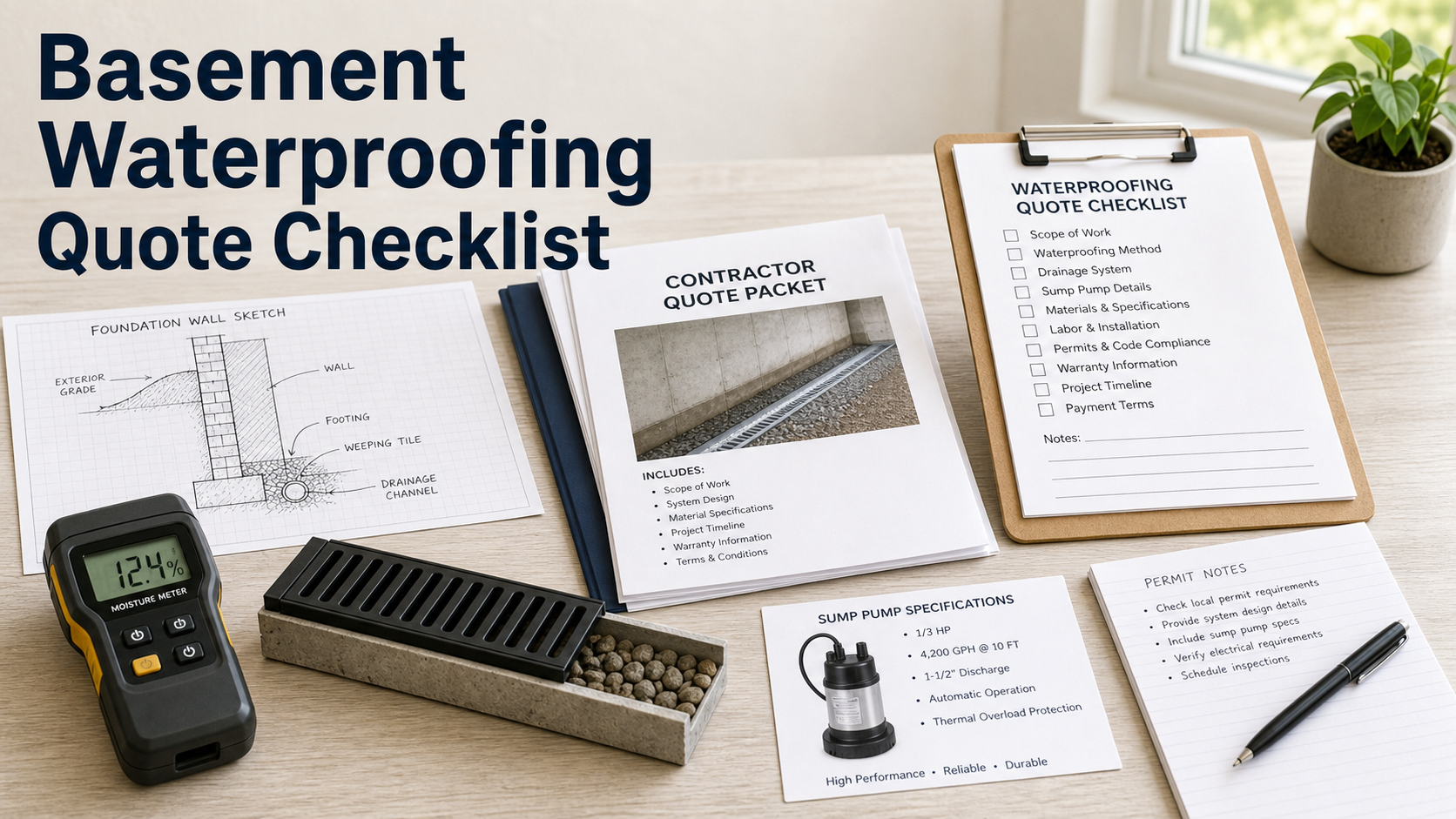
Basement waterproofing quotes can sound alike while solving different problems. One quote may redirect roof and surface water outside. Another may cut the slab and install an interior perimeter drain. Another may only coat a wall.
EPA mold guidance says the best way to control mold growth is to control moisture. That makes diagnosis the first quote item, not a footnote after the sales pitch.
Start With The Water Source
Ask the contractor to identify the observed source: roof runoff, poor grading, window well leakage, foundation crack, floor-wall joint seepage, groundwater pressure, plumbing leak, condensation, or floodwater.
The quote should include photos, affected locations, inspection notes, and the limits of the diagnosis. If the contractor cannot say what the system is designed to control, the warranty will be hard to trust.
Separate Exterior Drainage From Interior Management
Exterior work may include grading, downspout extensions, footing drains, excavation, waterproof membrane, drain board, backfill, and discharge routing. Interior work may include slab cutting, drainage channel, sump basin, pump, wall liner, and concrete patching.
DOE/PNNL Building America foundation guidance treats water management as a system that drains water away from slabs, footings, and below-grade walls. A quote should say whether it is stopping water before it reaches the wall or managing it after it reaches the basement.
Review Sump Pump And Backup Details
If the proposal includes a sump pump, ask for pump capacity, basin size, check valve, cover, alarm, discharge line, freeze protection, battery backup or secondary power, and who handles electrical work.
Ready.gov flood guidance emphasizes preparing for flooding and protecting utilities and living areas. A quote that omits backup power, discharge, and maintenance expectations leaves the homeowner carrying a major failure risk.
Ask Where Water Will Discharge
Collected water has to go somewhere. The quote should state discharge location, pipe route, daylight outlet or storm connection, local code responsibility, freeze risk, erosion protection, and whether the discharge can flow back toward the foundation.
Do not approve a system that moves water from the basement to a spot where it can cycle back into the soil beside the same wall.
Include Demolition, Dust, And Restoration
Interior waterproofing can involve cutting concrete, removing drywall or baseboards, moving storage, protecting finished floors, controlling dust, hauling debris, patching concrete, and leaving walls ready for later finish work.
The quote should say exactly where the contractor stops. “Waterproofing complete” may not mean the basement is put back together.
Address Mold, Drying, And Materials
EPA mold course materials note that wet building materials should be dried quickly to avoid mold growth. Ask whether the quote includes moisture readings, dehumidification, disposal of wet porous materials, or referral to a remediation contractor when needed.
Waterproofing is not the same as mold remediation. If mold cleanup is excluded, the exclusion should be visible before work begins.
Read The Warranty Like A Failure Scenario
Good warranty language names covered components, duration, transfer rules, maintenance duties, exclusions, and response process. Ask what happens after power loss, pump failure, clogged discharge, new cracks, grading changes, frozen pipes, or floodwater.
A broad “dry basement” promise is less useful than a clear answer about what the contractor will do if water appears again.
Basement Waterproofing Quote Review Table
| Quote area | What to confirm | Why it matters |
|---|---|---|
| Diagnosis | Water source, affected areas, photos, inspection limits | The system should match the actual moisture problem. |
| Drainage | Exterior drainage, interior drain, discharge route, grading | Water management method changes cost and durability. |
| Sump pump | Pump size, basin, cover, alarm, backup, electrical, maintenance | Pump failures are common warranty disputes. |
| Restoration | Concrete patching, drywall removal, dust control, debris hauling | Some quotes stop before the room is usable again. |
| Warranty | Covered failures, exclusions, response process, transfer rules | Sales promises must match written obligations. |
Questions To Ask Before Approval
- What exact water source does this quote address?
- Is the work exterior drainage, interior drainage, crack repair, coating, pump installation, or a combination?
- Where will collected water discharge, and who confirms local code requirements?
- What sump pump, alarm, backup power, and electrical work are included?
- What drywall, flooring, concrete, storage, dust control, and cleanup are included?
- Are mold assessment, remediation, drying, and dehumidification included or excluded?
- What homeowner maintenance is required after installation?
- What conditions void or limit the waterproofing warranty?
Red Flags In This Quote
The contractor promises a dry basement without naming the water source or the system’s limits.
The quote includes a sump pump but not backup power, alarm, discharge route, maintenance, or electrical responsibility.
Restoration, mold, finished-wall removal, concrete patching, and debris hauling are missing from the written scope.
Codes, Agencies & Technical Sources
- DOE/PNNL Building America: Water Managed Foundation
- EPA: Mold, Moisture, And Your Home
- EPA: Mold Course Chapter 2
- Ready.gov: Floods
- FTC: How To Avoid A Home Improvement Scam
FAQ
Should a basement waterproofing quote include a diagnosis?
Yes. It should state whether the work addresses runoff, groundwater pressure, crack leakage, condensation, plumbing, or another visible source.
Is interior drainage the same as exterior waterproofing?
No. Interior drainage manages water inside the foundation line, while exterior work tries to redirect water before it reaches the wall.
Should sump pump backup be included?
Ask for it specifically. The quote should state whether backup power, alarm, check valve, covered basin, and discharge freeze protection are included.
Does waterproofing include mold remediation?
Not automatically. If mold, wet drywall, carpet, or porous materials are present, the quote should state what drying or remediation work is included or excluded.
What is the biggest signing risk?
The biggest risk is signing a waterproofing quote that manages visible water but excludes the source, restoration, backup power, and likely warranty failure conditions.
Related Contractor Scope Guides
- Crawl Space Encapsulation Quote Checklist
- Foundation Crack Repair Quote Checklist
- Sewer Line Repair Quote Checklist
A basement waterproofing quote is ready only when diagnosis, drainage method, pump backup, discharge route, restoration, drying, and warranty limits are written down.