
Short answer: approve a home energy audit quote only after it states the tests included, rooms and systems inspected, safety checks, report format, upgrade priorities, rebate or tax-credit documentation, and whether the auditor also sells the recommended work.
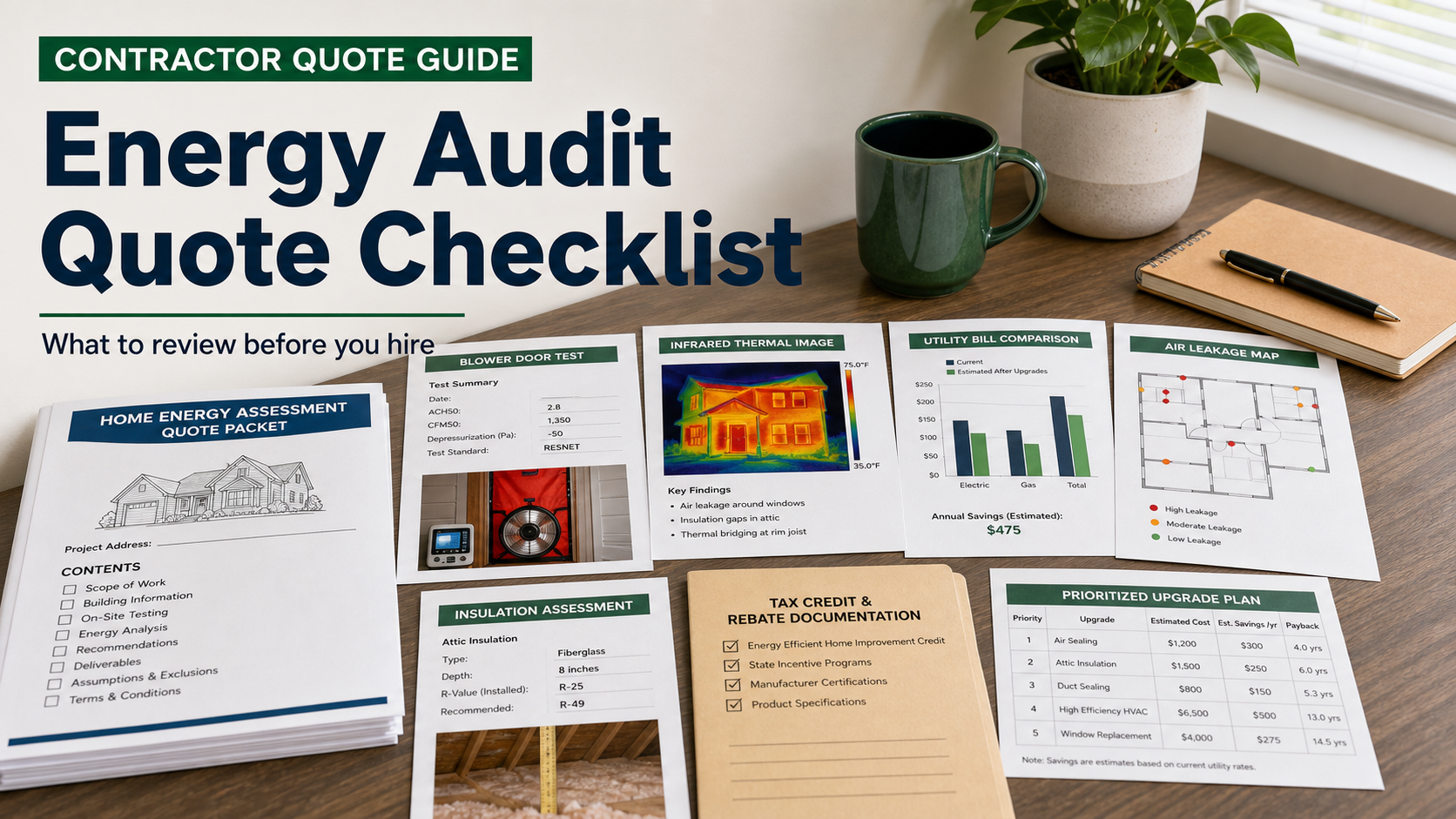
A home energy audit is valuable when it produces a prioritized plan, not just a sales visit. The quote should tell you what the auditor will measure, what equipment will be used, how results will be documented, and whether recommended upgrades are priced separately.
Energy.gov describes a professional home energy assessment as a room-by-room examination that may include equipment such as blower doors and infrared cameras. ENERGY STAR also points homeowners toward assessments before choosing efficiency upgrades. That means the quote should define the actual assessment, not simply promise lower bills.
Confirm The Diagnostic Tests
The estimate should list whether it includes a blower door test, infrared scan, duct leakage testing, insulation inspection, attic access, crawl space or basement review, window and door checks, combustion safety screening, and utility bill review.
If the quote is for a quick walkthrough only, that may be fine, but it should not be priced or described like a full diagnostic audit.
Ask What The Report Includes
The final report should be more than a checklist. Ask whether it includes photos, test numbers, air-leakage findings, insulation gaps, estimated savings ranges, health or safety concerns, upgrade priority order, and which recommendations require licensed trades.
If the company sells insulation, HVAC, windows, or air sealing, ask whether the audit report can stand alone even if you do not buy the follow-up work.
Clarify Rebates And Tax-Credit Claims
Many energy improvements are tied to utility rebates, state programs, or federal credits. The quote should separate audit cost, upgrade cost, expected rebate paperwork, and any tax-credit claim. IRS rules for the Energy Efficient Home Improvement Credit include limits and eligibility details, so a contractor should not guarantee a tax result casually.
Ask for product documentation and program names, not just a promised payback period.
Check Safety And Access Requirements
Some audits require access to attics, crawl spaces, mechanical rooms, gas appliances, fireplaces, ducts, electrical panels, and utility bills. The quote should say what the homeowner must prepare and what happens if areas are inaccessible.
If blower door testing is included, ask whether combustion appliances, fireplaces, pets, alarms, and interior doors require special preparation.
Home Energy Audit Quote Review Table
| Quote area | What to confirm | Why it matters |
|---|---|---|
| Audit type | Walkthrough, diagnostic audit, Home Energy Score, utility program | Different audits produce different depth of findings. |
| Testing | Blower door, infrared, duct leakage, insulation inspection | Equipment changes the value and price of the audit. |
| Report | Photos, readings, priority list, savings assumptions | The report should help compare contractors later. |
| Programs | Rebate forms, tax-credit documentation, eligibility limits | Incentive claims should be documented, not guessed. |
| Sales role | Independent audit or contractor-led sales audit | Recommendations may be influenced by services sold. |
Questions To Ask Before Scheduling
- Is this a full diagnostic audit or a basic walkthrough?
- Will a blower door test or infrared scan be performed?
- Are attic, crawl space, basement, ducts, and mechanical systems included?
- Will the auditor review utility bills and occupancy assumptions?
- What exact report will I receive?
- Are safety checks included before or during testing?
- Does the auditor also sell the recommended upgrades?
- Who handles rebate forms or tax-credit documentation?
- What happens if some areas are inaccessible?
Red Flags In An Energy Audit Quote
- The quote promises savings without saying what will be tested.
- The report is not described before you pay.
- Every recommendation conveniently points to one product the company sells.
- Tax credits are guaranteed without eligibility documentation.
- The auditor refuses to provide findings unless you buy an upgrade package.
- Combustion safety and access requirements are never discussed.
Quote check: a good energy audit quote buys evidence. You should know what will be measured, what report you receive, and how upgrade claims are separated from sales pressure.
Source Links
- Energy.gov: Home Energy Assessments
- ENERGY STAR: Home Performance Assessment
- ENERGY STAR: Home Energy Audit Tax Credit
- IRS: Energy Efficient Home Improvement Credit
- FTC: How to Avoid a Home Improvement Scam
FAQ
Is a home energy audit worth paying for?
It can be, if the audit includes useful testing and a written report that helps prioritize upgrades. A vague sales walkthrough is less valuable.
Should a quote include a blower door test?
Not every audit does, but the quote should say clearly. Blower door testing helps identify air leakage that a visual walkthrough may miss.
Can an audit company also do the upgrade work?
Yes, but ask for a report that stands on its own. You should be able to compare upgrade quotes from other contractors.
Do energy audits qualify for tax credits?
Eligibility depends on current IRS rules, limits, and documentation. Ask for written program details instead of relying on a verbal promise.
What should I prepare before the audit?
Collect utility bills, clear attic or crawl space access, list comfort complaints, and ask about pets, fireplaces, combustion appliances, and alarm preparation.