
Short answer: approve a well pump replacement quote only after it states pump type, depth, horsepower, flow assumptions, pressure tank scope, electrical work, water testing, disinfection, permits, emergency fees, and warranty response time.
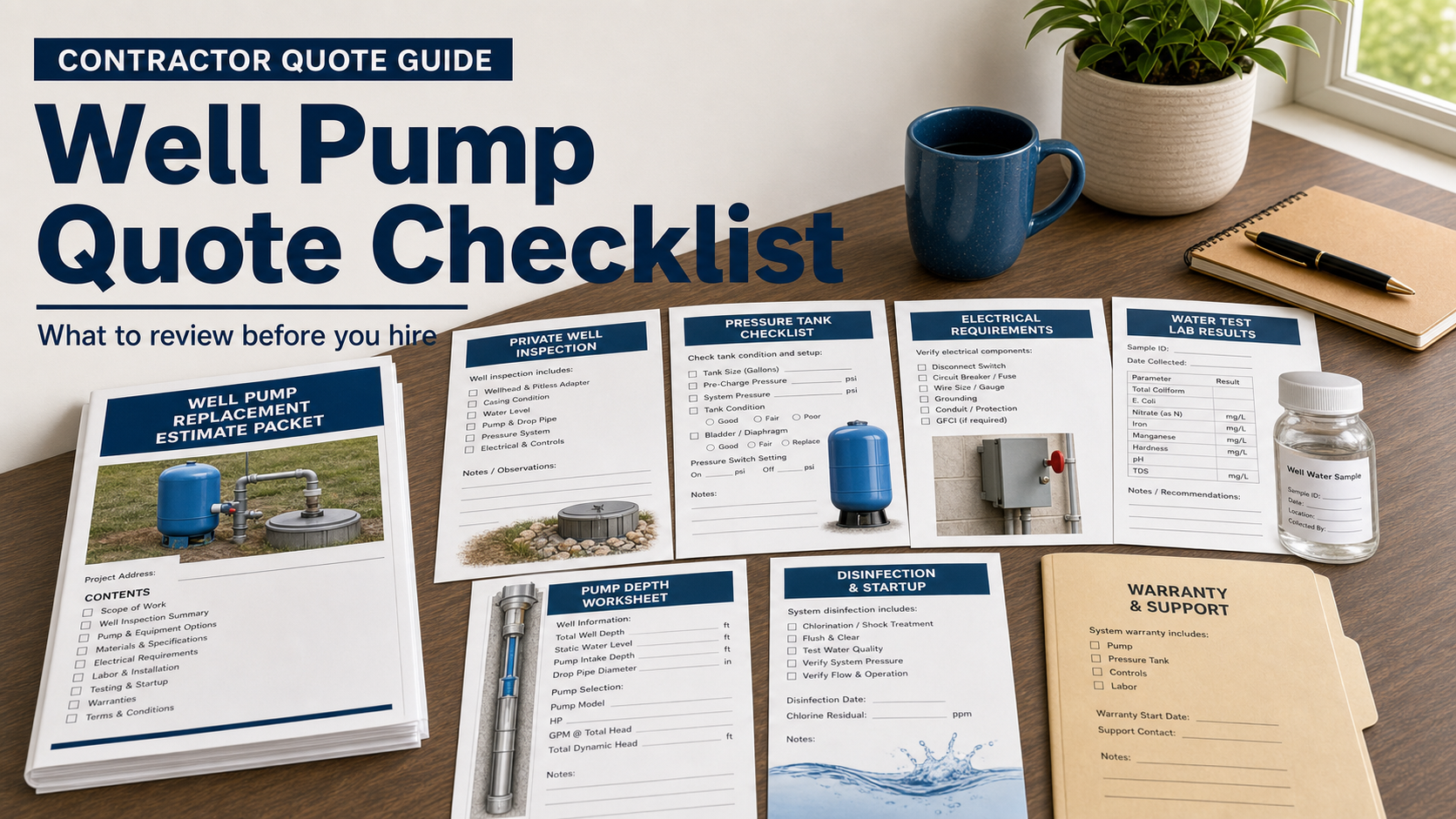
A failed well pump can feel like an emergency because the home may have no water. That pressure makes it easy to approve a vague quote. Slow down long enough to confirm the pump, tank, electrical, and water-safety scope in writing.
EPA and CDC both explain that private well owners are generally responsible for maintaining and testing their own wells. That makes documentation important after any pump work that opens the system, disturbs components, or changes water delivery.
Confirm Pump Type And Well Conditions
The estimate should identify whether the system uses a submersible pump, jet pump, booster pump, or other setup. It should also state known well depth, pump setting depth, static water level if available, pipe size, wire condition, and whether the contractor expects to pull the pump.
If the pump has already failed and exact depth is unknown, ask what assumptions are built into the price and what triggers a change order.
Check Pressure Tank And Controls
A pump replacement quote should not ignore the pressure tank. Ask whether the tank, pressure switch, control box, check valve, pressure gauge, sediment filter, and electrical disconnect are inspected or included.
If the tank is waterlogged or the switch is failing, a new pump can short-cycle and wear out early. The quote should say whether those parts are included or quoted separately.
Clarify Electrical Work
The contractor should state what electrical work is included: wire replacement, splice kits, control box, breaker, disconnect, grounding, conduit, and troubleshooting. If a licensed electrician is needed, the quote should say who schedules and pays for that work.
Emergency jobs often include extra trip, after-hours, excavation, or diagnostic fees. Make sure those charges are visible before work starts.
Ask About Water Testing And Disinfection
After work on a well system, ask whether disinfection, flushing, or water testing is recommended or included. CDC recommends testing private wells regularly and after events that may affect safety, while EPA provides private well owner guidance on protecting drinking water.
The quote should say whether bacterial testing, nitrate testing, or other local water tests are included, optional, or handled by the homeowner.
Well Pump Quote Review Table
| Quote area | What to confirm | Why it matters |
|---|---|---|
| Pump | Type, horsepower, depth, flow assumptions | Wrong sizing can cause pressure and reliability issues. |
| Well | Depth, pipe, wire, casing access, water level | Unknown conditions can change labor quickly. |
| Pressure system | Tank, switch, control box, check valve, gauge | A new pump can fail early if controls are bad. |
| Electrical | Disconnect, breaker, wiring, electrician exclusions | Power issues can mimic pump failure. |
| Water safety | Disinfection, flushing, testing, lab responsibility | Private well owners need a record after work. |
Questions To Ask Before Installation
- What type and horsepower pump is being installed?
- What well depth and pump depth are assumed?
- Will the pressure tank and switch be tested?
- Are wiring, control box, disconnect, and splices included?
- What happens if the drop pipe, wire, or pitless adapter is damaged?
- Is well disinfection or flushing included?
- Will water testing be performed after the work?
- Are permits or local well contractor requirements included?
- What is the emergency warranty response time?
Red Flags In A Well Pump Estimate
- The quote lists a pump price but no depth or horsepower.
- Pressure tank and switch condition are not discussed.
- Electrical troubleshooting is excluded but not priced separately.
- Water testing and disinfection are ignored.
- Emergency fees are unclear before the truck arrives.
- The warranty covers parts only and says nothing about labor response.
Quote check: a well pump replacement is a water system repair. The quote should cover pump sizing, controls, power, water safety, and emergency follow-up, not just the pump model.
Source Links
- EPA: Private Drinking Water Wells
- EPA: Protect Your Home’s Water
- CDC: Guidelines for Testing Well Water
- EPA: Private Drinking Water Well Programs in Your State
- FTC: How to Avoid a Home Improvement Scam
FAQ
Should a well pump quote include the pressure tank?
It should at least inspect and discuss it. A bad pressure tank or switch can damage a new pump or cause poor water pressure.
Do I need water testing after pump replacement?
Ask the contractor or local health department. CDC recommends private well testing regularly and after events that may affect safety.
Can electrical problems look like pump failure?
Yes. Breakers, control boxes, switches, wiring, and splices can fail. The quote should define diagnostic and electrical responsibilities.
Why does pump depth matter?
Depth affects labor, wire, pipe, pump selection, and the risk of change orders when equipment is pulled from the well.
What warranty matters most?
Ask for both product warranty and labor response terms. A pump warranty is less useful if emergency callbacks are excluded.