
Short answer: Compare a main water shutoff valve replacement quote by confirming who can stop water upstream, the service pipe material and condition, valve type and size, transition fittings, pressure and pressure-regulating valve condition, access and wall opening, drain-down and refill procedure, leak and functional testing, permit responsibility, permanent labeling, and finish restoration.
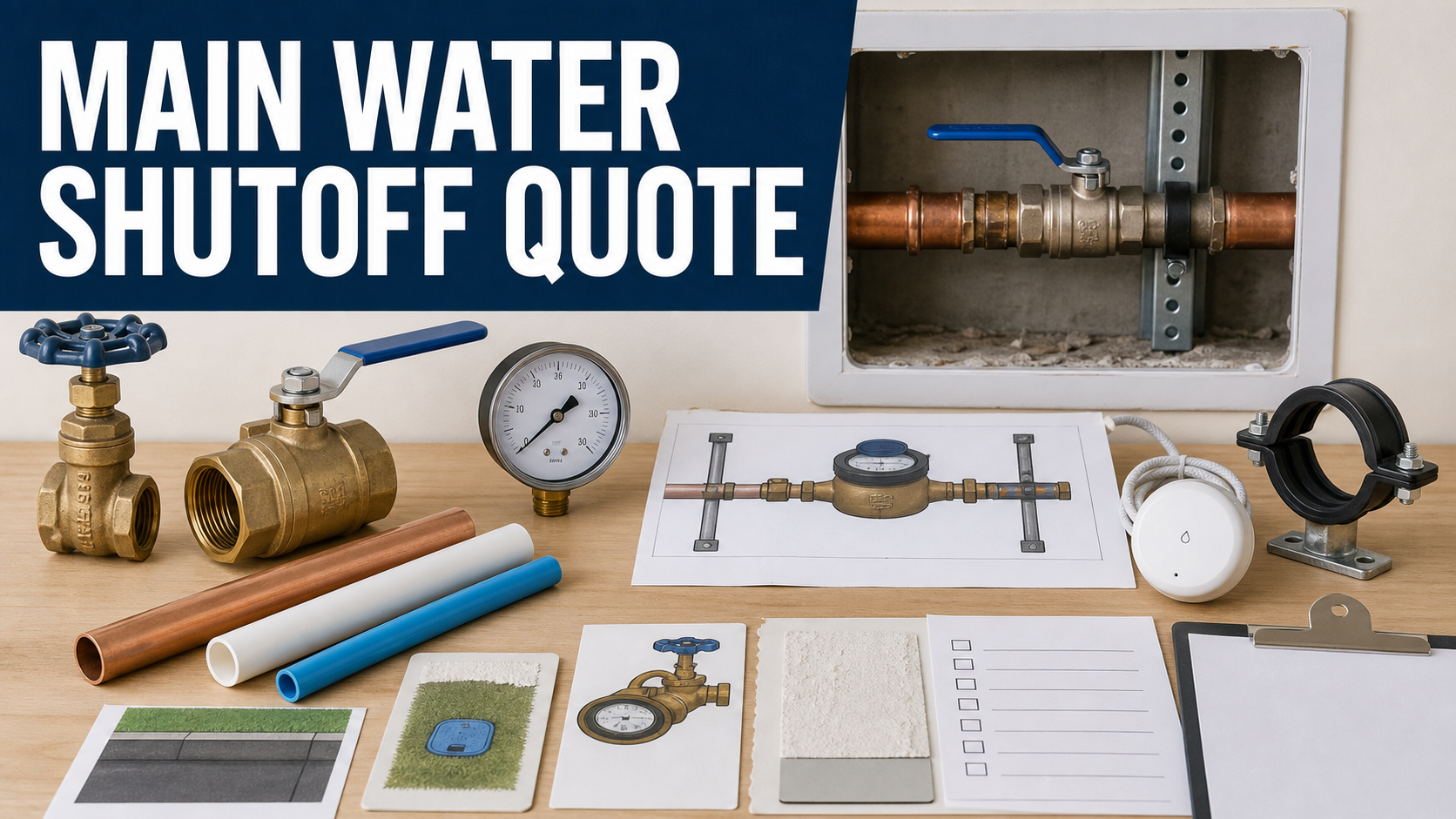
The visible valve may not be the only part that controls risk. A corroded service line, stuck curb stop, fragile meter connection, incompatible pipe transition, excessive pressure, concealed location, or unplanned wall opening can change the job after water is already off.
Do not compare bids by valve price alone. One proposal may include utility coordination, upstream isolation, pipe transitions, pressure checks, supports, access panel, leak detection, permits, testing, cleanup, and wall repair while another assumes a working upstream valve and open access.
Confirm Where Water Can Be Stopped Upstream
Identify the utility-owned curb stop, meter valve, well system, shared building valve, or other upstream control and who is authorized to operate it. State appointment, fee, notice, outage window, access, excavation, and contingency responsibility if the upstream device does not close fully.
The contractor should not begin cutting based on an unverified assumption. Include a safe stop-work plan for a failed curb stop, leaking meter assembly, frozen service, shared line, or unavailable utility crew.
Document Pipe Material, Size, And Condition
Record service and house-side pipe material, nominal size, wall thickness or tubing type where relevant, corrosion, mineral buildup, previous repairs, grounding or bonding connections, supports, nearby fittings, and available straight length.
Require a specific connection method and approved transitions for copper, steel, plastic, or mixed materials. If lead or another regulated service material is suspected, separate identification, notification, and replacement decisions from the simple valve scope.
Choose A Valve That Can Be Used In An Emergency
Specify valve type, size, pressure rating, potable-water suitability, full-port requirement if selected, connection type, handle clearance, flow direction if applicable, unions or serviceability, and a visible durable label.
Locate the handle where a resident can reach and operate it quickly without moving appliances, removing shelving, entering a hazardous crawlspace, or opening a finished wall. Define an access panel when the piping cannot remain exposed.
Check Pressure And Adjacent Components
Measure static pressure before or after the work and identify whether a pressure-regulating valve, expansion tank, check valve, meter, backflow device, filter, softener, alarm, or automatic shutoff affects the assembly.
EPA WaterSense advises homeowners to monitor leaks and notes that household fixtures generally work best with incoming pressure in a suitable range. The quote should state whether a failing regulator or excessive pressure is included, excluded, or a separate alternate rather than discovered after refill.
Plan Drain-Down, Refill, And Water Quality Protection
Define which fixtures or low points are used to drain, how finished areas are protected, where water is discharged, and how the line is cut without contaminating potable piping. Include debris control, approved materials, curing or cooling time, and support before repressurization.
State the refill sequence, air purging, fixture checks, water-heater or equipment precautions, flushing, and any required disinfection or sampling for the project type and local rules.
Test Function, Leaks, Access, And Closeout
Test the valve through full travel, verify that it shuts the house down, inspect every disturbed joint under pressure, check adjacent equipment, record pressure, and confirm that the handle remains accessible and labeled. Define the observation time and return visit if a slow leak appears.
Closeout should include permit or utility records, valve and fitting information, before-and-after photos, pressure reading, test result, location note for residents, wall or cabinet restoration, cleanup, warranty, and emergency instructions.
Review The Quote Before The Water Is Turned Off
Pass One: Prove Isolation And Compatibility
Verify Upstream Control
Name the curb stop, meter, well, or shared valve, the authorized operator, confirmed access, outage window, and the action if upstream isolation fails.
Match Every Material
Require service and house-side materials, sizes, transition fittings, joining method, supports, ratings, and any grounding or bonding coordination in writing.
Pass Two: Prove Emergency Use
Test A Real Shutoff
Operate the completed valve, confirm downstream flow stops, inspect disturbed joints under pressure, record pressure, and verify affected equipment returns to service.
Protect Future Access
Keep the handle visible, reachable, labeled, and serviceable through a permanent access panel where needed; include finish repair and resident instructions.
Main Shutoff Valve Quote Comparison
| Quote area | What to confirm | Why it matters |
|---|---|---|
| Upstream isolation | Curb stop, meter, well or shared valve, authorized operator, utility appointment, outage, fees, access, and failure plan | Prevents an uncontrolled cut or surprise utility delay |
| Existing piping | Material, size, condition, corrosion, prior repairs, bonding, supports, adjacent fittings, and lead-service concern | Determines safe connection and change risk |
| Valve assembly | Type, port, size, rating, potable approval, joints, transitions, unions, handle clearance, and label | Makes the shutoff usable and serviceable |
| Pressure and equipment | Static pressure, regulator, expansion tank, meter, backflow, filter, softener, sensor, and alternates | Finds system conditions that can damage the repair |
| Access and finishes | Wall or cabinet opening, protection, access panel, patch, paint, cleanup, and responsible trade | Shows the completed-project cost and future access |
| Testing and closeout | Full-travel test, downstream isolation, leak observation, refill, flushing, records, photos, warranty, and instructions | Proves reliable emergency operation |
Questions To Ask Before Approval
- What upstream device will stop water, and who is authorized to operate it?
- What happens if the curb stop, meter valve, or shared valve leaks or will not close?
- What are the pipe materials, sizes, conditions, and transition fittings on both sides?
- Which valve type, rating, connection, handle clearance, and serviceability are included?
- Will pressure, regulator condition, expansion control, and adjacent equipment be checked?
- Who opens and restores the wall, cabinet, insulation, or finish around the valve?
- How will the line be drained, protected, refilled, purged, flushed, and tested?
- What label, photos, readings, records, warranty, and emergency instructions are delivered?
Red Flags In This Quote
A quote that assumes the street or meter valve works without assigning verification and utility coordination leaves the highest-consequence step unresolved.
An inaccessible valve hidden behind a fixed wall or appliance may be technically installed but unusable during a leak emergency.
No pressure reading, full shutoff test, or pressurized leak observation means the homeowner receives little evidence that the assembly works as intended.
Source Links
- EPA WaterSense home maintenance guidance
- EPA WaterSense leak detection and flow monitoring devices
- EPA Fix a Leak Week homeowner guidance
- FTC guidance for home improvement estimates and contracts
FAQ
Who is allowed to operate the curb stop at the street?
Rules vary by utility and location. The proposal should identify the authorized operator, appointment and fee requirements, access, and what happens if the curb stop needs repair.
Is a ball valve better than a gate valve for the main shutoff?
A full-port quarter-turn ball valve is often easier to identify and operate, but material, size, rating, connection, space, local requirements, and system condition still need to match the installation.
Should water pressure be checked during replacement?
Yes, a documented pressure check helps identify excessive or low pressure and can reveal whether a pressure-regulating valve or other system component needs separate attention.
Can the new valve be concealed inside a wall?
If concealment is permitted, the handle should remain permanently accessible through a suitable panel. The contract should define panel size, location, finish, label, and service clearance.
Does this job include an automatic leak shutoff?
Only if the quote says so. A manual main valve, flow monitor, leak sensor, motorized shutoff, commissioning, network setup, and maintenance are separate scope items that should be named individually.
What should be tested before final payment?
Require full valve travel, confirmed downstream isolation, pressurized joint inspection, pressure reading, restored fixture and equipment operation, accessible labeling, cleanup, and closeout records.
Related Contractor Quote Guide Guides
- Water damage restoration quote checklist
- Well pump replacement quote checklist
- Water heater replacement quote checklist
A main shutoff replacement is complete when upstream isolation is verified, every connection is compatible, pressure and leaks are tested, and any resident can find and operate the valve in an emergency.