
Short answer: Compare a water pressure regulator replacement quote by requiring static and flowing pressure readings, time-of-day variation, leak and shutoff checks, valve size and pressure range, accessible unions and supports, included piping and restoration, permit and backflow coordination, a documented final setting, fixture-by-fixture testing, and warranty terms. EPA WaterSense says household fixtures operate best when incoming pressure is between 45 and 60 psi, but the contractor must apply local code, utility conditions, and the home’s actual system.
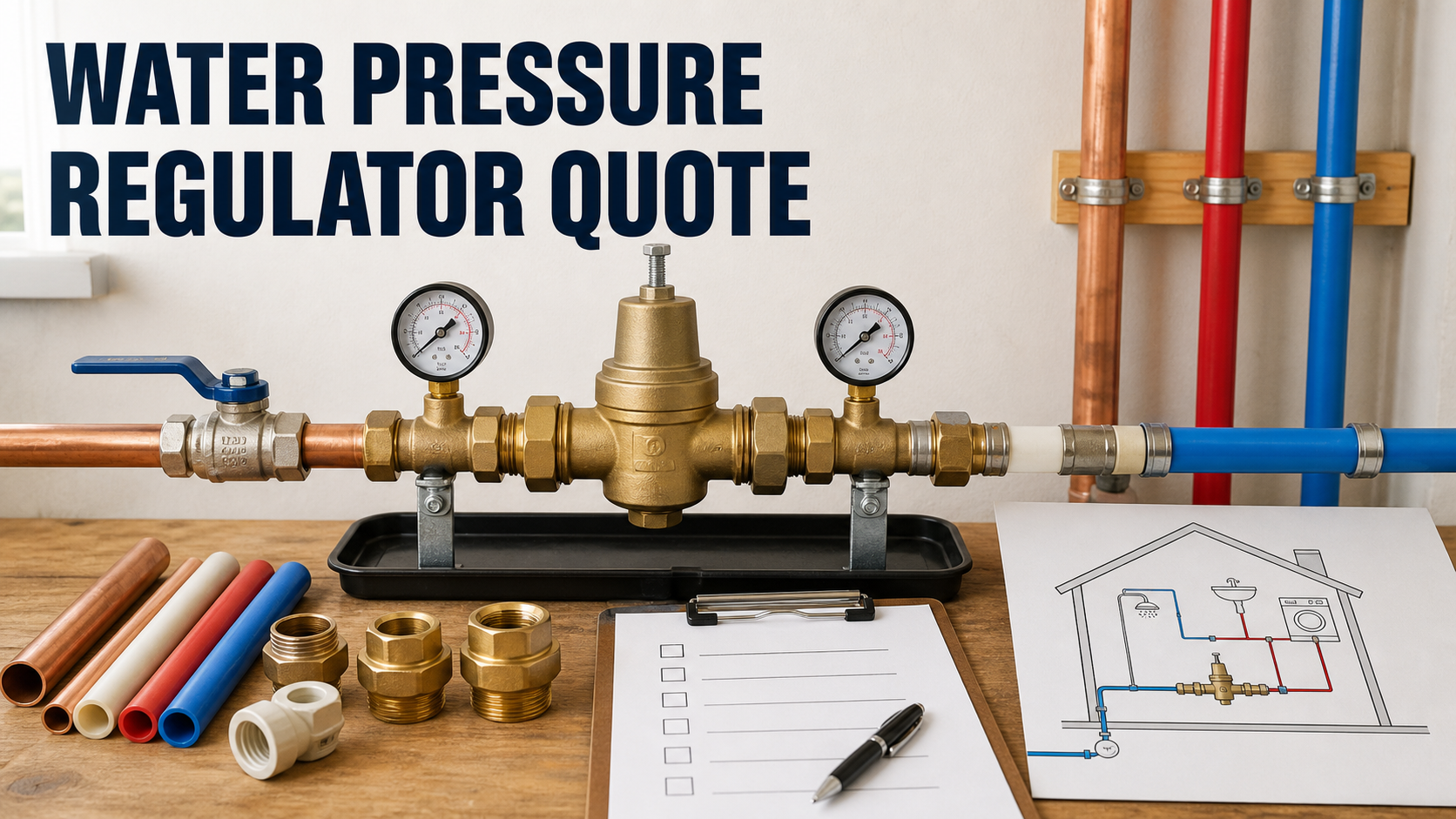
High or unstable pressure can accelerate leaks, create noisy valves, and stress fixtures and appliances, while low pressure can come from a leak, restriction, utility condition, well system, or a failing regulator. Replacing a valve before measuring both sides of it can leave the original problem untouched.
Do not compare bids by valve price alone. One proposal may include diagnosis, shutdown risk, fittings, unions, code coordination, pressure testing, cleanup, and a return adjustment while another covers only cutting in a generic valve.
Confirm The Regulator Is The Problem
Require static pressure readings with fixtures off, flowing readings at representative fixtures, and observations at more than one time if utility pressure varies. Record symptoms such as banging, relief-valve discharge, appliance errors, weak upper-floor flow, or pressure that creeps upward after use stops.
The quote should check for leaks, clogged strainers, partially closed valves, meter restrictions, failed expansion control, cross-connections, and well-system issues before assigning every symptom to the regulator.
Map The Main Water Assembly
Identify the meter or service entry, main shutoff, existing regulator, backflow device, check valve, thermal expansion tank, filters, softeners, branch takeoffs, drain point, electrical bonding, and accessible test locations. Note pipe material, nominal size, corrosion, clearance, and whether a full shutdown is reliable.
Ask who coordinates a utility-side shutoff if the house valve does not hold. The contract should state whether an emergency shutoff, temporary cap, freeze protection, or water-service interruption notice is included.
Match Valve Size And Pressure Range
Require manufacturer performance data for the proposed generic valve class: inlet limit, adjustable outlet range, flow capacity, connection type, temperature rating, orientation, serviceability, and compatibility with the pipe and potable-water system. A same-size body is not proof of adequate flow or correct pressure control.
The proposal should state the selected target pressure and why it suits the home, local requirements, elevation, fixtures, irrigation, and appliances. EPA guidance is useful context, not a substitute for code and measured conditions.
Define Piping, Unions, And Support
List every adapter, union, transition, dielectric or approved connection, solder or press joint, PEX fitting, support, sleeve, insulation, access opening, drain-down point, and corrosion repair. Show whether the new valve can be removed later without cutting finished piping.
Specify protection for combustible surfaces, water-sensitive finishes, stored items, electrical equipment, and occupied areas. Include containment, cleanup, wall or cabinet restoration, and responsibility for concealed damage discovered after shutdown.
Coordinate Expansion And Backflow
A regulator or check arrangement can affect how thermal expansion is managed. Require the contractor to inspect the water heater relief path and any expansion tank, document tank condition and charge where applicable, and explain included corrections separately.
Backflow devices, utility rules, permits, inspections, bonding, and local plumbing code can change the assembly. The quote should identify who confirms these requirements instead of promising a universal layout.
Set, Flush, And Test The System
After installation, require a controlled refill, air purge, joint inspection, debris flushing, documented outlet-pressure setting, and static and flowing measurements using a known gauge. Test representative hot and cold fixtures, toilets, hose connections, irrigation interfaces, and pressure-sensitive appliances.
Ask for a pressure-hold or follow-up reading after the system rests so pressure creep is visible. Verify shutoff operation, noise, leaks, relief discharge, hot-water behavior, and any required inspection before final acceptance.
Close With Records And Warranty
The final package should include valve identification, pressure range, before-and-after readings, target setting, photos, permit and inspection record, hidden-condition change orders, maintenance instructions, and the location of strainers or service parts. Record what the homeowner may adjust and what requires a plumber.
Define labor and material warranty, exclusions for utility pressure or unrelated plumbing, callback response, freeze or corrosion limits, and whether one return pressure adjustment is included. Final payment should follow leak-free operation and recorded results.
Review The Quote From Diagnosis To Final Gauge Reading
Prove The Need
Capture Static And Flowing Pressure
Require readings, time conditions, gauge locations, fixture states, symptoms, and leak checks before the valve is selected.
Map The Whole Assembly
Include shutoffs, backflow, expansion control, filters, pipe materials, bonding, access, and utility-side dependencies.
Prove The Result
Specify A Serviceable Installation
Confirm valve capacity, pressure range, connections, unions, supports, protection, permits, restoration, and future access.
Record The Final Setting
Tie acceptance to controlled refill, flushing, joint inspection, static and flowing readings, pressure-creep check, fixture tests, and warranty records.
Water Pressure Regulator Quote Comparison
| Quote area | What to confirm | Why it matters |
|---|---|---|
| Diagnosis | Static and flowing readings, time variation, symptoms, leaks, restrictions, utility or well conditions | Prevents replacing the valve for an unrelated problem |
| Existing assembly | Meter, shutoffs, backflow, expansion control, filters, takeoffs, materials, bonding, and access | Exposes shutdown and code dependencies |
| Valve selection | Size, capacity, inlet limit, outlet range, connections, orientation, serviceability, and target setting | Matches the device to the home and measured supply |
| Installation | Adapters, unions, joints, supports, protection, drainage, access openings, cleanup, and restoration | Defines a durable and maintainable replacement |
| Compliance | Permit, inspection, local pressure rule, backflow, expansion, utility coordination, and change orders | Avoids unsafe or rejected work |
| Acceptance | Refill, purge, flush, leak check, static and flow tests, creep check, fixtures, records, and warranty | Proves the setting and installation perform |
Questions To Ask Before Approval
- What static and flowing pressure readings prove the existing regulator is failing?
- Were readings taken under comparable conditions and checked for pressure creep?
- Which leaks, restrictions, shutoffs, utility conditions, or well components were ruled out?
- What valve size, capacity, inlet limit, outlet range, and target setting are specified?
- Which fittings, unions, supports, access openings, cleanup, and finish repairs are included?
- How are backflow, thermal expansion, bonding, permits, inspections, and utility shutdown handled?
- Which fixtures and appliances are tested after refill and flushing?
- What before-and-after record, callback, adjustment, and warranty will I receive?
Red Flags In This Quote
A proposal that replaces the regulator without documenting static and flowing pressure may be treating the symptom rather than the cause.
A valve model or price without capacity, range, connection, unions, supports, and expansion review does not define the installed system.
Final payment before leak checks and recorded pressure tests leaves no objective acceptance result.
Source Links
- EPA WaterSense home maintenance service-pressure guidance
- EPA WaterSense service water pressure technical sheet
- EPA WaterSense leak detection and flow monitoring guidance
- EPA WaterSense homes technical reference manual
FAQ
What pressure should a house water system have?
EPA WaterSense says fixtures operate best with incoming pressure between 45 and 60 psi. The correct setting still depends on local code, utility supply, elevation, house layout, fixtures, appliances, and measured flow.
Does high pressure always mean the regulator is bad?
No. Utility variation, a closed-system expansion problem, gauge error, valve configuration, or other plumbing conditions can mimic regulator failure. Require diagnosis before replacement.
Why test both static and flowing pressure?
Static pressure shows the resting condition; flowing readings show delivery under demand. The difference helps reveal restrictions, inadequate capacity, and conditions a resting gauge alone misses.
Should the quote include an expansion tank check?
It should at least document how thermal expansion is controlled, especially where check or pressure-regulating devices create a closed system. Applicable corrections should be explicit.
Are unions important around a pressure regulator?
Serviceable connections can allow future removal without cutting piping. The exact connection method must suit the valve, pipe material, access, and local requirements.
How is replacement work accepted?
Use a controlled refill, air purge, flushing, joint inspection, documented final setting, static and flowing readings, pressure-creep observation, representative fixture tests, and required inspection.
Related Contractor Quote Guide Guides
- Well pump replacement quote checklist
- Backflow preventer installation quote checklist
- Water heater replacement quote checklist
A pressure-regulator quote is ready when the diagnosis, assembly, valve capacity, installation, final setting, fixture tests, and warranty can all be verified from recorded evidence.