
Approve a backflow preventer quote only after it identifies the cross-connection risk, required device type, local code or water-provider approval, installation location, test-port access, drainage and freeze protection, permit responsibility, and annual testing requirements.
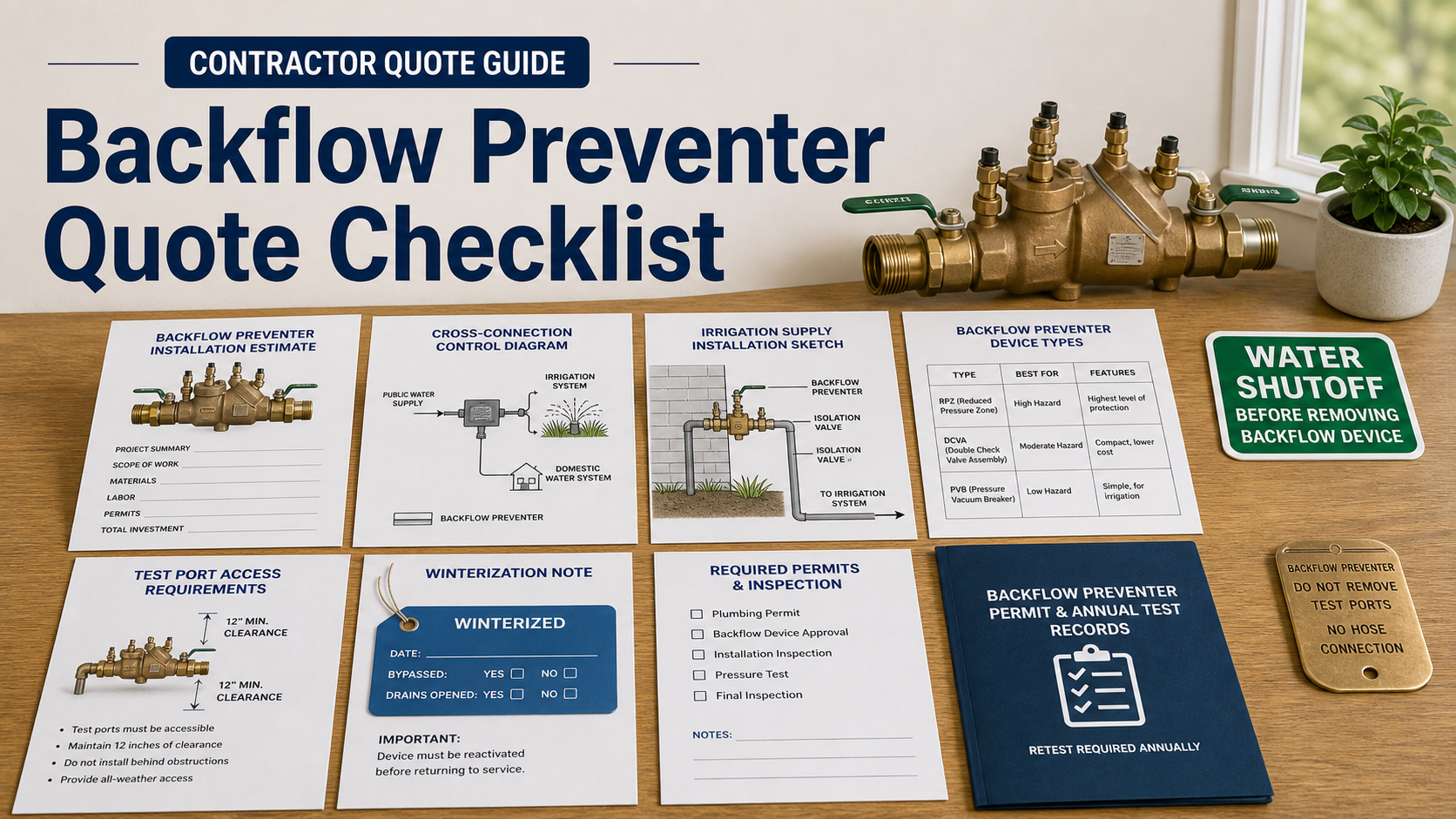
Backflow prevention is about protecting potable water from cross-connections. In homes, the issue often appears with irrigation systems, boilers, hose bibbs, pools, fire sprinklers, wells, or equipment that can connect drinking water to nonpotable water or chemicals.
EPA’s cross-connection materials are written for water systems and plumbing professionals, but the homeowner buying lesson is simple: the correct device depends on the hazard and local approval. A quote should not treat every backflow device as interchangeable.
Start With The Cross-Connection Being Protected
The estimate should say what risk the device is addressing. Common examples include lawn irrigation fertilizer injection, a boiler feed line, a pool fill line, a private well connection, or a hose bibb used with chemical sprayers.
If the quote only says “install backflow,” ask the contractor to label the protected connection and explain why that device type is required for that use.
Confirm Device Type And Local Approval
Backflow protection can involve air gaps, vacuum breakers, double check assemblies, reduced-pressure principle assemblies, pressure vacuum breakers, or other approved methods depending on the hazard and local rules. Your quote should name the device, size, rating, standard, and approval path.
For irrigation work, local water providers often have specific requirements for device type, test reporting, and installation height or location. The contractor should know who accepts the test report and whether the device must be installed by a licensed plumber, irrigation contractor, or certified tester.
Review Location, Access, And Drainage
The device needs to be reachable for service and testing. Ask for the installation location, shutoff valves, unions, test ports, clearance, drain discharge plan, and whether a protective enclosure is included.
Some devices can discharge water during operation or failure. The quote should not place a discharge-prone assembly where it can damage flooring, walls, equipment, or landscaping without drainage planning.
Plan For Winterization And Annual Testing
Backflow devices exposed to freezing temperatures need a winterization plan. The quote should say whether blowout, drain-down, insulation, heat, enclosure, or seasonal removal is expected.
Many jurisdictions require annual testing for testable assemblies. The installation quote should state whether the first test is included, who files the report, and what the ongoing owner responsibility will be.
Backflow Preventer Quote Review Table
| Quote area | What to confirm | Why it matters |
|---|---|---|
| Hazard | Irrigation, boiler, pool, well, hose, or other cross-connection | The hazard determines the required protection. |
| Device type | Approved assembly or method, size, rating, and code basis | Wrong device type can fail inspection or protection goals. |
| Location | Indoor or outdoor placement, clearance, enclosure, shutoffs, unions | Testing and service require physical access. |
| Drainage and freeze | Discharge handling, winterization, insulation, blowout plan | Water discharge and freezing can create damage. |
| Testing | Certified tester, first test, annual reports, owner responsibility | Compliance often continues after installation. |
Questions To Ask Before Approval
- Which cross-connection or hazard is this backflow preventer protecting?
- Which device type is required, and who approved that choice?
- Will the water provider, city, or plumbing inspector require documentation?
- Where will the device be installed, and can it be tested without removing walls or landscaping?
- Does the quote include shutoff valves, unions, fittings, enclosure, and labeling?
- Can the device discharge water, and where will that water go?
- How will the device be protected from freezing?
- Is the first test included, and who files the test report?
- What annual maintenance or testing cost should the owner expect to arrange separately?
Red Flags In A Backflow Quote
- The estimate does not identify the protected connection.
- The device type is chosen without reference to local requirements.
- Testing access is blocked by cabinets, walls, landscaping, or tight clearances.
- Outdoor freeze protection is not discussed.
- Drainage is missing for a device that can discharge water.
- The contractor says annual testing is “someone else’s problem” without explaining the owner’s obligation.
Quote check: a backflow preventer estimate should read like a compliance and maintenance plan, not just a plumbing part list.
Official Standards & References Reviewed
- EPA: Cross-Connection Control Manual
- EPA: Distribution Resources for Small Drinking Water Systems
- EPA: Private Drinking Water Wells
- EPA WaterSense: Sprinkler Spruce-Up
- OSHA: Trenching and Excavation
FAQ
Is every backflow preventer the same?
No. The correct device depends on the hazard, local plumbing rules, and water-provider requirements.
Does a sprinkler system need backflow prevention?
Often yes, but the required device and test rules depend on the local water provider and code. The quote should identify those requirements.
Should the device be testable?
If the local rule requires a testable assembly, the quote should include access, test ports, first testing, and report filing.
Can a backflow preventer freeze?
Outdoor or unconditioned installations can freeze. Ask for a winterization or freeze-protection plan before approval.
Who files the backflow test report?
The quote should say whether the contractor, certified tester, homeowner, or water provider handles the report after installation.