
Short answer: Compare a whole-home leak detection and automatic shutoff quote by requiring a map of covered water lines and risk points, point-of-entry versus point-of-use devices, pipe and flow compatibility, safe valve location, power and backup, network and alert dependencies, user and privacy controls, professional plumbing and electrical scope, scenario-based commissioning, manual override, maintenance, and data-export or account-transfer terms. EPA WaterSense advises buyers to match the technology, shutoff capability, pipe size, notifications, programmability, installation needs, and maintenance to the home.
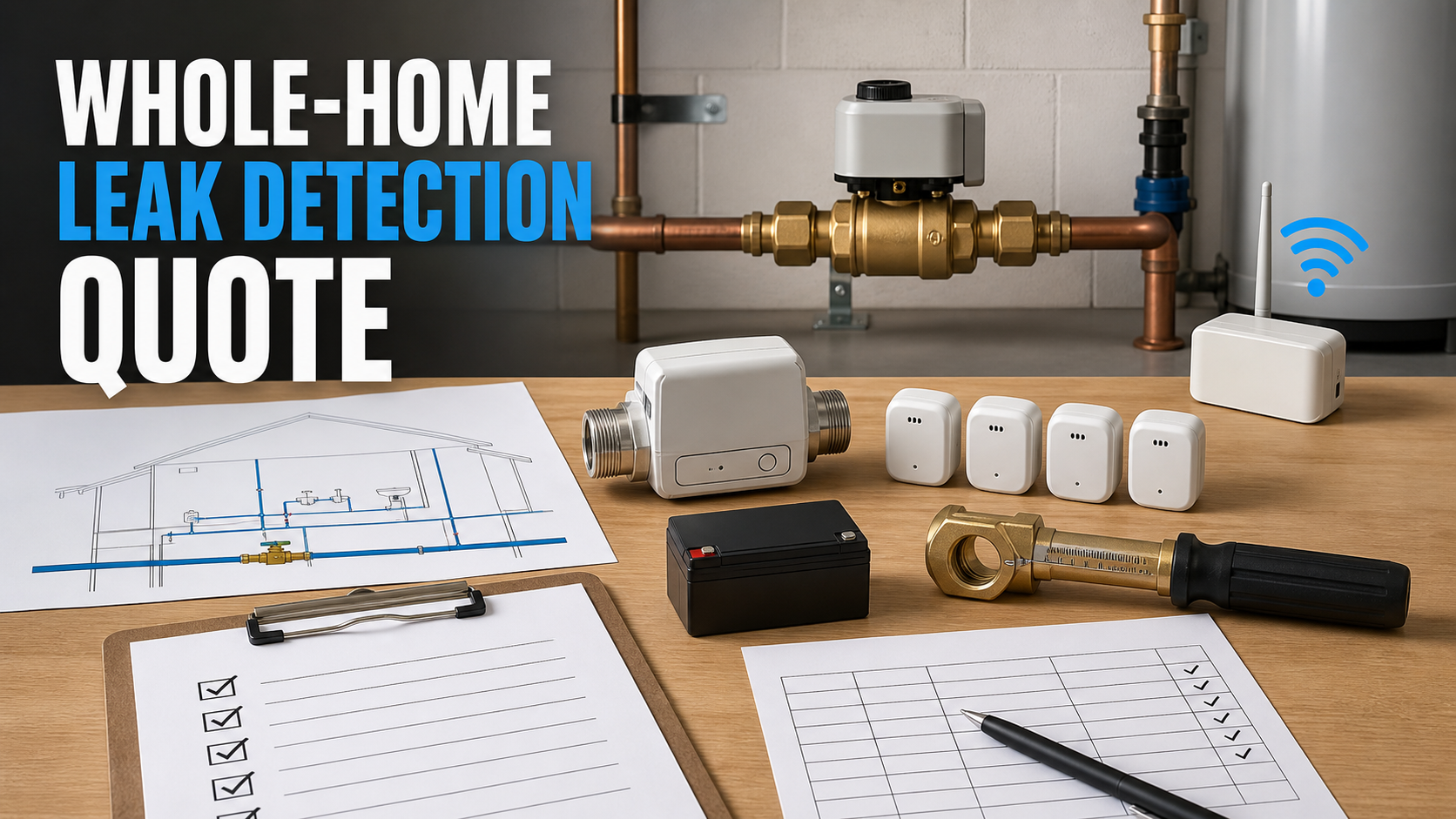
A moisture puck under one appliance, an external flow monitor, and an inline whole-house valve solve different problems. A system may alert but not stop water, may exclude irrigation or fire protection, or may depend on cloud service and power that the quote never names.
Do not compare bids by sensor count or app screenshots. One proposal may include plumbing, power, network setup, risk-zone design, account ownership, test scenarios, training, and annual service while another supplies a box and leaves commissioning to the homeowner.
Define The Protection Goal And Coverage
List the hazards to detect: burst or flowing supply lines, slow continuous flow, intermittent toilet leaks, appliance pan moisture, water heater leakage, frozen pipes, vacant-home events, irrigation, sump areas, or remote properties. Mark every protected and excluded line, fixture, floor, outbuilding, and dwelling unit.
Choose point-of-use moisture sensors, whole-home flow monitoring, pressure-based monitoring, inline shutoff, or an integrated combination based on those goals. The contract should not imply one device detects every leak type.
Verify Pipe, Flow, And Valve Compatibility
Document pipe material and size, normal and peak flow, service pressure, regulator and backflow devices, meter, main shutoff, fire sprinkler branch, irrigation takeoff, well equipment, treatment equipment, and the proposed sensor or valve location. Confirm rated size, flow capacity, pressure and temperature limits, orientation, clearances, and potable-water suitability.
Specify unions, transitions, supports, bypass if permitted, insulation, freeze protection, drainage, and service access. An automatic valve should not block fire protection or an essential process without an approved design.
Plan Power, Network, And Offline Behavior
List receptacle or hardwired power, transformer, low-voltage cable, battery backup, gateway, Wi-Fi or wired network, signal survey, app-compatible device, and responsibility for electrical work. State what detection, alarm, logging, remote control, and shutoff still work during internet, cloud, router, or power failure.
Define whether alerts use local sound, text, email, push notification, monitoring service, or multiple channels. Include recipient roles, escalation, quiet hours, travel mode, cellular options, subscription dependencies, and test messages.
Set Rules Without Hiding Normal Water Use
Describe learning period, occupancy, irrigation, water treatment, cleaning, guests, seasonal use, vacation settings, thresholds, delay, maximum continuous flow, and manual overrides. Identify who can change rules and how accidental shutoffs are prevented or recovered.
Require a written response for ambiguous or small leaks and unusual usage. The system should make uncertainty visible instead of presenting an automated shutoff as infallible.
Protect Accounts, Data, And Privacy
State who owns the account, which data is collected, cloud location, retention, sharing, remote support, multifactor authentication if available, administrator roles, export, deletion, subscription, and what happens if the vendor service ends. Avoid installing the system under a contractor’s permanent personal account.
Include device reset, property-sale transfer, offboarding, credential handoff, and removal of contractor access. Buyers should know whether historical water-use data or alerts remain accessible after cancellation.
Install With Plumbing And Electrical Controls
Define shutdown, utility coordination, drainage, pipe cutting, fire-safe work, electrical protection, permits, inspection, wall openings, access panels, labeling, containment, cleanup, and restoration. List hidden-condition allowances for corroded piping, failed shutoffs, inadequate grounding, no receptacle, or weak network coverage.
Protect finished surfaces and electronics from water during installation. Confirm the manual shutoff remains accessible and occupants can restore service safely after a false alarm or emergency.
Commission Real Scenarios
Test normal peak use, a small continuous flow, a high-flow event, a wet sensor, offline network, power loss, low battery, alert delivery, remote and local valve closure, manual reopening, and every defined exemption. Record trigger, delay, notification, closure time, valve position, and recovery result.
Do not create damaging test leaks. Use controlled fixtures, test modes, sensor wetting, or approved simulation, then inspect joints and verify all fixtures and protection systems operate normally.
Document Maintenance And Warranty
Provide device inventory, serials, valve location, account owner, settings, network dependencies, test records, emergency contacts, manuals, subscription cost, privacy choices, battery type, sensor placement map, and a periodic test schedule. Label the manual bypass or reopen procedure.
Define plumbing and device warranties, cloud and subscription exclusions, response to a failed closure, battery and firmware responsibility, annual service, replacement parts, account transfer, and callback terms. Final payment should follow successful scenario tests and owner training.
Review The Quote From Risk Map To Shutoff Test
Match Technology To The Home
Map Every Protected Zone
Separate point-of-entry flow, point-of-use moisture, irrigation, fire protection, outbuildings, and excluded lines before selecting devices.
Trace Every Dependency
Document pipe and flow capacity, power, network, cloud, subscription, alert channels, account ownership, and offline behavior.
Prove The Response
Test Defined Scenarios
Commission small and large flow, wet sensor, power and internet loss, alert delivery, valve closure, manual recovery, and exemptions.
Leave A Maintainable System
Require service access, owner-controlled credentials, placement map, settings, battery and firmware plan, transfer process, and warranty.
Whole-Home Leak Detection Quote Comparison
| Quote area | What to confirm | Why it matters |
|---|---|---|
| Goals and coverage | Leak types, risk zones, point-of-use or point-of-entry, protected lines, exclusions, occupancy, and response | Matches devices to actual damage scenarios |
| Hydraulic fit | Pipe, flow, pressure, regulator, backflow, fire branch, irrigation, valve rating, fittings, supports, and access | Avoids restriction or unsafe shutoff |
| Power and network | Circuit, backup, gateway, coverage, internet and cloud failure behavior, alerts, and subscriptions | Makes hidden dependencies explicit |
| Controls and data | Thresholds, learning, users, MFA, privacy, retention, sharing, export, reset, and property transfer | Keeps control and information with the owner |
| Installation | Shutdown, plumbing, electrical, permits, labeling, openings, restoration, hidden conditions, and manual override | Defines the real job around the device |
| Commissioning | Normal use, leak simulations, wet sensor, offline tests, alerts, closure, recovery, records, training, and warranty | Proves the system responds as promised |
Questions To Ask Before Approval
- Which leak types, locations, and water lines are protected or excluded?
- Why is point-of-use, point-of-entry, or combined technology appropriate?
- Does the device match pipe size, peak flow, pressure, fire protection, irrigation, and treatment equipment?
- What works during internet, cloud, router, or power failure?
- Who owns the account and water-use data, and how are access, export, deletion, and property transfer handled?
- Which plumbing, electrical, permit, access, cleanup, and restoration work is included?
- Which safe scenarios prove detection, alerts, automatic closure, manual override, and recovery?
- What subscription, battery, firmware, periodic testing, service, and warranty remain after installation?
Red Flags In This Quote
A quote that lists hardware but no risk map can leave the most important appliance, branch, or outbuilding unprotected.
Automatic shutoff without fire-line, irrigation, pipe-capacity, offline, and manual-recovery details can create a new operational risk.
Commissioning that only shows the app opens does not prove detection, alert delivery, valve closure, or service restoration.
Source Links
- EPA WaterSense leak detection and flow monitoring devices
- EPA WaterSense 2026 leak and flow device selection guide
- EPA WaterSense leak detection technical sheet
- EPA WaterSense Fix a Leak Week resources
FAQ
What is the difference between moisture and flow detection?
Moisture sensors detect water at a location. Flow or pressure monitoring watches patterns in piping. They cover different failure modes and can be combined.
Does every leak detector shut off the water?
No. Some only alarm or notify. The quote must state which device controls which valve, under what rules, and what happens offline.
Can a whole-home device monitor irrigation?
Only if the irrigation branch is within the monitored path and the rules account for scheduled use. Map the piping and exemptions before purchase.
Will the system work without internet?
Capabilities vary. Require a written matrix for detection, local alarm, logging, automatic closure, manual control, and notification during each outage type.
Who should own the app account?
The property owner or authorized operator should control the primary account, recovery methods, administrators, data, and transfer process. Contractor access should be time-limited.
How often should the system be tested?
Follow manufacturer and local requirements, and put periodic sensor, alert, battery, valve, manual-recovery, and account checks in the turnover plan.
Related Contractor Quote Guide Guides
- Water heater replacement quote checklist
- Well pump replacement quote checklist
- Backflow preventer installation quote checklist
A leak-detection quote is ready when coverage, dependencies, account ownership, shutoff behavior, safe scenario tests, maintenance, and recovery are written and demonstrated.