
Short answer: A foundation crack injection quote should map the crack on both sides where accessible, record width, length, direction, displacement, moisture and history, identify structural or movement red flags, evaluate grading, gutters, drains and hydrostatic pressure, choose epoxy, polyurethane or another compatible system for a stated purpose, define surface preparation, port spacing, sealing, injection sequence and consumption, protect finishes, include monitoring and a realistic leak test, document limitations and exterior work, and provide photos, material data, test results, maintenance advice, and warranty.
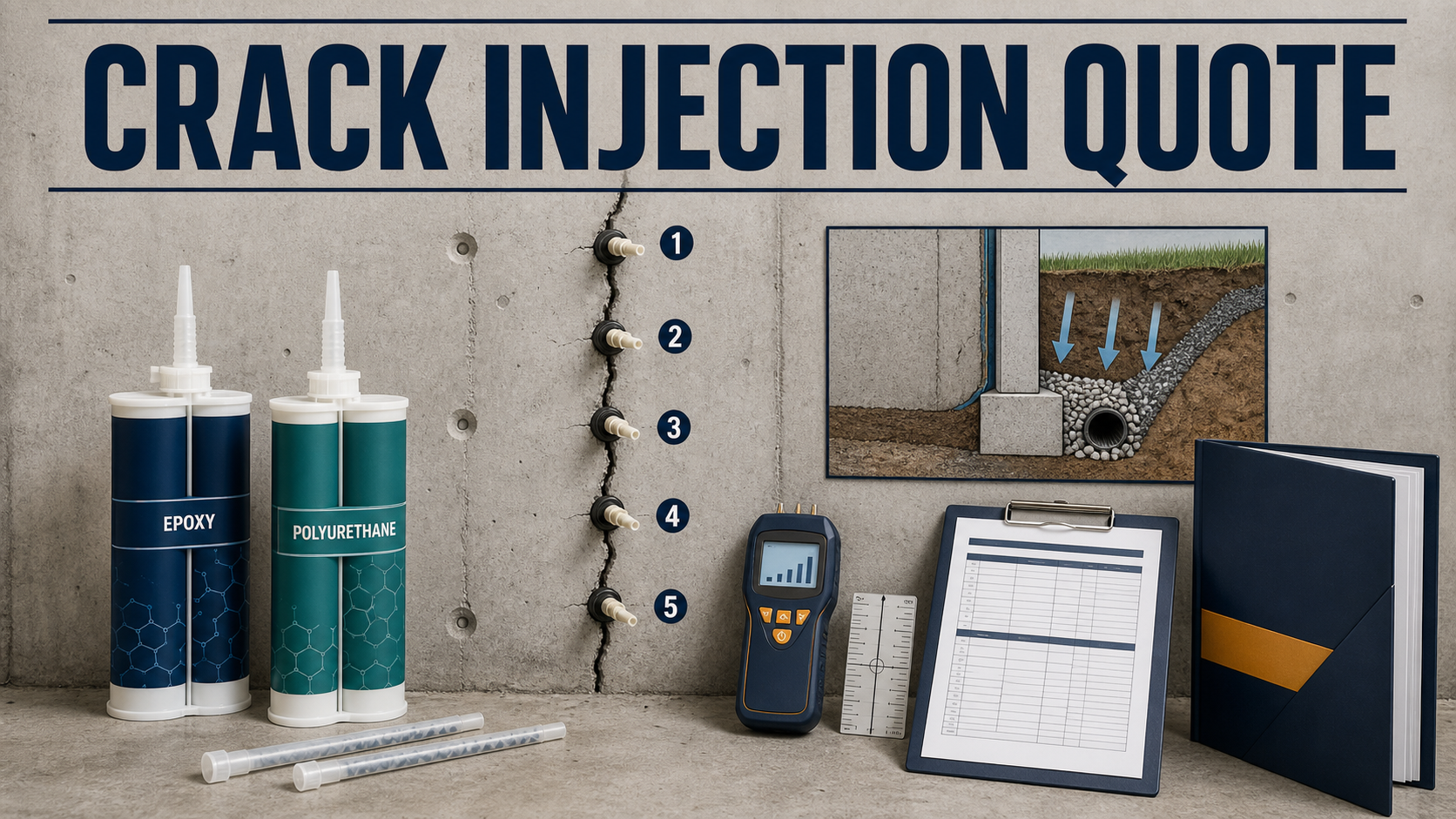
A narrow poured-concrete crack may be a leakage path, a structural symptom, or both. EPA moisture guidance recommends inspecting foundations for new or changing cracks and correcting exterior water sources such as poor grading, downspouts and seepage. Injection should not be sold as a universal substitute for drainage or engineering.
Compare bids only after contractors use the same crack map, movement observations, wet-weather history, access, finish removal, water-source assumptions, repair objective, material type, testing, restoration, and warranty. A per-crack price without diagnosis can conceal fundamentally different scopes.
Classify The Crack Before Choosing A Product
Record location, foundation type, wall thickness if known, crack orientation, width at several points, displacement, branching, floor or wall intersections, previous repairs, efflorescence, rust, and interior damage. Note whether the crack changes seasonally or followed excavation, impact, settlement, flood, or nearby construction.
Horizontal cracks, bowing, significant displacement, recurring movement, multiple related cracks, or damaged structural elements warrant engineering or broader foundation evaluation before injection. The quote should state the stop condition and referral responsibility.
Trace The Water Source And Pressure
Inspect roof runoff, gutters, downspouts, grading, paving, window wells, irrigation, plumbing, foundation drains, sump, groundwater, and wall-floor joints. Ask when water appears and whether the leak occurs only in wind-driven rain, snowmelt, or prolonged saturation.
The proposal should separate crack sealing from exterior drainage, excavation, waterproofing, sump, dehumidification, and finish replacement. Injection can close one path while water finds another if the source and pressure remain.
Match Material To The Repair Objective
Epoxy systems are commonly selected when bonding and structural continuity are objectives in a stable, dry or controllably damp crack. Flexible polyurethane systems are often selected for active water sealing and movement tolerance. The contractor should explain the chosen chemistry, viscosity, moisture compatibility, expansion, cure, temperature range, certifications, and limitations.
Name the exact system, primer or surface seal, ports, cleaners, accessory materials, lot records, shelf-life checks, and manufacturer instructions. Avoid mixing unrelated components or promising structural restoration from a product intended only for water sealing.
Specify Preparation And Injection Control
Define finish removal, cleaning, crack exposure, removal of failed prior materials, surface dryness or dampness, port type and spacing, surface-seal width, cure time, starting point, pressure limits, sequence, refusal criteria, material consumption, and treatment at the top, bottom and wall-floor connection.
High pressure can route material into unintended voids or damage weak concrete. Require controlled equipment, monitoring at adjacent openings, protection of floors and belongings, ventilation, spill collection, and photographs before the surface seal hides the crack.
Verify The Result Without Overpromising
Acceptance can include visible fill evidence, material use compared with expected crack volume, port-to-port progression, cured surface-seal inspection, moisture readings, and observation during natural rain or a carefully designed limited water test where appropriate. A dry test day cannot prove performance under every groundwater condition.
State the monitoring period, owner reporting method, reinspection trigger, and response if leakage returns at the repaired crack or appears nearby. Structural monitoring may require gauges, dated measurements, or an engineer rather than a simple leak warranty.
Document Finish Work And Warranty Boundaries
List port removal, surface-seal grinding or retention, patch profile, coating compatibility, insulation and drywall removal, mold or wet-material handling, dust control, disposal, repainting, and exclusions. Do not conceal the repair before required inspection and photographs.
The closeout package should include the crack map, photos, diagnosis limits, product data, lot numbers, quantities, environmental conditions, test record, exterior recommendations, maintenance, warranty term, covered leak location, exclusions for movement or new cracks, and transferability.
Normalize Crack Injection Proposals
Normalize Diagnosis
Use One Crack Map
Compare the same width, direction, displacement, history, moisture, finishes, and structural observations.
Use One Water Review
Include grading, runoff, drains, sump, groundwater, plumbing, and wet-weather timing.
Normalize The Repair
Name The System
Record chemistry, purpose, moisture compatibility, ports, surface seal, pressure, sequence, and cure.
Separate Related Work
Make engineering, drainage, excavation, waterproofing, finishes, and mold work explicit.
Normalize Acceptance
Use One Test Plan
Require fill evidence, conditions, moisture checks, observation limits, and return-leak procedure.
Use One Warranty Matrix
Compare repaired-crack leakage, movement, new cracks, access, finishes, transferability, and exclusions.
Foundation Crack Injection Quote Comparison Table
| Quote area | What to confirm | Why it matters |
|---|---|---|
| Crack map | Width, length, direction, displacement, branches, history | Distinguishes a repair target from a structural symptom |
| Water source | Runoff, grading, drains, sump, groundwater, plumbing | Prevents treating one path while pressure remains |
| Material | Epoxy or polyurethane, purpose, properties, limitations | Matches chemistry to bonding, sealing, and movement |
| Preparation | Finish removal, cleaning, ports, surface seal, protection | Controls adhesion and hidden work |
| Injection | Spacing, pressure, sequence, consumption, stop criteria | Makes workmanship observable |
| Verification | Photos, fill evidence, moisture, observation, retest | Sets realistic acceptance evidence |
| Related scope | Engineering, drainage, waterproofing, finishes, mold | Exposes work injection cannot replace |
| Warranty | Leak location, movement, new cracks, access, transfer | Clarifies what a callback actually covers |
Questions To Ask Before Approval
- What evidence shows this crack is stable enough for injection?
- Which movement or structural findings would stop the work?
- What exterior and interior moisture sources were evaluated?
- Is the objective structural bonding, water sealing, or both?
- Which exact material system and manufacturer procedure will be used?
- How are moisture, temperature, ports, pressure, and sequence controlled?
- How will material progression and consumption be recorded?
- What finishes must be removed and restored?
- What inspection or monitoring occurs before concealment?
- How will the repair be tested and what are the test's limits?
- What happens if the same crack leaks again or movement continues?
- Which photos, product records, recommendations, and warranties are delivered?
Red Flags In This Quote
The contractor recommends injection without measuring the crack or checking movement and water sources.
A horizontal, displaced, bowing, or changing condition is treated as a routine cosmetic leak.
The quote does not name the material, purpose, moisture limits, pressure, or manufacturer procedure.
Exterior drainage problems are ignored while a permanent dry-basement promise is made.
The warranty excludes access and investigation so broadly that a callback has little practical value.
Source Links
- EPA: Main Ways To Control Moisture In The Home
- EPA: Moisture Control Guidance For Buildings
- EPA: Remodeling Your Home And Indoor Air Quality
- FEMA: Damage Assessment Operations Manual
FAQ
Is every vertical foundation crack nonstructural?
No. Direction alone is not enough. Width, displacement, movement, pattern, wall condition, loads, history, and related damage determine whether engineering review is needed.
What is the difference between epoxy and polyurethane injection?
Epoxy is often used for bonding stable concrete cracks, while flexible polyurethane is often used to seal water paths and tolerate limited movement. The exact product and conditions control suitability.
Can injection replace exterior waterproofing?
It can seal a specific path but does not correct grading, gutters, drains, hydrostatic pressure, failed membranes, or other entry routes. Those issues may require separate work.
Can a repaired crack be hidden immediately?
Keep it accessible until required inspection, photos, cure, testing, and monitoring are complete. Premature finish work can conceal leakage or movement evidence.
What kind of leak test is reliable?
Use a test appropriate to the building and repair, with agreed limits and weather context. A brief hose test or dry-day reading cannot reproduce every groundwater condition.
What should the warranty say?
It should identify the repaired crack, covered leakage, term, access responsibility, finish removal, movement and new-crack exclusions, response time, remedy, and transferability.
Related Contractor Guides
- Basement Waterproofing Quote Checklist
- Foundation Drainage Repair Quote
- Structural Engineer Inspection Quote
- Sump Pump Installation Quote
Approve crack injection only after the quote explains what caused the condition, why the chosen material fits the objective, and how success will be observed without hiding unresolved movement or water pressure.