
Short answer: Approve an HRV or ERV installation quote only after it states the ventilation goal and design airflow, explains the HRV-versus-ERV and equipment selection, maps fresh-air supply and exhaust pickup points, separates exterior intake and exhaust terminals from contaminants, specifies insulated and sealed duct routes, condensate and freeze protection, controls and HVAC interaction, electrical and permit work, and includes measured airflow balancing, commissioning, owner training, maintenance access, records, and warranty.
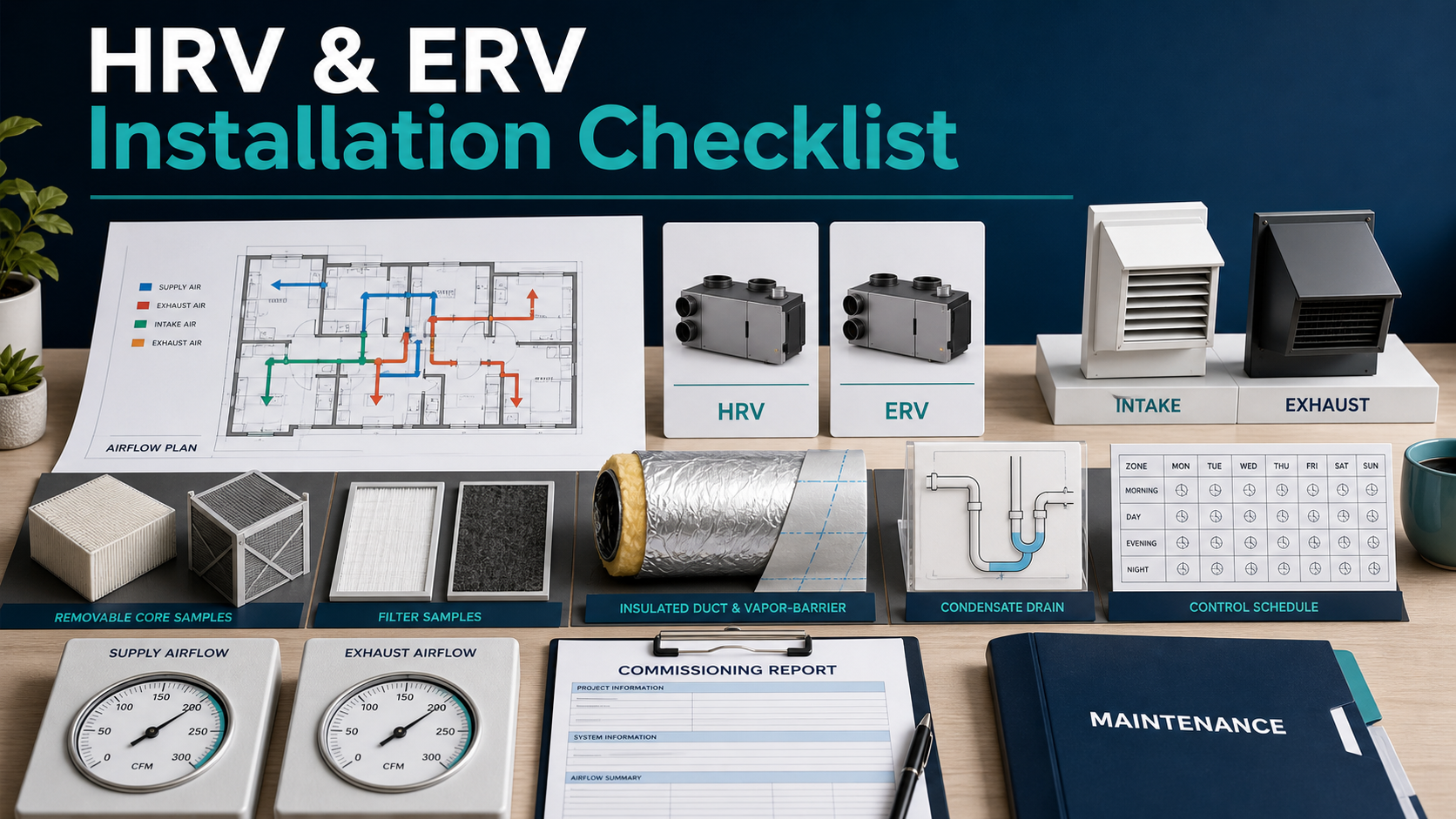
A heat- or energy-recovery ventilator is a balanced ventilation system, but performance depends on climate, occupants, house tightness, humidity, local exhaust fans, equipment capacity, duct resistance, exterior terminal placement, filtration, defrost, condensate, and controls. Buying by equipment model alone misses most installation risk.
Compare bids against the same target airflow and distribution plan. One contractor may include dedicated ducts, bathrooms and bedrooms, exterior penetrations, insulation, drains, electrical, controls, balancing, permits, and drywall repair while another prices only the appliance and two short ducts.
Define The Ventilation Goal And Design Airflow
Document home size, bedrooms or occupants, enclosure work, existing exhaust fans, combustion appliances, indoor humidity, outdoor smoke or pollutant concerns, and the reason for adding balanced ventilation. State the continuous and boost airflow targets and the design method or local requirement used.
EPA notes that ventilation helps dilute indoor pollutants but outdoor sources must also be considered. The proposal should identify which rooms receive outdoor air, which rooms exhaust stale air, and how air transfers between them when doors are closed.
Choose HRV Or ERV With A Written Basis
Compare rated airflow at the expected external pressure, sensible and total recovery, low-temperature performance, defrost method, fan power, sound, filters, controls, cabinet leakage, drain needs, warranty, and replacement-part access. Explain why moisture transfer from an ERV is or is not appropriate for the climate and house.
DOE describes both HRVs and ERVs as balanced recovery systems, with ERVs also transferring some water vapor. Selection should follow the actual humidity and operating strategy rather than a one-size-fits-all sales rule.
Map Interior Ducts And Exterior Terminals
Show dedicated or shared HVAC connections, supply diffusers, exhaust grilles, balancing dampers, silencers, access panels, duct sizes, lengths, fittings, supports, insulation, vapor barrier, and air-sealing. Avoid long crushed flex runs or inaccessible filters and dampers.
Locate intake and exhaust terminals with dimensions from grade, snow, roof, windows, doors, exhausts, dryer vents, combustion outlets, garages, driveways, and other contaminants as required locally. Include exterior flashing, screens, hoods, weatherproofing, and pest resistance.
Control Condensation, Frost, And Pressure
Specify cabinet slope and drain trap where required, condensate route, freeze protection, insulated cold-side ducts, sealed vapor retarder, defrost cycle, preheat if designed, and protection of nearby finishes. Put responsibility for a blocked or freezing drain and inaccessible trap in writing.
Coordinate kitchen and bath fans, clothes dryer, range hood makeup air, radon system, fireplaces, water heaters, furnaces, and attached garage pressure. A balanced unit does not automatically resolve pressure effects from larger intermittent exhaust appliances.
Define Controls, Electrical Work, And Access Repairs
List wall controls, timers, humidity or other sensors, occupancy or boost switches, HVAC interlock, summer strategy, filter alarms, wiring, dedicated receptacle or circuit, disconnect, low-voltage cable, and app or network exclusions. State default settings and who programs them.
Map ceiling, wall, closet, attic, crawl-space, siding, and roof openings. Include dust protection, fire-stopping, insulation repair, drywall or plaster, paint, trim, exterior sealant, safe service platform, lighting, and clear filter/core removal space.
Balance And Commission The Complete System
Before final payment, require measured supply and exhaust at the unit and key terminals, documented balanced settings, boost operation, controls, defrost, drains, filters, noise, exterior airflow, HVAC interaction, and any required combustion-safety or pressure checks. Correct deficiencies and retest.
Collect design airflow, as-built duct and terminal map, equipment data, settings, measurement report, permits and inspections, filter and core cleaning schedule, drain and frost instructions, replacement filter information, owner demonstration, finish punch list, and warranty.
HRV or ERV Installation Scope Comparison
| Quote area | What to confirm | Why it matters |
|---|---|---|
| Goal and airflow | House and occupant assumptions, indoor and outdoor concerns, design method, continuous and boost rates, supply rooms, and exhaust rooms | Defines what the system must accomplish |
| Equipment choice | HRV or ERV basis, rated airflow, pressure, recovery, fan power, defrost, sound, filters, controls, parts, and warranty | Matches the unit to climate and operating conditions |
| Ducts and terminals | Routes, sizes, fittings, dampers, supports, insulation, vapor barrier, diffusers, grilles, intake and exhaust clearances | Protects airflow quality and maintainability |
| Moisture and pressure | Drain, trap, freeze protection, defrost, cold ducts, fans, range hood, dryer, radon, garage, and combustion appliances | Prevents condensation and pressure conflicts |
| Controls and finishes | Boost, timers, sensors, interlock, electrical, default settings, access, fire-stopping, insulation, drywall, paint, and exterior flashing | Captures the daily-use and restoration scope |
| Commissioning | Measured supply and exhaust, balance, terminals, boost, controls, frost, drain, noise, pressure checks, records, training, and warranty | Proves the installed system works as designed |
Questions To Ask Before Approval
- What ventilation goal, house assumptions, design method, and airflow rates govern this quote?
- Why is the proposed HRV or ERV appropriate for this climate, humidity, pressure, and duct resistance?
- Which rooms receive supply and exhaust, and how do closed rooms get a return path?
- Where are intake and exhaust terminals, and how are they separated from contaminants and weather?
- How are ducts insulated and sealed, condensate drained, frost controlled, and filters serviced?
- How do controls, local fans, dryer, range hood, radon, garage, and combustion appliances interact?
- Which measurements, balancing report, as-built map, training, finish repairs, and warranty are required at closeout?
Red Flags In This Quote
An appliance-only price with no design airflow, room distribution, duct pressure, or exterior terminal plan cannot show that ventilation will reach the house.
An intake located near exhaust, smoke, vehicles, dryer lint, snow, or standing water can import the contamination the system is meant to dilute.
Final payment before measured supply/exhaust balance, drain and frost checks, controls, training, and maintenance access leaves performance unverified.
Source Links
- DOE energy recovery ventilation overview
- EPA improving indoor air quality through ventilation
- EPA mechanical ventilation homeowner guide
FAQ
What is the difference between an HRV and an ERV?
Both exchange heat between exhaust and incoming air. An ERV also transfers some water vapor. Climate, indoor humidity, occupancy, and operating strategy should guide selection.
Will an HRV or ERV heat and cool the house?
It recovers part of the energy from exhaust air but is primarily a ventilation appliance. It does not replace correctly sized heating or cooling equipment.
Can it connect to existing HVAC ducts?
Sometimes. Shared-duct designs must address fan operation, connection points, controls, pressure, balance, mixing, and whether ventilation remains distributed when the HVAC blower is off.
Does balanced ventilation eliminate bathroom fans?
Not necessarily. The design should state whether bathrooms exhaust continuously through the recovery ventilator, use boost controls, retain local fans, or require both.
What maintenance should the quote explain?
Ask for filter replacement or cleaning, core cleaning, exterior hood checks, condensate trap and drain service, frost and defrost operation, control settings, and periodic airflow verification.
Related Contractor Quote Guide Guides
- HVAC ductwork replacement quote checklist
- Bathroom exhaust fan installation quote checklist
- Home energy audit quote checklist
A recovery-ventilator quote is complete when design airflow, equipment choice, clean air paths, moisture and frost control, controls, measured balance, service access, and owner records all agree.