
Choose an ice dam prevention quote that begins with evidence of where heat and moisture reach the roof, then defines attic air sealing, insulation continuity, ventilation baffles and clear paths, eave and roof-water repairs, safe treatment of combustion and electrical hazards, limits of any heat-cable option, and post-work verification. A quote that removes ice without correcting the cause is emergency service, not prevention.
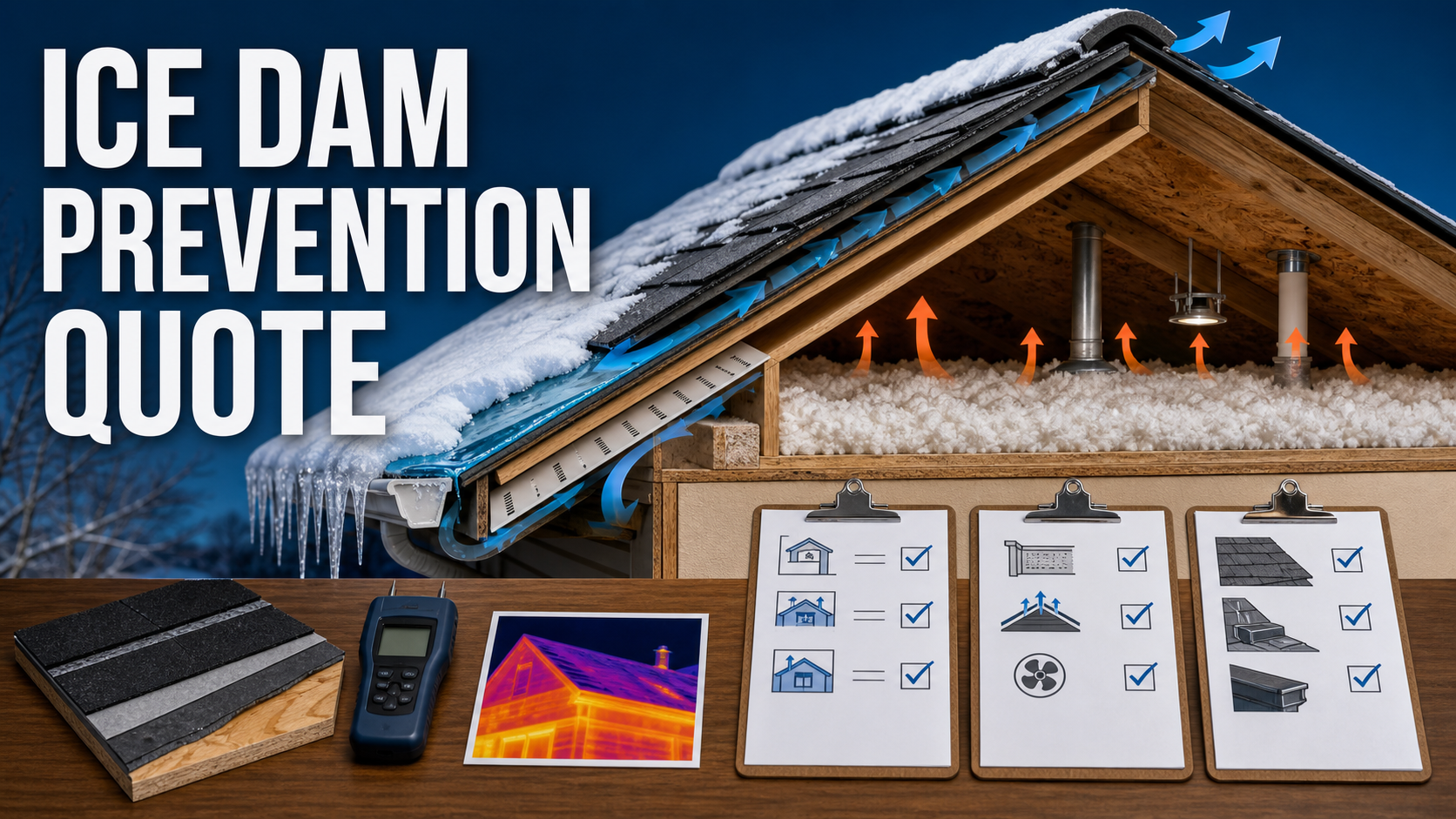
Ice dams form when upper roof areas warm enough to melt snow and the water refreezes at a colder edge. Air leaks, thin or displaced insulation, blocked soffits, bath fans dumping into the attic, ducts, chimneys, complex roof geometry, and existing underlayment or flashing defects can overlap.
Do not compare bids by insulation depth or heat-cable length alone. One contractor may diagnose air leakage, moisture, ventilation and roof defects, protect combustion clearances, repair water damage, document ventilation paths, and verify results while another treats only the visible eave.
Document The Pattern Before Snow Is Gone
Record roof faces, valleys, dormers, skylights, chimneys, eaves, icicle locations, interior stains, attic frost, wet insulation, bath and dryer ducts, HVAC equipment, recessed lights, hatches, wiring penetrations, and prior roof repairs. Use dated photos and note weather conditions.
The diagnosis should distinguish emergency ice removal, active leak repair, roof-covering defects, and building-envelope causes. If observations are limited by season, list which attic inspection, moisture, infrared, blower-door, or follow-up checks are included and what each can prove.
Air-Seal The Ceiling Plane Safely
Define sealing at wiring and plumbing penetrations, top plates, partition chases, attic hatches, dropped soffits, duct boots, flues, chimneys, and recessed fixtures. Specify compatible materials, backing, access, and limits near heat-producing equipment.
DOE guidance on preventing ice dams emphasizes an airtight ceiling plane. The quote should also require combustion-safety review where air sealing may affect fuel-burning equipment and should not bury unsafe wiring or heat sources under new insulation.
Restore Continuous Insulation
State existing insulation type, depth, condition, contamination, compression, wind washing, missing areas, and whether wet or damaged material is removed. Specify target performance, coverage at top plates and attic edges, dams around heat sources, hatch treatment, walkways, storage restrictions, and depth markers.
More insulation does not compensate for unsealed bypasses or blocked ventilation. Require the order of work—repairs and air sealing before insulation—and photographs of concealed edges before the final layer hides them.
Protect The Intended Ventilation Path
Inventory soffit, eave, gable, ridge, roof, and powered vents; blocked bays; bird screens; baffles; attic partitions; and short-circuit paths. Specify clear airspace, baffle material and fastening, insulation dams, intake and exhaust coordination, and repairs at crushed or missing vents.
Ventilation is not a universal cure for every roof assembly. The contractor should identify whether the attic or roof is designed as vented or unvented and obtain design help before mixing systems or adding powered exhaust that may depressurize the home.
Repair Water Entry And Eave Details
Separate damage caused by backed-up meltwater from flashing, shingle, membrane, valley, gutter, fascia, soffit, and roof-deck defects. Define temporary dry-out, sheathing and framing repair, mold or insulation response, underlayment limits, flashing, gutters, downspouts, and interior finish restoration.
If roofing must be opened, state permit, manufacturer, weather window, temporary protection, material match, warranty, and the unit process for concealed decking. Prevention work should not leave an existing leak or saturated assembly closed inside.
Treat Heat Cable As A Limited Alternate
If electric deicing cable is proposed, price it as a separate controlled measure with listed equipment, circuit capacity, GFCI protection where required, routing, fastening, controls, sensor location, roof compatibility, operating instructions, seasonal inspection, and removal or replacement responsibility.
Cable may create a drainage channel but does not replace air sealing, insulation, ventilation or roof repair. The quote should state the expected purpose, operating cost inputs, maintenance, failure indicators, and areas it cannot protect.
Verify Before Final Payment
Use before-and-after photos, air-leak or pressure testing where included, insulation coverage, baffle and vent inspection, moisture readings, bath-fan discharge verification, electrical and combustion checks, roof-water repairs, cleanup, and a seasonal follow-up plan.
Closeout should identify remaining limitations, inaccessible areas, weather dependence, maintenance, heat-cable instructions, roof and insulation warranties, and what observation during the next snow event triggers a callback.
Review The Quote By Cause, Path, And Proof
Cause And Path
Find The Heat Source
Match each ice pattern to ceiling bypasses, ducts, equipment, insulation gaps, roof geometry, or sun and weather effects; list evidence and unknowns.
Keep The Roof Assembly Coherent
Confirm whether the assembly is vented or unvented and make air sealing, insulation, baffles, intake, exhaust, and roofing details support the same design.
Repair And Proof
Separate Existing Damage
Price wet insulation, sheathing, flashing, roof covering, gutters, interior stains, and mold response separately from envelope prevention so exclusions remain visible.
Define The Next-Snow Test
Record photos and measurements now, identify post-work checks, and state what result during the next comparable snow event counts as success or requires correction.
Ice Dam Prevention Quote Comparison
| Quote area | What to confirm | Why it matters |
|---|---|---|
| Diagnosis | Roof pattern, attic frost, stains, moisture, air leaks, ducts, vents, insulation, geometry, season limits, and tests | Connects the symptom to a correctable cause |
| Air sealing | Penetrations, chases, hatches, fixtures, flues, materials, heat clearances, access, and combustion safety | Reduces warm moist air reaching the roof deck |
| Insulation | Existing condition, removal, target, edge coverage, dams, hatch, walkways, storage, depth markers, and photos | Keeps the ceiling plane thermally consistent |
| Ventilation | Assembly type, intake, exhaust, clear paths, baffles, screens, partitions, blocked bays, and powered-fan risk | Maintains the designed roof-deck conditions |
| Roof and water repair | Leak source, deck, membrane, flashing, valleys, gutters, fascia, dry-out, hidden-damage process, and finishes | Repairs damage that envelope work alone cannot reverse |
| Verification | Photos, testing, moisture, vent paths, fan discharge, electrical and combustion checks, seasonal follow-up, and warranty | Defines measurable completion and callback evidence |
Questions To Ask Before Approval
- What evidence connects the ice pattern to attic heat, moisture, insulation, ventilation, or roof defects?
- Which ceiling penetrations and chases are included in air sealing, and which are inaccessible?
- How will heat-producing fixtures, flues, chimneys, wiring, and combustion equipment be protected?
- What insulation condition, target, edge coverage, hatch treatment, and removal are included?
- Is the roof assembly vented or unvented, and how will intake and exhaust paths remain clear?
- Which roof, flashing, sheathing, gutter, interior, and moisture repairs are included or separate?
- If heat cable is offered, what exact limited purpose, circuit, control, maintenance, and warranty apply?
- What post-work checks and next-snow observation define success?
Red Flags In This Quote
A quote that starts with heat cable or more insulation without documenting air leakage, moisture, ventilation, and roof defects may treat the symptom instead of the system.
Burying recessed lights, old wiring, flues, or wet material under insulation without safety and condition checks can create new hazards.
No before-and-after evidence or next-snow acceptance rule makes a recurring seasonal problem difficult to judge.
Primary References & Homeowner Resources
- U.S. Department of Energy Building America guide to preventing ice dams
- DOE Building Science Education guidance for sealed eaves in cold climates
- ENERGY STAR well-insulated and sealed attic guidance
- FTC guidance for home improvement estimates and contracts
FAQ
Do gutters cause ice dams?
Gutters can affect drainage and visible ice, but classic ice dams begin with snowmelt on a warmer roof refreezing at a colder edge. Diagnose heat, air leakage, insulation, ventilation, roof details, and gutters together.
Will adding attic insulation stop ice dams?
Only if insulation gaps are part of the cause and ceiling air leaks, ventilation paths, moisture sources, and roof defects are also addressed. Sequence air sealing before insulation.
Should attic ventilation always be increased?
No. The correct approach depends on whether the roof assembly is designed as vented or unvented, existing intake and exhaust paths, pressure interactions, and local climate and code.
Is roof heat cable a permanent fix?
It can provide a drainage path in selected areas but does not correct indoor heat and moisture reaching the roof. Treat it as a limited, maintained alternate with electrical and roof-compatibility details.
Can work be verified without snow?
Air sealing, insulation coverage, vent paths, moisture, fan discharge, roof repairs, electrical and combustion checks can be verified, but seasonal performance should still have a next-snow observation plan.
What belongs in the warranty?
Separate workmanship for air sealing, insulation, ventilation components, roofing and electrical work; list weather limitations, maintenance, inaccessible areas, callback evidence, and response time.
Related Home Repair & Remodel Guides
- Attic air sealing and insulation quote checklist
- Roof ventilation repair quote checklist
- Roof replacement quote checklist
An ice-dam prevention quote is credible when it explains the heat and moisture path, keeps the roof assembly coherent, repairs existing water entry, and defines how the next winter will prove the work.