
Short answer: Approve an inground pool removal quote only after local officials confirm permits and full-versus-partial removal rules, the contractor inventories utilities, equipment, fuel and chemicals, obtains an approved water-discharge route, keeps the excavation safely fenced, defines shell, deck, plumbing and electrical demolition, disposal and recycling, specifies acceptable fill placed in controlled lifts with compaction evidence, protects structures and drainage, restores final grade and landscaping, and delivers inspections, disposal receipts, as-built records, disclosure documents, warranty, and future-building limitations.
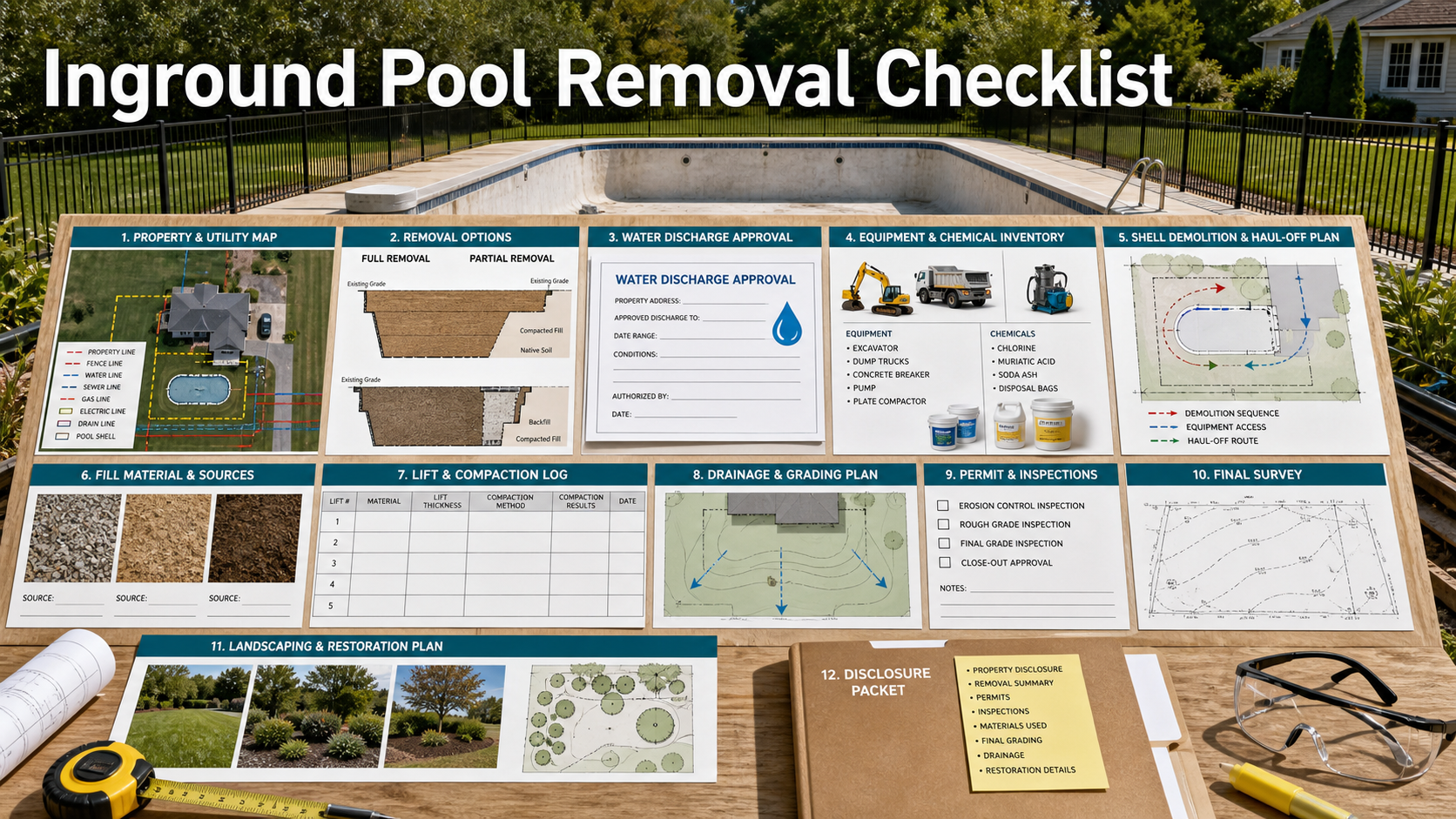
Pool removal is an earthwork and site-drainage project, not just breaking concrete. Shell type, groundwater, access, nearby foundations, retaining walls, utilities, pool chemicals, water discharge, demolition method, fill quality, compaction, surface drainage, and the owner's future building plans determine the proper scope.
Compare bids against the same jurisdiction-approved removal method and restoration area. One contractor may include engineering, water disposal, equipment and chemical handling, deck and utility removal, haul-off, certified fill, compaction tests, drainage, permits, survey and landscaping while another leaves most of that work as an allowance.
Confirm Permits, Method, And Future Land Use
Ask the building, zoning, environmental, sewer and stormwater authorities which approvals, notifications, inspections, drainage rules, setbacks, fill records, property disclosures, and tax or assessor updates apply. Document whether full shell removal, partial removal with specified openings, or another engineered method is accepted.
State whether the area may later support a building, addition, accessory unit, driveway, retaining wall, garden, lawn, or only open space. The demolition and compaction standard should fit that intended use; a future foundation may require full removal and geotechnical or structural input.
Inventory Water, Chemicals, Equipment, And Utilities
Record pool volume and chemistry, covers, pumps, filters, heaters, fuel, electrical panels and bonding, gas, water, sewer, drainage, skimmers, returns, lights, automation, stored chemicals, fencing, deck, cabana, and underground lines. Locate public and private utilities before excavation.
EPA stormwater guidance warns that chemically treated pool water can harm water quality. The quote should identify the approved discharge authority, testing or dechlorination, rate, erosion control, receiving route, and receipts or evidence—not simply pump to street.
Define Demolition, Haul-Off, And Interim Safety
List water removal, disconnection and capping, equipment removal, fuel and chemical disposition, deck limits, coping, shell walls and floor, reinforcing steel, plumbing, electrical, gas, debris size, on-site reuse approvals, recycling, truck route, dust, noise, vibration, soil protection, and disposal facility.
Maintain code-required fencing or an approved temporary barrier, secure gates, covers, signage, lighting and daily site checks until the hazard is eliminated. CPSC pool safety guidance underscores the importance of barriers; demolition should not create an unfenced empty or partially filled basin.
Specify Fill, Lifts, Compaction, And Groundwater Control
Name allowed and prohibited fill, source documentation, gradation, moisture conditioning, lift thickness, equipment, compaction target and reference method, test frequency and locations, proof rolling if used, and response to failed tests. Demolition rubble should not silently replace specified structural fill.
Address groundwater, hydrostatic pressure, dewatering approvals, saturated subgrade, soft soils, voids, buried organic material, adjacent foundations, retaining walls, access loads, settlement monitoring, and bad-weather pauses. Require approval before changing fill or eliminating tests.
Restore Drainage, Grade, And Site Features
Set final elevations and positive drainage away from the house and neighboring property, swales, drains, downspouts, erosion control, topsoil depth, settlement allowance, seed or sod, irrigation, fences, paths, deck edges, retaining walls, and tree protection. A flat filled depression can become a new water problem.
Define survey or elevation checks, soil and pavement repair along equipment routes, sidewalk and curb protection, street cleaning, removal of temporary fencing only after safe grade, and responsibility for settlement or drainage corrections during the warranty period.
Use Inspections And Records As Payment Gates
Tie payments to water and utility clearance, demolition inspection, required shell openings or full removal, debris removal, subgrade approval, fill and compaction stages, drainage and rough grade, final inspection, survey or test report, and landscape punch list. Do not bury work before the required official sees it.
Collect permits and closures, photographs, utility disconnects and caps, water and chemical disposition, dump and recycling receipts, fill tickets, compaction tests, as-built limits, final elevations, inspections, future-use restrictions, disclosure or assessor documents, maintenance instructions, and settlement and drainage warranty.
Inground Pool Removal Scope Comparison
| Quote area | What to confirm | Why it matters |
|---|---|---|
| Approval and future use | Permits, full or partial method, engineering, inspections, setback, disclosure, assessor, and planned building, paving, garden, or lawn use | Selects a removal and compaction standard that the jurisdiction accepts |
| Water and utilities | Volume, chemistry, discharge authority and route, testing, chemicals, electric and bonding, gas, water, sewer, drains, equipment, and caps | Prevents illegal discharge and hidden live services |
| Demolition and safety | Fencing, shell, deck, coping, steel, plumbing, equipment, fuel, dust, vibration, hauling, recycling, disposal, and truck route | Defines what leaves the site and how the hazard remains controlled |
| Fill and compaction | Source, prohibited material, gradation, moisture, lifts, equipment, target, test method, frequency, failures, groundwater, subgrade, and weather | Controls voids and future settlement |
| Drainage and restoration | Final elevations, positive drainage, swales, drains, topsoil, settlement allowance, landscaping, irrigation, fences, paving, retaining walls, and route repairs | Turns the former basin into a stable usable site |
| Closeout evidence | Photos, disconnects, discharge, receipts, fill tickets, compaction tests, inspections, as-built limits, survey, disclosure, restrictions, and warranty | Preserves proof for resale and future construction |
Questions To Ask Before Approval
- Which removal method does the local authority approve, and what future land use is the fill designed to support?
- Where may pool water be discharged, and who documents chemistry, permission, rate, erosion control, and completion?
- Which equipment, chemicals, fuel, electric, bonding, gas, water, sewer, drainage, shell, deck, and fencing components are removed or capped?
- How is the open or empty pool secured every day until safe final grade?
- What fill source, lift thickness, moisture, compaction target, test method, frequency, and failed-test remedy are specified?
- How are groundwater, adjacent foundations, retaining walls, final drainage, topsoil, landscaping, paving, and settlement handled?
- Which inspections, photos, receipts, tickets, tests, survey, as-built, disclosure, future-use restrictions, and warranty will I receive?
Red Flags In This Quote
Pumping treated pool water to a street or storm drain without authority approval and water-quality controls can harm receiving waters and violate local rules.
Filling over large uncontrolled shell pieces, organic debris, equipment, or piping with no lift and compaction plan creates avoidable void and settlement risk.
Removing the permanent barrier before the empty excavation is eliminated can expose children and others to a severe fall or drowning hazard after rain.
Source Links
- EPA guidance on safely discharging chemically treated water
- CPSC Safety Barrier Guidelines for Home Pools
- CPSC Pool Safely safety center
FAQ
Is partial pool removal the same as full removal?
No. Partial removal typically leaves approved portions of the shell after specified openings or demolition; full removal takes the shell out. Local rules, drainage, disclosure, and future building plans govern the choice.
Can pool water go into the storm drain?
Do not assume so. EPA guidance says treated water can harm water quality. Contact local sanitary sewer and stormwater authorities and follow their approved route, chemistry, timing, and rate.
Can broken concrete be used as fill?
Only if the approved plan and jurisdiction allow a defined use and size. Require specified fill, void control, lift placement, compaction, and records rather than uncontrolled buried rubble.
Why are compaction tests important?
They provide evidence that designated lifts reached the specified density and moisture condition. Test method, target, frequency, locations, and failed-test correction should be written before filling.
What records matter when selling the home?
Keep permits, final approval, method, photos, water and disposal records, fill tickets, compaction tests, as-built limits, final elevations, future-use restrictions, disclosures, and warranty.
Related Contractor Quote Guide Guides
- Inground pool installation quote checklist
- Excavation contractor quote checklist
- Landscape drainage quote checklist
A pool-removal quote is complete when approved demolition, water and chemical handling, utilities, safe excavation, documented fill and compaction, drainage, restoration, disclosure, and warranty all match the future site use.