
A permeable paver driveway quote should document soil and infiltration conditions, seasonal groundwater, slopes, utilities, building setbacks, drainage area and design storm, full, partial or no-infiltration strategy, overflow and underdrain, excavation and disposal, protected subgrade, geotextile or liner purpose, clean open-graded subbase, base and bedding gradations and thicknesses, vehicular-rated pavers, permeable joint aggregate, edge restraints, construction sediment controls, compaction and elevation checks, infiltration acceptance, as-built photos, vacuum cleaning, winter-care limits, maintenance frequency, and separate structural and infiltration warranties.
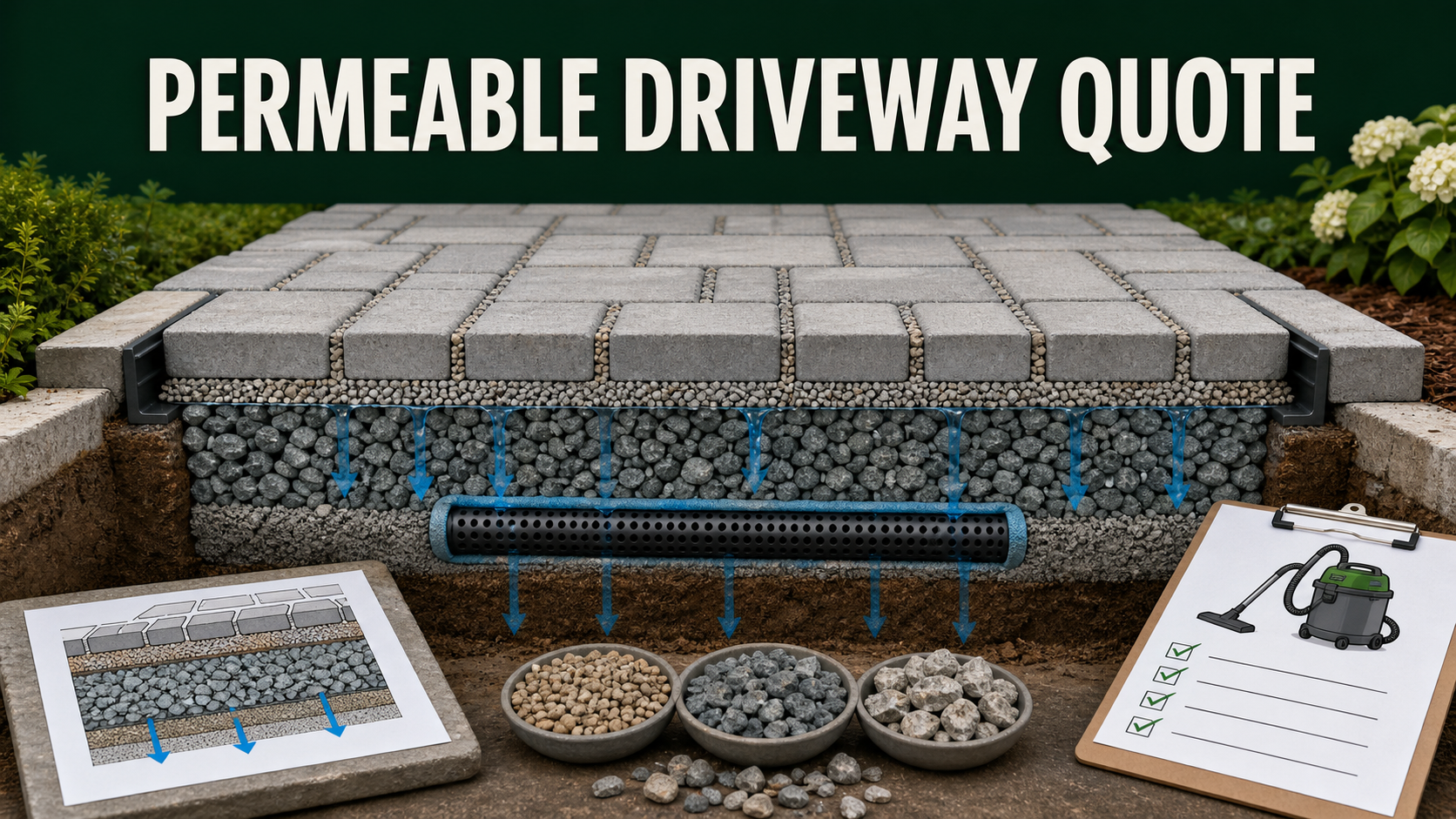
Permeable interlocking concrete pavement stores runoff in an open-graded stone reservoir and then infiltrates or drains it. FHWA guidance describes pavers, bedding, base, subbase, subgrade, edge restraint, geosynthetics and underdrain as one system. EPA and USGS sources also warn that fine sediment and winter sand can clog the surface.
Do not compare bids by paver square footage alone. Normalize drainage area, storm target, soil testing, groundwater, excavation depth, stone gradations, storage volume, underdrain and overflow, edge restraint, traffic load, utility crossings, erosion control, testing, maintenance and warranty.
Confirm Whether The Site Can Infiltrate Safely
The proposal should document soil borings or pits, measured infiltration where required, fill or expansive soil, seasonal high groundwater, bedrock, contamination risk, slopes, nearby foundations, wells, septic systems, retaining walls, utilities, trees and downstream conditions. One surface percolation test does not describe the whole reservoir.
State whether the design is full infiltration, partial infiltration with an underdrain, or no infiltration with a liner and controlled outlet. The selected approach should match local stormwater rules and protect adjacent property and structures from subsurface water.
Size Runoff Storage And Safe Overflow
Identify the driveway area plus any roof, walk or impervious area draining onto it, the design rainfall or storage criterion, void ratios, drawdown target, contributing slopes, pretreatment and emergency overflow path. Extra run-on can overwhelm a system sized only for its own surface.
Show underdrain size, elevation, slope, cleanouts, outlet, backflow or freeze considerations, and connection approval. Overflow should discharge safely without eroding soil, entering the building or burdening a neighbor.
Specify Excavation And Open-Graded Layers
List excavation limits, unsuitable-soil contingency, disposal, subgrade protection from compaction and smearing, stabilization, geotextile or liner purpose, and layer-by-layer elevations. Sediment-laden construction traffic should not cross the finished infiltration area.
Name aggregate source and gradation for subbase reservoir, base and bedding, required cleanliness and angularity, compacted thickness, placement lifts and compaction method. Dense-graded stone or material with excess fines can defeat storage and infiltration.
Define Pavers, Joints, And Edge Restraint
Specify vehicular-rated paver dimensions, thickness, strength, finish, color range, pattern, lot blending, spare units, bedding thickness, joint opening and the exact permeable joint aggregate. Do not fill openings with polymeric sand unless the approved system specifically permits it.
Show concrete curb or other edge restraint, haunch, driveway apron, garage threshold, sidewalk, utility cover, drainage structure and transition details. Elevations should prevent runoff from bypassing the surface or water from entering the garage.
Protect The System During Construction
Require upstream erosion and sediment controls, covered aggregate, clean equipment, staged excavation, proof of utilities, protection from muddy tires and stockpiles, and delayed connection of dirty runoff. EPA guidance emphasizes preventing sediment from entering the base during construction.
Inspection hold points should occur at subgrade, geosynthetic or liner, underdrain, each stone layer, bedding, edge restraint and finished joints. Capture measurements and photographs before each layer is concealed.
Test Infiltration And Fund Maintenance
Acceptance should include surface elevations, drainage and overflow observation, paver alignment, joint fill, edge stability, proof-rolling or specified load check, and an agreed surface-infiltration test after final cleaning. Record a baseline so future decline can be measured.
Provide vacuum-cleaning method and interval, joint-aggregate replenishment, inspection after storms, sediment-source correction, winter plowing and deicer guidance, prohibition or limits on sand, repair procedure, contractor response, and warranty distinctions for settlement, pavers, drainage and infiltration.
Normalize Permeable Driveway Proposals
Normalize Hydrology
Use One Site Record
Compare soil, infiltration, groundwater, slope, utilities, setbacks, contamination and structure risks.
Use One Runoff Target
Apply the same contributing area, design storm, storage, drawdown, underdrain and overflow assumptions.
Normalize The Section
Use One Layer Table
Record subgrade, geotextile or liner, underdrain, subbase, base, bedding, pavers, joints and edges.
Use One Material Standard
Compare aggregate gradations, cleanliness, thickness, compaction, paver rating and spare units.
Normalize Performance
Use One Acceptance Test
Require elevations, overflow, alignment, joints, edges, cleaning, infiltration and as-built photos.
Use One Maintenance Plan
Compare vacuuming, winter care, joint refill, sediment control, testing and warranty response.
Permeable Paver Driveway Quote Comparison Table
| Quote area | What to confirm | Why it matters |
|---|---|---|
| Site | Soil, infiltration, groundwater, slope, utilities, setbacks | Determines whether infiltration is safe |
| Hydrology | Drainage area, storm target, storage, drawdown, overflow | Sizes the system for actual runoff |
| Outlet | Full, partial or no infiltration, drain, cleanout, connection | Controls water that cannot infiltrate |
| Stone layers | Gradation, cleanliness, voids, thickness, lifts, compaction | Provides storage and structural capacity |
| Surface | Paver rating, pattern, joint width, aggregate, spare units | Maintains traffic support and permeability |
| Edges | Curb, apron, garage, walks, covers, transitions, elevations | Prevents spreading and bypass flow |
| Acceptance | Hold points, photos, alignment, overflow, infiltration baseline | Verifies concealed and finished work |
| Maintenance | Vacuum, joint refill, sediment, winter care, retesting | Preserves long-term infiltration |
Questions To Ask Before Approval
- What soil, infiltration, groundwater and setback evidence supports this design?
- Is the system full, partial or no infiltration, and why?
- Which areas drain to the driveway and what storm volume is stored?
- Where does overflow go if the reservoir fills?
- What underdrain, outlet, cleanout or liner is included?
- Which aggregate gradations, clean-fines limits and thicknesses are specified?
- How is the subgrade protected from sediment and compaction?
- Which vehicular paver, joint aggregate and edge restraint are included?
- What hold points and concealed-work photos are required?
- How will finished infiltration and drainage be tested?
- What vacuum and winter-maintenance schedule applies?
- How do settlement, paver, drainage and infiltration warranties differ?
Red Flags In This Quote
The quote calls ordinary pavers permeable but uses dense base and sand-filled joints.
No soil, groundwater, runoff-volume, overflow, or building-setback review supports the design.
Muddy construction traffic can cross the exposed subgrade or open-graded stone.
The proposal omits edge restraint, garage threshold, underdrain cleanouts, or utility transitions.
There is no baseline infiltration test, vacuum plan, winter-sand restriction, or clogging response.
Primary References & Homeowner Resources
- FHWA: Permeable Interlocking Concrete Pavement TechBrief
- EPA: Stormwater BMP Permeable Pavements
- EPA: Green Infrastructure Installation And Maintenance
- USGS: Benefits And Concerns Of Permeable Pavement
FAQ
Are permeable pavers themselves porous?
In many interlocking systems, water passes through aggregate-filled openings between solid pavers into open-graded layers below. The complete section creates permeability.
Does every permeable driveway infiltrate into soil?
No. Designs may fully infiltrate, partially infiltrate with an underdrain, or use a liner and controlled outlet where soil, groundwater, contamination or structures make infiltration unsuitable.
Why are clean open-graded aggregates important?
Their connected voids store and move water while supporting loads. Excess fines can clog voids and reduce both storage and infiltration.
Can permeable pavers handle vehicles?
Yes when the pavers, layer thicknesses, aggregate, edge restraint and subgrade design are selected for vehicle loads and installed correctly.
How is a permeable driveway maintained?
Regularly remove sediment and organic debris, vacuum the surface using the specified method, replenish joint aggregate, correct sediment sources, inspect drainage and follow winter-care limits.
What should final testing show?
Verify elevations, overflow, edge stability, paver and joint condition, as-built layer evidence, drainage operation and a baseline surface-infiltration rate after final cleaning.
Related Contractor Guides
- Paver Driveway Installation Quote
- Driveway Drainage Repair Quote
- Landscape Grading Quote Checklist
- French Drain Installation Quote
A permeable driveway is a stormwater structure beneath a driving surface; approve the bid only when both the pavement section and the water path are designed, inspected, and maintainable.