
Short answer: Approve a termite damage repair quote only after it separates active-infestation control from structural repair, identifies how hidden damage will be exposed and documented, defines the framing and finish scope, corrects moisture or wood-to-soil conditions, and explains treatment and workmanship warranties.
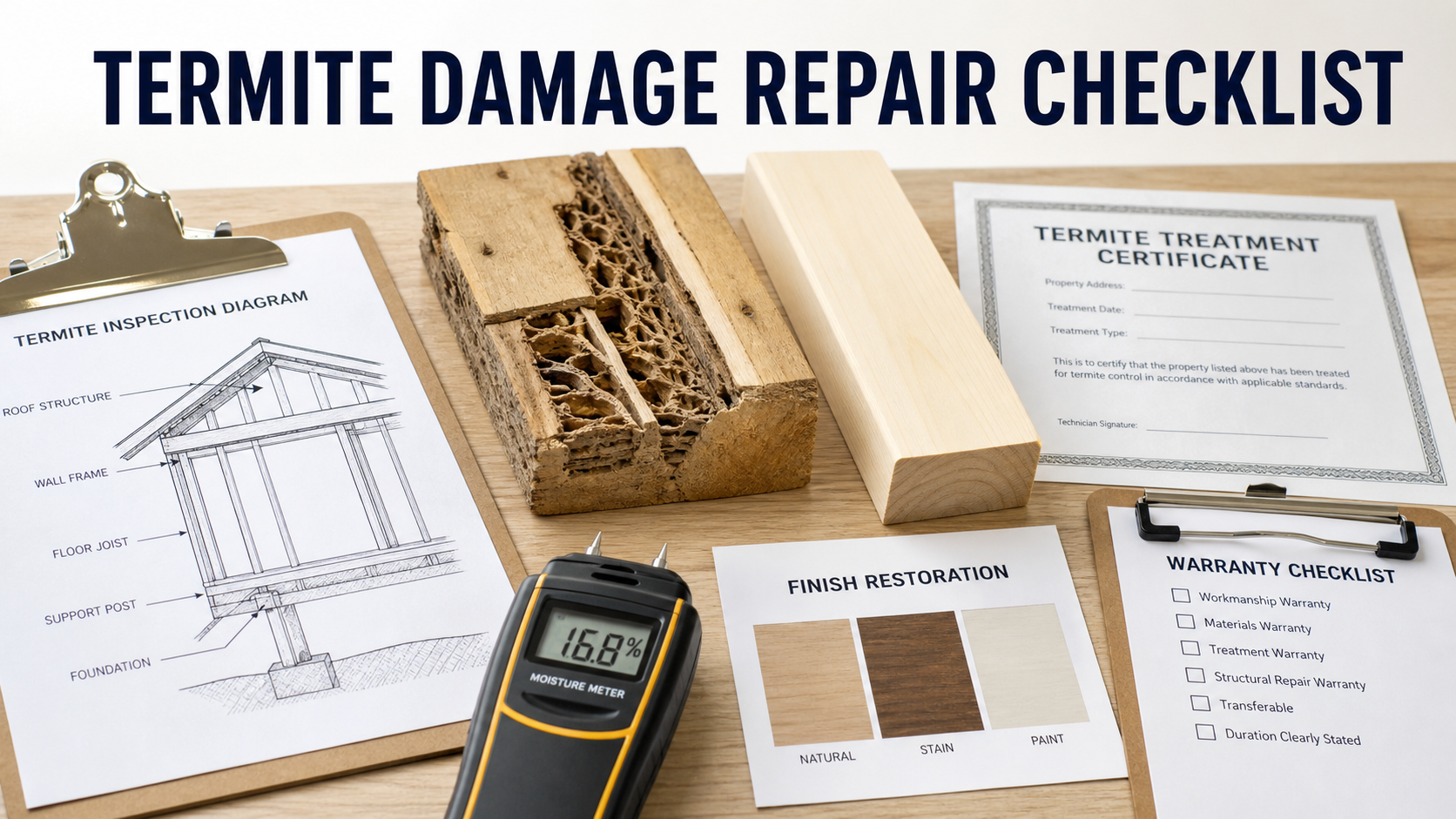
A treatment proposal and a repair proposal solve different problems. Termiticide or bait work addresses the infestation, while damaged joists, sill plates, studs, subfloors, trim, or other wood may need a separate structural assessment and repair contract.
Do not let a low treatment price imply that damaged wood is included. Compare inspection evidence, repair boundaries, access work, licensed pest-control duties, structural design, moisture correction, and finish restoration as separate line items.
Confirm Evidence And Current Activity
Ask for a diagram showing observed activity, mud tubes, damaged members, moisture conditions, and inaccessible areas. USDA Forest Products Laboratory guidance notes that termites can consume the inside of wood while leaving an outer shell, so a surface that looks intact may not prove sound framing.
The quote should say who determines whether activity is current and whether treatment must occur before, during, or after demolition. Record any areas that cannot be assessed until finishes are removed.
Separate Pest Treatment From Building Repair
The pest-control scope should name the treatment method, target areas, product-label documents when chemicals are used, reentry instructions, inspection schedule, and treatment warranty. EPA advises homeowners to verify state licensing and read the pesticide label for termite use.
The repair scope should name the contractor responsible for removing finishes, supporting loads, replacing or reinforcing wood, coordinating inspections, and restoring the area. If two companies are involved, the contract should define their handoff and documentation.
Plan For Concealed Damage
Termite paths may extend beyond the first visible board. The quote should define an initial opening, photo or probe documentation, stop-work point, and approval process before the crew enlarges the repair.
Use unit prices only where the unit is measurable, such as a joist length, sill section, subfloor area, or finish patch. Open-ended time and materials without a notification threshold makes the homeowner carry every unknown without control.
Protect The Structural Load Path
If damaged wood carries floor, wall, or roof loads, the repair needs a defined support sequence and, when required, qualified structural design. The quote should list sistering, replacement, splices, posts, connectors, bearing, fasteners, and temporary shoring rather than saying repair framing as needed.
Ask how the crew will verify sound material at each end of a repair. Cosmetic filler or surface patching is not a substitute for restoring capacity in a damaged structural member.
Correct Conditions That Invite Reinfestation
EPA and USDA homeowner guidance emphasize moisture control and reducing wood contact with soil. The quote should address leaks, drainage, crawl-space moisture, grade clearance, wood debris, and access points that are part of the observed condition.
Do not accept a broad promise that treatment prevents all future damage. Record the homeowner maintenance duties, inspection cadence, excluded moisture repairs, and actions that can void a treatment warranty.
Define Finish Restoration And Closeout
List drywall, insulation, trim, flooring, paint, siding, cabinetry, and other finishes removed for inspection or repair. The contract should show whether the finish is restored to a stated boundary or left open for another trade.
Before final payment, collect treatment records, product labels or service documents, repair photos, inspection approvals when required, moisture corrections, warranty terms, and a map of repaired and monitored areas.
Termite Damage Quote Scope Comparison
| Quote area | What to confirm | Why it matters |
|---|---|---|
| Inspection evidence | Activity map, damage locations, moisture readings, photos, and inaccessible areas | Defines what is known before finishes are opened |
| Pest control | Licensed provider, method, label documents, reentry, follow-up, and treatment warranty | Separates infestation control from carpentry repair |
| Concealed damage | Opening limit, stop-work notice, documentation, measurable units, and approval | Controls expansion after hidden damage is found |
| Structural repair | Shoring, member replacement or reinforcement, connectors, bearing, and design | Restores capacity instead of covering damaged wood |
| Moisture and access | Leaks, drainage, soil clearance, crawl-space conditions, and wood debris | Addresses conditions linked to termite access and wood deterioration |
| Closeout | Treatment record, repair photos, finish restoration, inspections, and warranties | Creates a usable record for future monitoring or claims |
Questions To Ask Before Approval
- Is the infestation active, and what evidence supports that conclusion?
- Which company handles treatment and which handles structural repair?
- What areas must be opened before the full damage boundary is known?
- How are additional damaged members measured, documented, and approved?
- Does any repair need temporary support or structural design?
- Which moisture, drainage, or wood-to-soil conditions are corrected?
- What inspections, records, and warranties are delivered at closeout?
Red Flags In This Quote
A proposal that combines treatment and structural repair into one vague line makes it impossible to see which problem is actually covered.
A contractor who plans to close walls before documenting repaired members and treatment access removes the evidence needed for inspection and future monitoring.
A lifetime warranty claim without inspection fees, exclusions, transfer rules, moisture duties, and structural-damage terms is not a complete warranty.
Source Links
- EPA termite identification and control guidance
- EPA tips for selecting a pest control service
- USDA Forest Products Laboratory termite detection guide
FAQ
Does termite treatment repair damaged wood?
No. Treatment controls or helps prevent infestation according to its scope. Damaged structural or finish materials need a separately defined repair assessment and contract.
Why can the repair scope grow after walls are opened?
Termites may consume interior wood while leaving a thin outer surface. The contract should anticipate concealed damage with a documented stop point and written approval process.
Who should decide whether a damaged member is structural?
Use a qualified professional appropriate to the member and local requirements. The quote should identify that responsibility instead of leaving it to an undefined field judgment.
What should a termite treatment warranty explain?
It should state treatment coverage, inspection schedule and fees, retreatment terms, structural-damage responsibility if any, exclusions, transfer rules, and homeowner maintenance duties.
What records should I keep after the work?
Keep the inspection diagram, photos, treatment documents, pesticide labels or service records, repair scope, change orders, inspection approvals, moisture corrections, payment receipts, and both treatment and workmanship warranties.
Related Contractor Quote Guide Guides
- Pest control treatment quote checklist
- Floor joist repair quote checklist
- Crawl space encapsulation quote checklist
A termite repair quote is complete when it proves where activity and damage were found, separates treatment from structural work, controls concealed conditions, and leaves a record for future inspections.