
Approve a mold remediation quote only after it identifies the moisture source, affected materials, containment plan, removal method, drying verification, post-remediation documentation, rebuild exclusions, and warranty limits in writing.
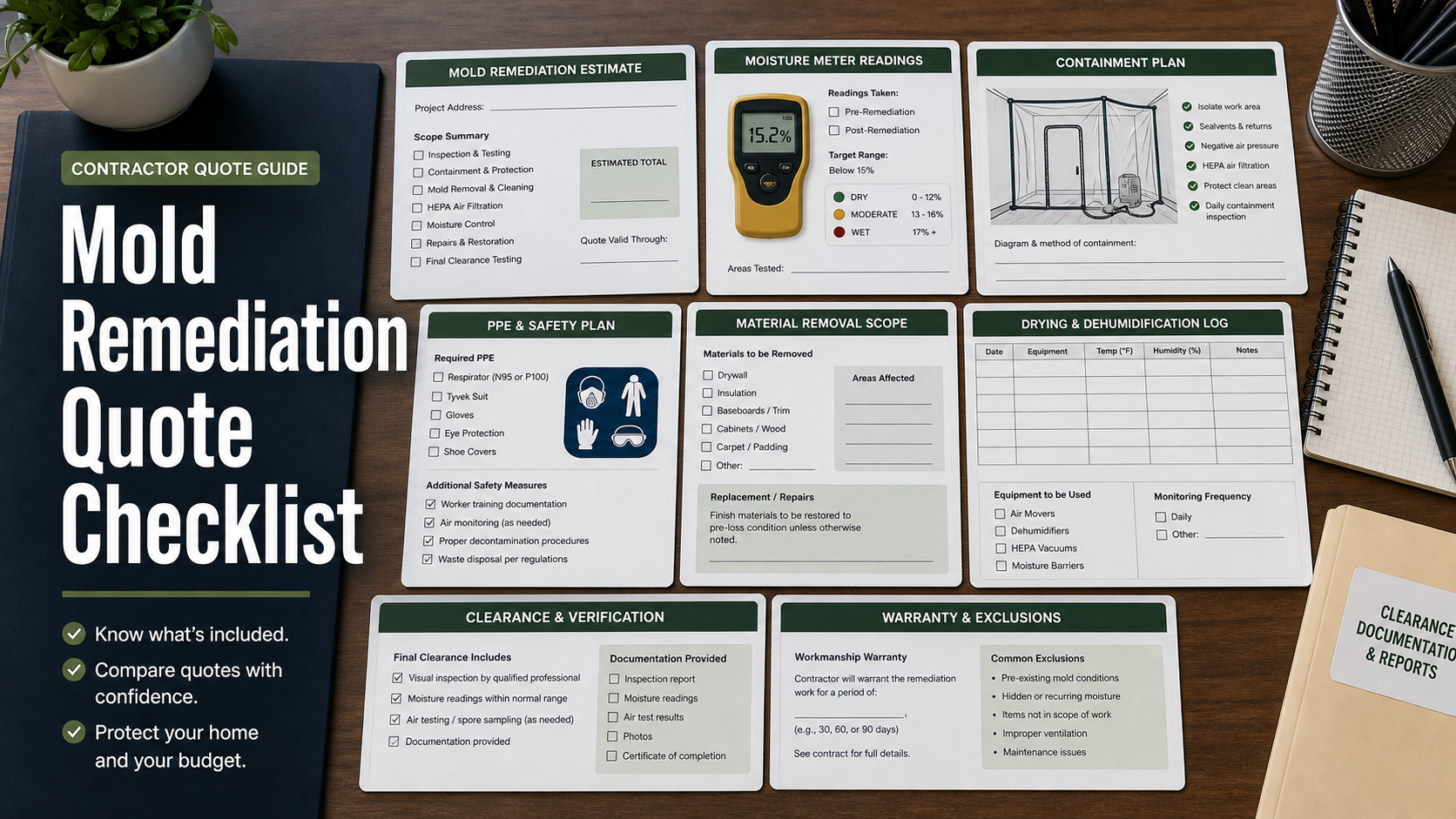
Mold remediation is not the same as wiping a stain. The quote should explain why mold appeared, what will be removed, what will be cleaned, how the work area will be isolated, and how the contractor will show the area is dry enough to close back up.
EPA guidance treats moisture control as the core issue: if the water problem is not corrected, mold can return. CDC cleanup guidance also emphasizes protective equipment and cautions around breathing mold or dust during cleanup. For a homeowner, that means the cheapest bid is not useful unless it also names the leak, humidity, condensation, or ventilation failure that fed the growth.
Start With The Moisture Source
The estimate should say whether the mold is tied to a roof leak, plumbing leak, basement seepage, crawl space moisture, HVAC condensation, bath fan failure, flooding, or indoor humidity. If the contractor cannot identify the moisture source, the quote should say what diagnostic work is included before remediation begins.
Ask for photos, moisture readings, affected-room notes, and a written boundary of the work area. “Treat visible mold” is too vague for a finished wall, attic, basement, or crawl space.
Separate Removal, Cleaning, And Rebuild
A strong mold quote separates contaminated material removal from cleaning and from reconstruction. Drywall removal, insulation removal, carpet disposal, framing cleaning, HEPA vacuuming, antimicrobial application, drying, and rebuild should not be bundled into one unclear line item.
Rebuild is where disputes often appear. The quote should state whether it includes new drywall, insulation, trim, paint, flooring, cabinets, plumbing access repair, or only remediation and disposal.
Confirm Containment And Air Control
The contractor should describe containment before demolition starts. Look for plastic barriers, sealed openings, negative air where appropriate, HEPA-filtered equipment, dust control, and a plan for protecting clean areas of the home.
OSHA’s mold information is workplace-focused, but it is still a useful reminder that mold cleanup can create exposure risks. In a home estimate, PPE, worker protection, and occupant separation should be part of the written work method, especially when demolition is involved.
Ask For Drying And Verification Records
The quote should say how drying will be measured. Ask whether moisture readings, drying logs, photos, or a final condition report are included. If third-party post-remediation verification or clearance testing is recommended, the bid should identify who orders it, who pays for it, and what happens if the area fails.
Be careful with a quote that promises “mold free forever.” A contractor can remediate a defined area and correct listed conditions, but future leaks, humidity, or hidden water entry can restart the problem.
Mold Remediation Quote Review Table
| Quote area | What to confirm | Why it matters |
|---|---|---|
| Moisture source | Leak, seepage, condensation, humidity, or ventilation issue | Mold can return if the water problem remains. |
| Scope boundary | Rooms, walls, cavities, attic, basement, or crawl space included | The contractor should not improvise the work area later. |
| Removal | Drywall, insulation, carpet, cabinets, or damaged materials | Disposal labor and rebuild costs depend on removal depth. |
| Containment | Barriers, HEPA equipment, dust control, occupant separation | Demolition can spread dust if containment is weak. |
| Documentation | Moisture logs, photos, final report, third-party verification | Records help prove what was done before repairs close the wall. |
Questions To Ask Before Approval
- What moisture source caused or supported the mold growth?
- Is the moisture repair included, or must another contractor handle it?
- Which rooms, cavities, surfaces, and materials are included?
- What will be removed, cleaned, dried, sealed, or left in place?
- How will clean areas be protected from dust and debris?
- What PPE and occupant-safety steps are included?
- Will the contractor provide photos, moisture readings, and a final report?
- Is third-party clearance testing included, optional, or excluded?
- Does the price include rebuild, or only remediation?
Red Flags In A Mold Remediation Estimate
- The quote does not identify the moisture source.
- The contractor prices “spray treatment” without removal or drying detail.
- Containment, HEPA filtration, and dust control are not mentioned.
- Rebuild is assumed verbally but missing from the written scope.
- The warranty ignores future leaks, humidity, or hidden water entry.
- The contractor asks for a large upfront payment before defining the work.
Quote check: a mold remediation price should read like a controlled work plan, not a stain-cleaning receipt. The written scope needs diagnosis, containment, removal, drying, verification, and clear exclusions.
Codes, Agencies & Technical Sources
- EPA: A Brief Guide to Mold, Moisture and Your Home
- EPA: Mold Cleanup in Your Home
- CDC: Mold Cleanup
- OSHA: Mold
- FTC: How to Avoid a Home Improvement Scam
FAQ
Should a mold remediation quote include leak repair?
It should at least identify whether leak repair is included or excluded. If the moisture source remains, remediation may not hold.
Is spraying mold enough?
Usually the quote needs more detail than spraying. Ask what contaminated materials will be removed, what surfaces will be cleaned, and how the area will be dried and documented.
Who pays for mold clearance testing?
The quote should say whether post-remediation verification is included, optional, third-party only, or excluded. It should also say what happens if the area does not pass.
Can mold remediation include reconstruction?
Yes, but only if the quote says so. Drywall, insulation, trim, flooring, and paint are often separate from remediation.
What documentation should I ask for?
Ask for before-and-after photos, moisture readings, a disposal summary when materials are removed, and a final work report that matches the written scope.