
Short answer: Before approving a rain garden installation quote, confirm the runoff source, soil infiltration test, basin size and depth, overflow path, plant list, mulch and soil amendments, utility locating, permit or rebate requirements, maintenance plan, and warranty for plant establishment and drainage performance.
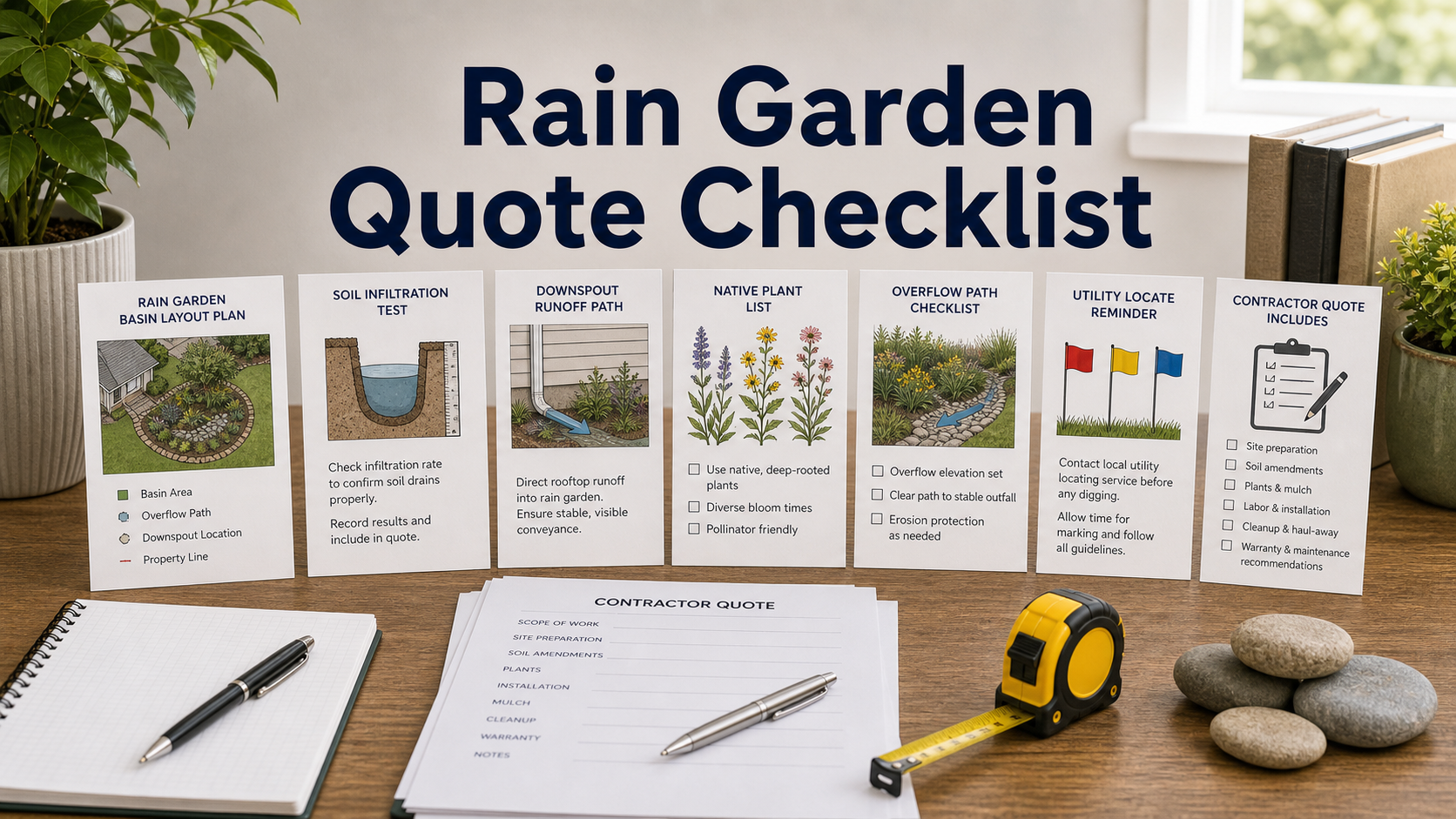
A rain garden is a stormwater feature, not just a planted bed in a low spot. The quote should explain how runoff will enter, soak in, overflow safely, and be maintained so the project manages water instead of creating a soggy landscape problem.
The cheapest rain garden quote may skip infiltration testing, overflow design, downspout connection details, soil amendments, native plant sizing, mulch, first-season watering, utility locating, or permit and rebate documentation.
Start With Runoff Source And Basin Sizing
Ask what runoff the rain garden is designed to receive: roof downspout, driveway edge, patio, yard low point, or a combination. EPA rain garden guidance emphasizes using rain gardens to capture runoff, so the quote should connect the garden to a specific water source rather than a decorative location.
The contractor should explain basin size, depth, side slopes, inlet path, and distance from the foundation. If the garden is undersized or placed too close to the house, it may create the water problem it was meant to solve.
Require Soil And Infiltration Checks
A rain garden depends on soil that drains at an appropriate pace. Ask whether the quote includes an infiltration test, soil texture review, or amendment plan before final design. Clay-heavy or compacted soil may require a different approach.
If the contractor says the soil is fine without testing, ask what observation supports that assumption. A written assumption helps compare quotes and warranty exclusions later.
Define Overflow Before Digging
Every rain garden needs a safe overflow path for storms that exceed design capacity. The quote should show where overflow goes, how it avoids the foundation and neighboring property, and whether rock, swale, drain inlet, or surface grading is included.
NRCS and extension-style rain garden resources often emphasize site selection and drainage behavior. In a contractor quote, that means overflow should be a line item, not an afterthought.
Check Plants, Mulch, And Establishment Care
Ask for a plant list with quantities, sizes, substitutions, sun and moisture zones, deer or salt tolerance if relevant, and whether native plants are prioritized. The quote should also include mulch type, edging, soil amendments, and watering needs after installation.
Plant warranty is only useful if the care requirements are clear. Ask what watering, weeding, and replacement terms apply during the first season.
Include Utilities, Permits, And Maintenance
Because rain gardens involve excavation, confirm who contacts 811 and who marks private irrigation, lighting, drainage, or invisible pet fence lines. If the project connects downspouts or changes grading, ask about permits, HOA approval, or municipal stormwater rebate paperwork.
The quote should end with a maintenance handoff: sediment removal, mulch refresh, weeding, inlet clearing, overflow inspection, and what to do if water stands longer than expected.
Rain Garden Quote Items To Confirm
| Quote area | What to confirm | Why it matters |
|---|---|---|
| Runoff source | Downspout, driveway, patio, or yard runoff area identified | Design starts with the amount and path of water entering the garden. |
| Sizing | Basin area, depth, side slopes, and setback assumptions listed | Improper sizing can cause ponding or foundation risk. |
| Soil test | Infiltration, compaction, or soil texture check included | Rain gardens need soil that drains at a suitable rate. |
| Overflow | Safe overflow path and erosion control described | Large storms need a controlled route away from structures. |
| Plants | Plant list, sizes, quantities, substitutions, and zones included | Plant selection affects survival and maintenance. |
| Utilities | 811 and private utility marking responsibility assigned | Excavation can affect buried lines and irrigation. |
| Approvals | Permit, HOA, or stormwater rebate documentation assigned | Some projects need paperwork or inspection to qualify for credits. |
| Maintenance | Watering, weeding, sediment, mulch, and plant warranty terms written | First-season care determines whether the garden succeeds. |
Questions To Ask Before Approval
- What runoff source is this rain garden designed to receive?
- What soil or infiltration test is included before final sizing?
- Where will overflow go during storms larger than the garden can hold?
- What native plants, sizes, quantities, mulch, and substitutions are included?
- Who contacts 811 and checks permits, HOA rules, or stormwater rebate requirements?
- What maintenance and plant replacement warranty applies during the first season?
Red Flags In This Quote
The quote sells a planted bed but does not identify the runoff source, infiltration rate, or overflow path.
The rain garden is placed near the foundation without setback or drainage explanation.
Plant selection is vague, with no quantities, sizes, moisture zones, or maintenance plan.
Excavation begins without utility locating or private irrigation and drainage line review.
Source Links
- EPA rain garden stormwater information
- USDA NRCS backyard conservation rain gardens
- Call 811 before digging
FAQ
Should a rain garden quote include a soil test?
Yes, the quote should address infiltration or soil suitability. Without that, the garden may hold water too long or fail to manage runoff as intended.
Why does overflow matter?
Rain gardens are designed for typical storms, not unlimited water. A safe overflow path protects the house, neighbors, and landscape during larger storms.
Are native plants required?
Requirements vary, but native or well-adapted plants are often preferred for stormwater landscapes. Ask for plant names, quantities, sizes, substitutions, and care needs.
Can a rain garden go next to the foundation?
Be careful. The quote should state setback assumptions and explain how water is kept away from the foundation, basement, and neighboring property.
Do rain gardens need maintenance?
Yes. Ask about first-season watering, weeding, mulch refresh, sediment removal, inlet clearing, and what standing water means after storms.
Should permits or rebates be part of the quote?
If your area offers stormwater credits or requires approvals, the quote should assign paperwork, inspection, and documentation responsibilities.
Related Contractor Quote Guide Guides
- Yard Drainage System Quote Checklist Before Trenching
- Window Well Drainage Repair Quote Checklist Before Digging
- Patio Paver Installation Quote Checklist Before Approval
A rain garden quote is complete only when it explains the runoff source, soil test, basin size, overflow path, planting plan, utility locating, maintenance, and warranty before digging starts.