
Short answer: Approve a yard drainage system quote only after it defines the water problem, grading plan, collection points, pipe or drain materials, discharge path, utility locating, soil and landscape restoration, maintenance access, and exclusions for downstream drainage limits.
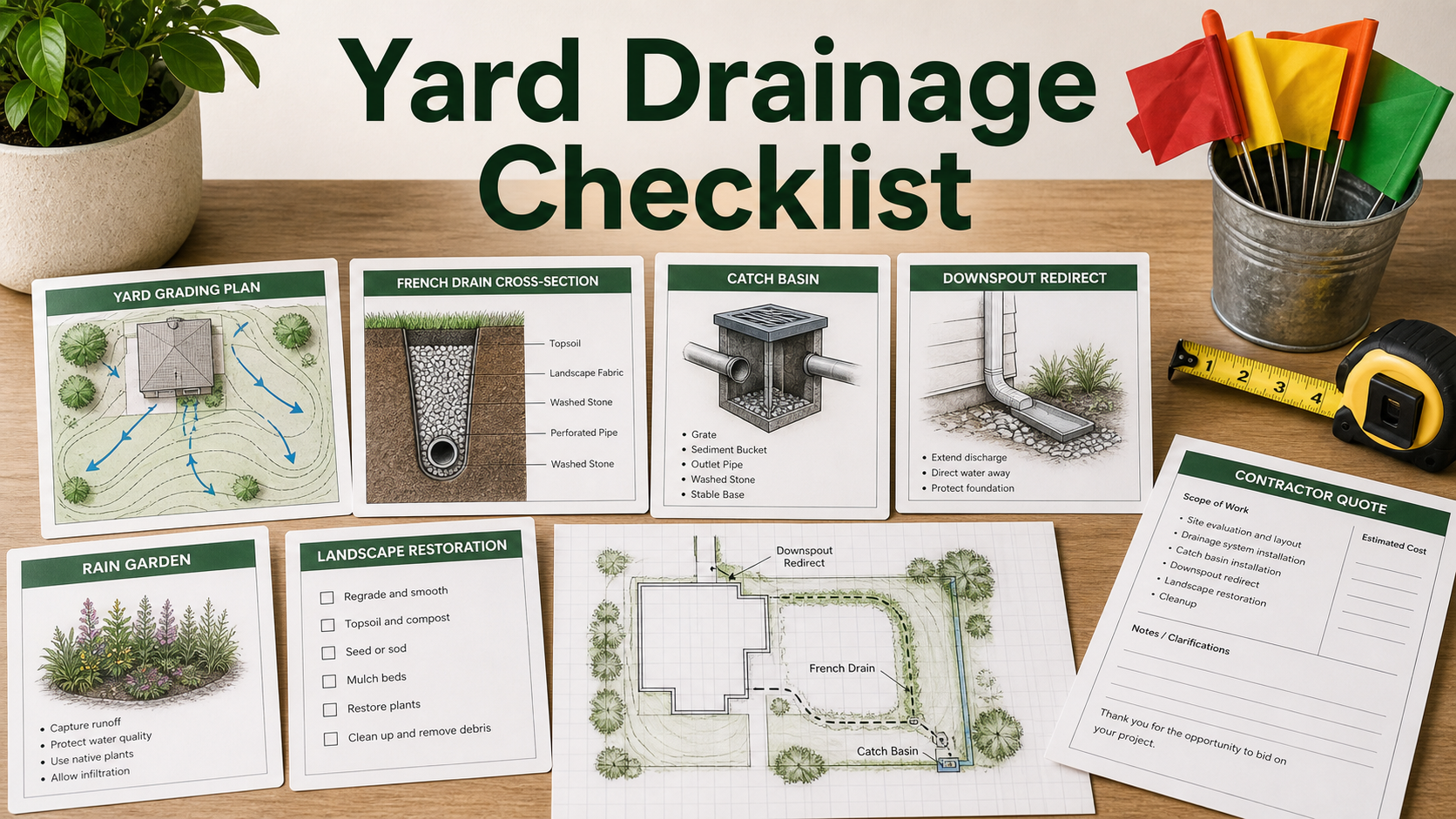
Yard drainage work can solve soggy lawns, foundation-adjacent water, downspout pooling, and erosion, but only when the quote explains the entire water path. A trench without a good discharge plan can simply relocate the problem.
Do not compare drainage quotes by trench length alone. One bid may include grading, stone, fabric, cleanouts, outlet protection, and landscaping while another only prices pipe in the ground.
Define The Water Problem
Ask the contractor to describe the problem area, likely water source, and goal of the system. Downspouts, slope, clay soil, neighbor runoff, hardscape, and low spots may require different answers.
The quote should say whether the system is meant to collect surface water, move downspout water, relieve soil saturation, or protect the foundation area.
Map Collection And Discharge
A useful quote shows collection points, drain route, slope, outlet, and where water will safely leave the system. The discharge point should not create a new problem for the house, sidewalk, neighbor, or street.
Ask whether local rules limit discharge to sidewalks, streets, storm systems, swales, or neighboring property.
Review Drain Materials And Access
The bid should name pipe type, pipe size, gravel or stone, filter fabric, catch basins, grates, downspout adapters, cleanouts, and outlet protection. These details make the system maintainable.
Maintenance access matters. A buried system with no cleanout can be difficult to diagnose when leaves, silt, or roots create a clog.
Confirm Trenching And Utility Locating
Drainage trenches may cross irrigation, lighting, internet, gas, electric, or other buried lines. The quote should identify public utility marking and any private-line locating exclusions.
Ask about trench depth, spoil handling, temporary lawn protection, equipment access, and whether work is hand-dug near sensitive areas.
Define Yard Restoration
Restoration should identify topsoil, grading, seed, sod, mulch, plant reset, irrigation repair, and cleanup. The final yard condition should be described in writing.
If soil settlement is likely, ask whether follow-up topping or touch-up grading is included or excluded.
Yard Drainage Quote Items To Confirm
| Quote area | What to confirm | Why it matters |
|---|---|---|
| Problem | Pooling, downspout runoff, erosion, foundation water, or soggy soil | The repair should match the water source |
| Route | Collection points, pipe path, slope, discharge point, and outlet protection | Drainage must move water to an acceptable place |
| Materials | Pipe, stone, fabric, basins, grates, adapters, and cleanouts | Shows system quality and maintenance access |
| Trenching | Utility locating, depth, access, spoil handling, and protection | Controls excavation risk and disruption |
| Restoration | Topsoil, seed, sod, mulch, irrigation, plants, and cleanup | Defines the finished yard condition |
Questions To Ask Before Approval
- What water problem is this system designed to solve?
- Where will water discharge?
- Are local drainage rules or approvals involved?
- What pipe, stone, fabric, basins, and cleanouts are included?
- Who handles utility locating and private buried lines?
- How will lawn and landscaping be restored?
- What maintenance access is included after installation?
Red Flags In This Quote
A drainage quote without a discharge point is incomplete.
A bid that names pipe but not stone, fabric, cleanouts, or outlet protection may be hard to maintain.
A contractor who excludes restoration without describing the final yard condition leaves a major cost open.
Source Links
FAQ
What should a yard drainage quote include?
It should include water source, collection points, route, discharge point, materials, trenching, utility locating, restoration, and maintenance access.
Is a French drain always the answer?
No. The right approach depends on surface water, soil saturation, downspouts, grading, hardscape, and where water can legally discharge.
Why does the discharge point matter?
A system that collects water but sends it to a bad location can create new flooding, erosion, or neighbor problems.
Should cleanouts be included?
Often yes, when the system uses buried pipe. Cleanouts make maintenance and troubleshooting easier.
What restoration details are easy to miss?
Seed, sod, mulch, plants, topsoil, irrigation, settlement touch-up, and final grading are common areas to clarify.
Related Contractor Quote Guide Guides
- Driveway drainage repair quote checklist
- Retaining wall repair quote checklist
- Rain garden installation quote checklist
A yard drainage quote is not ready until the water path, dig path, and restoration path are all written down.
Document what happens after approval
For Yard Drainage System Quote Checklist Before Trenching, name who owns setup or mobilization, exception handling, acceptance, documentation, support, and future warranty or renewal questions. Match the written scope to the property, local authority, product instructions, access, cleanup, warranty, and change-order process.
Keep the final scope, approved changes, evidence, and contact path together so the decision can be reconstructed.
- Name the decision owner and approver.
- List assumptions and exclusions in writing.
- Define acceptance evidence and exception handling.
- Keep the final documents and source links together.
- Set a date to review the decision after real use.
Keep a compact approval record
Save the final scope or requirements, dated source links, written answers, accepted exceptions, named owners, and acceptance evidence in one location. Record which facts were verified directly, which statements came from a seller or provider, and which questions remain open. This record makes later corrections, support escalation, warranty review, renewal, or project closeout easier to handle without relying on memory.