
Short answer: Approve a retaining wall repair quote only after it identifies the failure cause, drainage plan, wall height and load assumptions, permit or engineering needs, demolition scope, backfill details, and final site restoration.
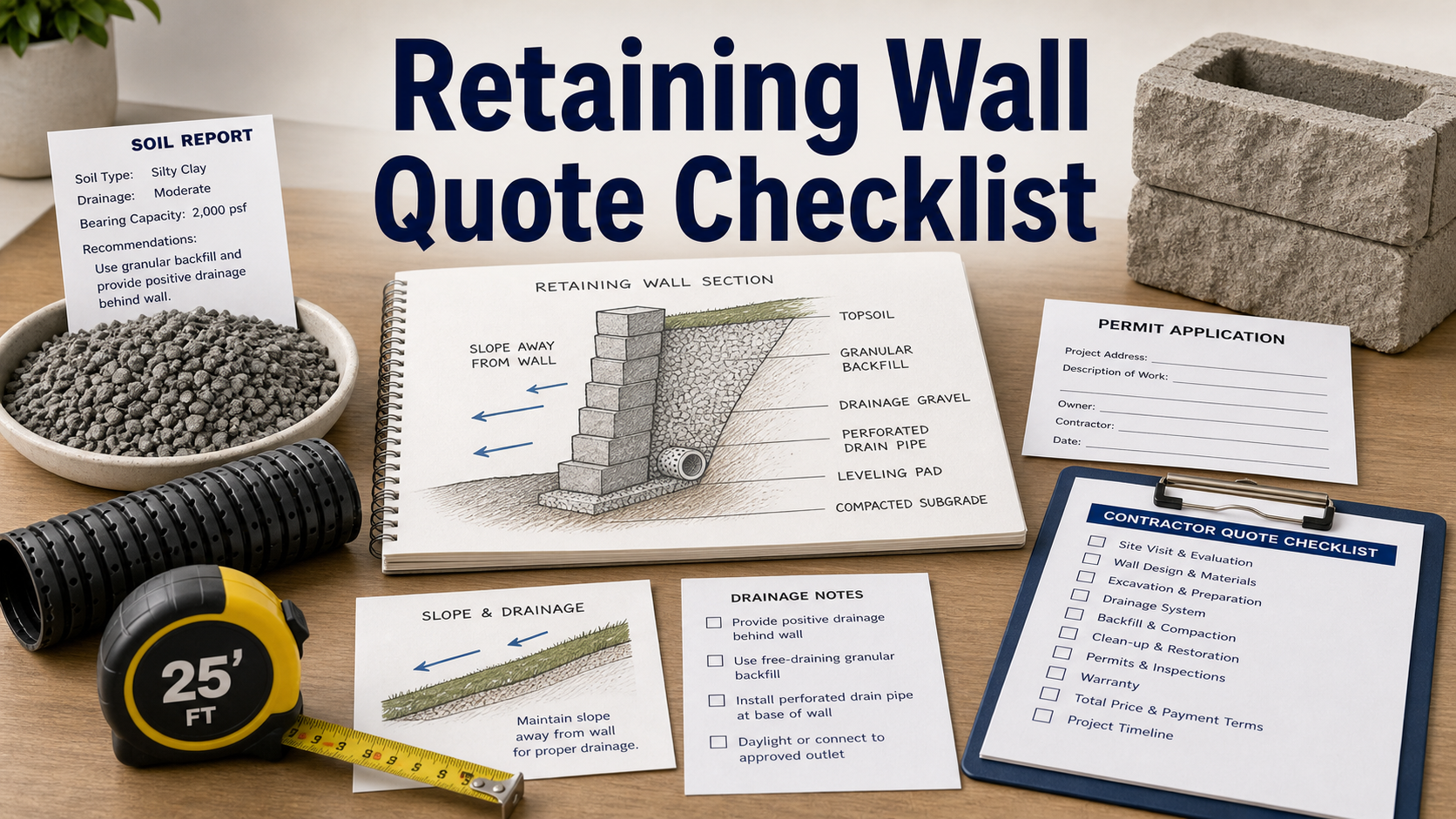
A leaning retaining wall is rarely just a cosmetic masonry job. Water pressure, poor backfill, missing drainage, slope load, tree roots, or settlement can make a simple rebuild fail again if the quote only replaces visible blocks.
Do not compare retaining wall quotes by wall length alone. One quote may include drainage stone, geogrid, engineering, permits, and restoration while another only prices block replacement.
Ask Why The Wall Failed
The quote should describe whether the wall is failing from drainage pressure, foundation movement, soil load, erosion, impact damage, root pressure, or age. If the cause is unclear, the repair scope should include investigation before rebuild.
A contractor does not need to overpromise a diagnosis, but the bid should not ignore obvious warning signs such as bulging, cracking, tilting, blocked weep holes, or water staining.
Confirm Drainage And Backfill Details
Retaining wall work should name drainage stone, filter fabric, perforated pipe, weep outlets, backfill depth, compaction approach, and where water will go. Drainage omissions can make a new wall carry the same pressure as the old one.
Ask whether the quote includes replacing saturated soil, removing clay-heavy backfill, or protecting nearby structures and landscaping during excavation.
Review Height, Load, And Engineering Triggers
Wall height, surcharge loads, slope above the wall, fences, driveways, and nearby structures can change the design. The quote should say whether engineered drawings or local review are included.
Do not rely on a verbal statement that permits are not needed. Ask the contractor to identify the local permit assumption and who is responsible if the building department requires more documentation.
Separate Demolition From Rebuild
A clear quote separates removal, disposal, excavation, temporary site protection, base preparation, wall material, drainage, backfill, cap, and cleanup. This makes hidden exclusions easier to catch.
If the contractor plans to reuse block, capstone, or drainage components, the quote should say which materials are reused and what happens if they are damaged during removal.
Define Restoration And Access
Retaining wall repairs can disturb lawns, fences, patios, irrigation, planting beds, or neighboring property lines. The quote should define equipment access and final restoration expectations.
If access is tight, ask whether hand excavation, smaller equipment, traffic protection, or neighbor coordination changes the price or schedule.
Retaining Wall Quote Items To Confirm
| Quote area | What to confirm | Why it matters |
|---|---|---|
| Failure cause | Drainage, soil load, settlement, roots, impact, or material failure | Prevents rebuilding the same problem |
| Drainage | Stone, fabric, pipe, outlets, weeps, and discharge path | Water pressure is a common wall failure driver |
| Design | Height, surcharge loads, geogrid, engineering, and permit assumptions | Shows whether the wall is being designed for actual site conditions |
| Demolition | Removal, disposal, excavation, access, and temporary protection | Makes disruption and disposal costs visible |
| Restoration | Lawn, patio, fence, irrigation, planting, and cleanup terms | Avoids a finished wall surrounded by unfinished damage |
Questions To Ask Before Approval
- What is the suspected reason the wall failed?
- Where will drainage water discharge?
- Does the wall height or slope require engineering or permits?
- Are geogrid, drainage stone, fabric, and pipe included?
- What material will be removed, reused, or disposed of?
- What property features are restored after excavation?
- What hidden conditions trigger a written change order?
Red Flags In This Quote
A retaining wall quote with no drainage detail should be treated as incomplete.
A contractor who dismisses permit or engineering questions without checking local triggers is asking you to accept undocumented risk.
A bid that excludes restoration but does not describe access damage can make the final yard repair a separate surprise.
Source Links
- FEMA homeowner flood risk resources
- EPA soak up the rain stormwater guidance
- 811 utility locating overview
FAQ
Should retaining wall quotes include drainage?
Yes. Drainage stone, fabric, pipe, weep outlets, and discharge path should be described when they apply. Missing drainage detail is a major comparison problem.
When might engineering be needed?
Engineering can depend on wall height, slope, load above the wall, nearby structures, soil conditions, and local code. Ask the contractor to state the permit and design assumption in writing.
Can I approve a quote that only replaces visible blocks?
Be cautious. If the old wall failed because of water, soil load, or base issues, replacing visible units may not address the underlying problem.
What restoration should I ask about?
Ask about lawn, patio, fence, irrigation, planting beds, access routes, neighboring property, and debris removal. These items are often excluded unless written.
What closeout records should I keep?
Keep contract scope, permit records, design drawings if used, material information, photos of drainage before backfill, warranty, and change orders.
Related Contractor Quote Guide Guides
- Yard drainage system quote checklist
- Concrete walkway repair quote checklist
- Foundation crack repair quote checklist
A retaining wall bid is stronger when it prices the wall you cannot see: drainage, soil, base, access, and restoration.