
Short answer: Authorize water damage restoration only when the quote identifies the source and safety conditions, maps wet materials, separates emergency extraction from demolition and drying, states equipment and monitoring assumptions, defines dry-out completion evidence, and clarifies mold, contents, insurance, and rebuild responsibilities.
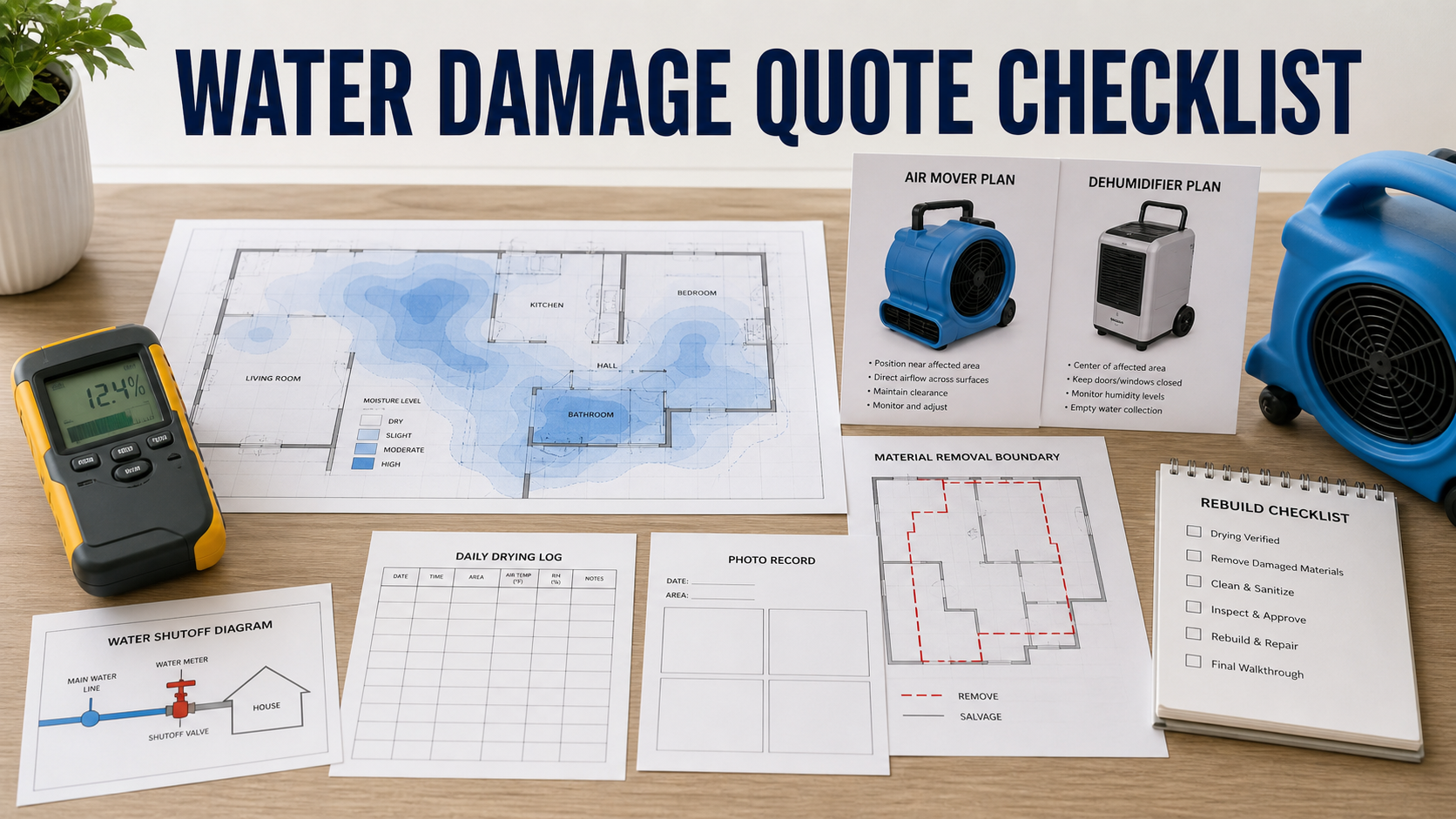
Speed matters after water intrusion, but urgency should not erase the scope. A useful emergency authorization states what the crew can do immediately and which demolition, contents handling, microbial cleanup, or reconstruction decisions require separate approval.
Do not compare only equipment-day totals. Two restoration bids may assume different removal boundaries, moisture goals, monitoring visits, containment, contents work, or rebuild handoffs, which can move substantial work outside the first estimate.
Stop The Source And Clear Safety Hazards
The quote should record the source, shutoff or repair status, affected date if known, and whether water may contain sewage or other contamination. Electrical, gas, structural, and access hazards must be addressed before ordinary drying work begins.
CDC guidance says not to energize electrical equipment while standing in water and to have flooded electrical systems checked. Ask who coordinates the plumber, electrician, utility, or other emergency trade and whether those costs are included.
Create A Moisture Map Before Demolition
Ask for a room-by-room map of wet flooring, walls, ceilings, insulation, cabinets, subfloor, framing, and contents, along with meter readings and photos. The initial map becomes the baseline for deciding what can dry in place and what must be removed.
The quote should also identify inaccessible cavities and the method used to investigate them. A broad remove all wet materials line does not explain why each boundary is necessary.
Separate Extraction, Removal, And Drying
Water extraction, controlled demolition, cleaning, equipment setup, and structural drying are separate tasks. Price them separately enough to show labor, equipment, disposal, containment, and any after-hours charge.
For each removed material, require a defined boundary and authorization. EPA notes that extensive flood cleanup may require removal of walls, insulation, flooring, or other materials, but the actual scope should follow the conditions in this home rather than a generic package.
Define Equipment And Monitoring Assumptions
The equipment plan should list air movers, dehumidifiers, filtration or containment equipment when used, power requirements, expected run time, and who pays for electricity. Ask how the crew prevents equipment placement from spreading contamination into clean areas.
Daily or scheduled monitoring should record temperature, humidity, and material readings at repeatable points. Set a notice requirement before equipment days exceed the original estimate.
Use Evidence To End The Dry-Out
CDC and EPA guidance emphasizes prompt drying and correction of the water problem to reduce mold risk. The contractor should define the comparison standard or target readings used to decide that materials are dry, not simply remove equipment when the calendar ends.
Closeout should include final readings, photographs, a list of removed materials, cleaning records, and unresolved areas. If odor, staining, or suspected mold remains, the quote should state who evaluates it and whether that work is inside the current scope.
Clarify Contents, Insurance, And Rebuild Handoff
List who moves, inventories, cleans, stores, or disposes of contents and how homeowner approval is documented. Before cleanup, CDC recommends contacting the insurer and photographing the home and belongings, so preserve evidence before discarded items leave the property when it is safe to do so.
Dry-out does not automatically include reconstruction. Identify the condition in which walls, floors, cabinets, and rooms will be left, who prepares the repair estimate, and what warranty applies to drying work versus later construction.
Water Damage Restoration Scope Comparison
| Quote area | What to confirm | Why it matters |
|---|---|---|
| Source and safety | Water source, shutoff, contamination concern, electrical or gas check, and safe access | Prevents drying work from starting before the cause and hazards are controlled |
| Moisture map | Affected materials, meter readings, photos, clean areas, and inaccessible cavities | Creates evidence for removal and drying decisions |
| Emergency work | Extraction, after-hours labor, contents moves, containment, and initial cleaning | Defines what the emergency authorization actually permits |
| Drying plan | Equipment type and count, placement, power, expected days, and monitoring visits | Controls equipment-day charges and documents progress |
| Completion | Target readings, final moisture map, photos, cleaning records, and unresolved areas | Ends the job with evidence instead of a calendar guess |
| Rebuild handoff | Removal boundaries, contents status, repair estimate, finish condition, and warranties | Shows which costs remain after the structure is dry |
Questions To Ask Before Approval
- Has the water source been stopped and documented?
- Are electrical, gas, structural, or contamination hazards cleared?
- Which materials are wet, and what readings support the map?
- What can the crew remove under the emergency authorization?
- Which equipment and monitoring visits are included, and when is extra time approved?
- What readings or evidence define successful drying?
- Who handles contents, insurer documentation, mold concerns, and reconstruction?
Red Flags In This Quote
An emergency form that authorizes unlimited demolition or equipment days without a room map, notice threshold, or completion standard gives away control of the scope.
A contractor who cannot show repeatable moisture readings cannot explain whether materials are drying or why equipment should remain.
A dry-out quote that promises a fully restored room but omits drywall, flooring, cabinets, paint, contents, or rebuild terms is mixing two different contracts.
Source Links
- CDC safety guidelines for reentering a flooded home
- EPA flood cleanup and indoor air guidance
- EPA guide to mold, moisture, and the home
FAQ
How quickly should a wet home be dried?
CDC guidance urges drying as soon as possible and commonly points to a 24-to-48-hour window for reducing mold risk when conditions allow. Safety and source control still come first.
Should the contractor remove every wet material?
Not automatically. The decision depends on the water source, material, contamination, saturation, accessibility, and ability to clean and dry it. Require a documented boundary for each removal.
What should a daily drying log contain?
It should identify the date, equipment operating status, indoor conditions, repeatable material readings, adjustments, new findings, and the technician responsible for the visit.
Is mold remediation included in water restoration?
Only if the contract says so. Drying and mold remediation may overlap, but suspected or confirmed mold, containment, removal, cleaning, testing, and warranty terms need an explicit scope.
Does the dry-out quote include rebuilding?
Often it does not. Ask exactly how rooms and materials will be left and whether reconstruction is a separate estimate, contractor, authorization, and warranty.
Related Contractor Quote Guide Guides
- Mold remediation quote checklist
- Basement waterproofing quote checklist
- Emergency plumbing quote checklist
A water restoration quote is ready to authorize when the source, wet-material map, removal boundary, drying plan, completion evidence, and rebuild handoff are all written down.