
Compare a rainwater harvesting quote by confirming state and local legality and permitted end uses, measuring catchment and seasonal demand, sizing storage with realistic rainfall and losses, screening roof and gutter materials, including leaf control and first flush, specifying a sealed accessible cistern and structural pad, routing overflow safely, protecting against mosquitoes and freezing, sizing pumps and pressure, separating potable plumbing with approved backflow control or an air gap, matching treatment and testing to the use, labeling nonpotable piping, commissioning controls, and pricing recurring cleaning and water-quality work. Stored rainwater is not automatically safe to drink.
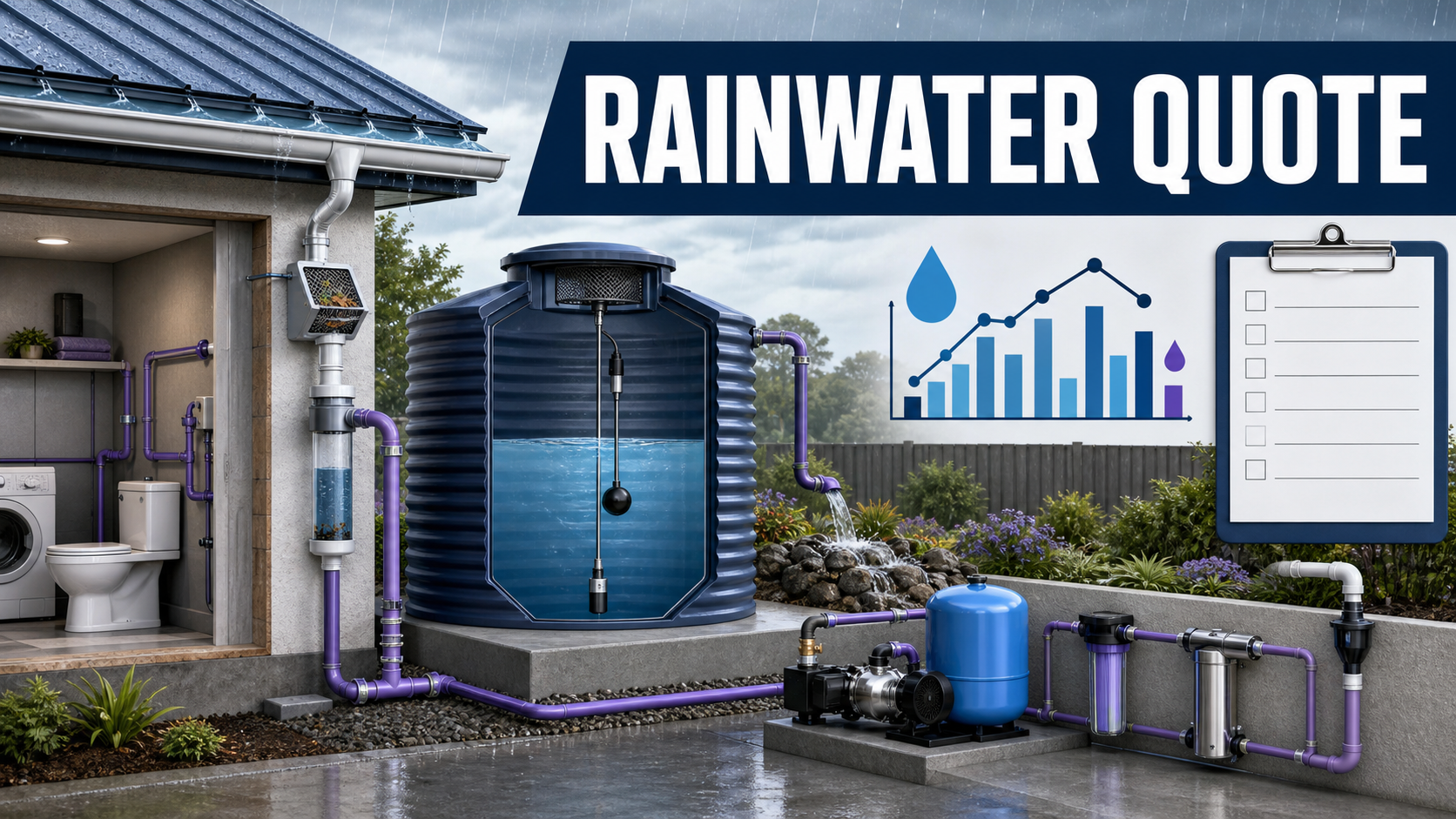
A rain barrel for exterior irrigation and a plumbed cistern serving toilets, laundry, or potable fixtures have very different design, health, permit, treatment, cross-connection, and maintenance requirements. The system must connect a compatible catchment to a defined use without creating roof drainage, foundation, mosquito, overflow, or drinking-water hazards.
Do not compare proposals by tank gallons alone. DOE guidance ties storage to monthly rainfall, catchment, collection losses, and demand, while CDC warns that roof runoff can carry germs and chemicals and must remain separated from treated drinking-water piping unless appropriate treatment and approval are provided.
Confirm Legal Uses And Health Requirements
Define state water rights, local plumbing and stormwater rules, permit, health-department input, potable or nonpotable end uses, irrigation restrictions, indoor fixtures, testing, treatment, signage, and owner responsibilities. The quote should name included materials, labor, access, preparation, interfaces, exclusions, assumptions, and the condition that changes the scope.
Require written authority requirements, permit path, approved end-use list, water-quality targets, and the responsible licensed trades. A system legal for irrigation may be prohibited or require substantially more safeguards for indoor or potable use. Keep this evidence with the permit, change-order, inspection, and closeout records so acceptance does not depend on a verbal promise.
Balance Catchment Yield And Demand
Define roof plan area, pitch, material, runoff coefficient, local monthly rainfall, first-flush and filter losses, drought intervals, irrigation or fixture demand, seasonal mismatch, backup water, and stormwater objective. The quote should name included materials, labor, access, preparation, interfaces, exclusions, assumptions, and the condition that changes the scope.
Require a month-by-month yield and demand calculation with assumptions, overflow frequency, unmet demand, and tank-size alternatives. An oversized tank can remain stagnant while an undersized tank frequently overflows or runs dry. Keep this evidence with the permit, change-order, inspection, and closeout records so acceptance does not depend on a verbal promise.
Screen Roof, Gutters, And Pretreatment
Define roofing and coating materials, lead, copper, asbestos, treated wood, bird and animal contamination, leaves, gutters, downspouts, inlet screen, first flush, calming inlet, sediment, cleanouts, and bypass. The quote should name included materials, labor, access, preparation, interfaces, exclusions, assumptions, and the condition that changes the scope.
Require a catchment compatibility survey, pretreatment schematic, screen mesh and capacity, first-flush sizing, and service access. Contaminated materials or clogged pretreatment can degrade stored water and send uncontrolled overflow at the building. Keep this evidence with the permit, change-order, inspection, and closeout records so acceptance does not depend on a verbal promise.
Specify Tank, Pad, Access, And Safety
Define tank material and certification, volume, above or below ground, dead load, foundation or excavation, anchors, vehicle and frost loads, screened vents, opaque walls, access hatch, confined-space risk, drain, isolation, and child safety. The quote should name included materials, labor, access, preparation, interfaces, exclusions, assumptions, and the condition that changes the scope.
Require tank data, structural pad or excavation detail, anchorage, access clearances, vent and hatch safeguards, and installation inspection. A full cistern imposes major loads and creates drowning, access, settlement, flotation, or contamination risks if siting is improvised. Keep this evidence with the permit, change-order, inspection, and closeout records so acceptance does not depend on a verbal promise.
Route Overflow And Drainage Safely
Define inlet capacity, overflow equal to expected inflow, emergency overflow, pipe slope, erosion, foundation separation, property lines, storm sewer or infiltration approval, mosquito protection, cleanouts, and extreme storms. The quote should name included materials, labor, access, preparation, interfaces, exclusions, assumptions, and the condition that changes the scope.
Require a surveyed overflow route, capacity calculation, discharge approval, erosion detail, and wet-weather functional test. A cistern that fills during a storm can concentrate roof runoff beside the foundation or onto neighboring property. Keep this evidence with the permit, change-order, inspection, and closeout records so acceptance does not depend on a verbal promise.
Design Pump, Controls, Freeze Protection, And Backup
Define gravity or pumped distribution, design flow and pressure, pump curve, intake, dry-run protection, pressure tank, level sensor, makeup water, air gap, controls, power, alarms, freeze protection, noise, and service isolation. The quote should name included materials, labor, access, preparation, interfaces, exclusions, assumptions, and the condition that changes the scope.
Require hydraulic calculation, pump and pressure settings, control sequence, safe makeup-water detail, alarm test, and freeze plan. Poor controls can run a pump dry, cross-connect backup water, overflow the tank, or leave interior fixtures without service. Keep this evidence with the permit, change-order, inspection, and closeout records so acceptance does not depend on a verbal promise.
Match Treatment And Separation To End Use
Define sediment, filtration, disinfection, chemical contaminants, contact time, residual, potable certification, sampling points, cross-connection control, nonpotable pipe identification, backflow testing, and bypass risk. The quote should name included materials, labor, access, preparation, interfaces, exclusions, assumptions, and the condition that changes the scope.
Require a treatment train tied to source testing and end-use targets, approved separation detail, commissioning samples, and maintenance consumables. Clear-looking rainwater can still contain pathogens or chemicals, and one cross-connection can contaminate treated plumbing. Keep this evidence with the permit, change-order, inspection, and closeout records so acceptance does not depend on a verbal promise.
Commission, Document, And Maintain
Define leak and pressure tests, inlet and overflow flow test, pump curve, level and alarm checks, treatment startup, water-quality results, cross-connection inspection, as-built piping, cleaning, sediment removal, mosquito control, filters, disinfection, winterization, and disaster procedures. The quote should name included materials, labor, access, preparation, interfaces, exclusions, assumptions, and the condition that changes the scope.
Require signed commissioning records, approved inspections, lab reports where required, as-built diagram, owner training, parts list, service schedule, and separate warranties. A system without recurring inspection and cleaning can lose capacity, grow contaminants, breed mosquitoes, or silently cross-connect. Keep this evidence with the permit, change-order, inspection, and closeout records so acceptance does not depend on a verbal promise.
Review The Quote From Rainfall Yield To Safe End Use
Prove Legality, Yield, And Water Quality
Confirm Legal Uses And Health Requirements
Confirm state water rights, local plumbing and stormwater rules, permit, health-department input, potable or nonpotable end uses, irrigation restrictions, indoor fixtures, testing, treatment, signage, and owner responsibilities; retain written authority requirements, permit path, approved end-use list, water-quality targets, and the responsible licensed trades.
Balance Catchment Yield And Demand
Confirm roof plan area, pitch, material, runoff coefficient, local monthly rainfall, first-flush and filter losses, drought intervals, irrigation or fixture demand, seasonal mismatch, backup water, and stormwater objective; retain a month-by-month yield and demand calculation with assumptions, overflow frequency, unmet demand, and tank-size alternatives.
Prove Controls, Testing, And Maintenance
Match Treatment And Separation To End Use
Confirm sediment, filtration, disinfection, chemical contaminants, contact time, residual, potable certification, sampling points, cross-connection control, nonpotable pipe identification, backflow testing, and bypass risk; retain a treatment train tied to source testing and end-use targets, approved separation detail, commissioning samples, and maintenance consumables.
Commission, Document, And Maintain
Confirm leak and pressure tests, inlet and overflow flow test, pump curve, level and alarm checks, treatment startup, water-quality results, cross-connection inspection, as-built piping, cleaning, sediment removal, mosquito control, filters, disinfection, winterization, and disaster procedures; retain signed commissioning records, approved inspections, lab reports where required, as-built diagram, owner training, parts list, service schedule, and separate warranties.
Rainwater Harvesting Quote Comparison
| Quote area | What to confirm | Why it matters |
|---|---|---|
| Confirm Legal Uses And Health Requirements | state water rights, local plumbing and stormwater rules, permit, health-department input, potable or nonpotable end uses, irrigation restrictions, indoor fixtures, testing, treatment, signage, and owner responsibilities. | A system legal for irrigation may be prohibited or require substantially more safeguards for indoor or potable use. |
| Balance Catchment Yield And Demand | roof plan area, pitch, material, runoff coefficient, local monthly rainfall, first-flush and filter losses, drought intervals, irrigation or fixture demand, seasonal mismatch, backup water, and stormwater objective. | An oversized tank can remain stagnant while an undersized tank frequently overflows or runs dry. |
| Screen Roof, Gutters, And Pretreatment | roofing and coating materials, lead, copper, asbestos, treated wood, bird and animal contamination, leaves, gutters, downspouts, inlet screen, first flush, calming inlet, sediment, cleanouts, and bypass. | Contaminated materials or clogged pretreatment can degrade stored water and send uncontrolled overflow at the building. |
| Specify Tank, Pad, Access, And Safety | tank material and certification, volume, above or below ground, dead load, foundation or excavation, anchors, vehicle and frost loads, screened vents, opaque walls, access hatch, confined-space risk, drain, isolation, and child safety. | A full cistern imposes major loads and creates drowning, access, settlement, flotation, or contamination risks if siting is improvised. |
| Route Overflow And Drainage Safely | inlet capacity, overflow equal to expected inflow, emergency overflow, pipe slope, erosion, foundation separation, property lines, storm sewer or infiltration approval, mosquito protection, cleanouts, and extreme storms. | A cistern that fills during a storm can concentrate roof runoff beside the foundation or onto neighboring property. |
| Design Pump, Controls, Freeze Protection, And Backup | gravity or pumped distribution, design flow and pressure, pump curve, intake, dry-run protection, pressure tank, level sensor, makeup water, air gap, controls, power, alarms, freeze protection, noise, and service isolation. | Poor controls can run a pump dry, cross-connect backup water, overflow the tank, or leave interior fixtures without service. |
Questions To Ask Before Approval
- How will the proposal define state water rights, local plumbing and stormwater rules, permit, health-department input, potable or nonpotable end uses, irrigation restrictions, indoor fixtures, testing, treatment, signage, and owner responsibilities and prove it with written authority requirements, permit path, approved end-use list, water-quality targets, and the responsible licensed trades?
- How will the proposal define roof plan area, pitch, material, runoff coefficient, local monthly rainfall, first-flush and filter losses, drought intervals, irrigation or fixture demand, seasonal mismatch, backup water, and stormwater objective and prove it with a month-by-month yield and demand calculation with assumptions, overflow frequency, unmet demand, and tank-size alternatives?
- How will the proposal define roofing and coating materials, lead, copper, asbestos, treated wood, bird and animal contamination, leaves, gutters, downspouts, inlet screen, first flush, calming inlet, sediment, cleanouts, and bypass and prove it with a catchment compatibility survey, pretreatment schematic, screen mesh and capacity, first-flush sizing, and service access?
- How will the proposal define tank material and certification, volume, above or below ground, dead load, foundation or excavation, anchors, vehicle and frost loads, screened vents, opaque walls, access hatch, confined-space risk, drain, isolation, and child safety and prove it with tank data, structural pad or excavation detail, anchorage, access clearances, vent and hatch safeguards, and installation inspection?
- How will the proposal define inlet capacity, overflow equal to expected inflow, emergency overflow, pipe slope, erosion, foundation separation, property lines, storm sewer or infiltration approval, mosquito protection, cleanouts, and extreme storms and prove it with a surveyed overflow route, capacity calculation, discharge approval, erosion detail, and wet-weather functional test?
- How will the proposal define gravity or pumped distribution, design flow and pressure, pump curve, intake, dry-run protection, pressure tank, level sensor, makeup water, air gap, controls, power, alarms, freeze protection, noise, and service isolation and prove it with hydraulic calculation, pump and pressure settings, control sequence, safe makeup-water detail, alarm test, and freeze plan?
- How will the proposal define sediment, filtration, disinfection, chemical contaminants, contact time, residual, potable certification, sampling points, cross-connection control, nonpotable pipe identification, backflow testing, and bypass risk and prove it with a treatment train tied to source testing and end-use targets, approved separation detail, commissioning samples, and maintenance consumables?
- How will the proposal define leak and pressure tests, inlet and overflow flow test, pump curve, level and alarm checks, treatment startup, water-quality results, cross-connection inspection, as-built piping, cleaning, sediment removal, mosquito control, filters, disinfection, winterization, and disaster procedures and prove it with signed commissioning records, approved inspections, lab reports where required, as-built diagram, owner training, parts list, service schedule, and separate warranties?
Red Flags In This Quote
A cistern volume without monthly rainfall, roof area, collection losses, seasonal demand, and overflow analysis is not a sizing calculation.
A proposal that calls roof runoff potable without source risks, treatment targets, testing, health approval, and maintenance creates a serious health gap.
A municipal-water makeup connection without an approved air gap or backflow arrangement and cross-connection inspection should not proceed.
Codes, Agencies & Technical Sources
- DOE rainwater harvesting systems technology review
- CDC collecting rainwater and health overview
- CDC cistern safety before and after disasters
- EPA rainwater harvesting practices toolbox
FAQ
Is collected rainwater safe to drink?
Not automatically. Roof runoff can contain germs and chemicals. Potable use requires local approval, suitable materials, treatment designed for identified hazards, regular testing, and maintenance.
How should a cistern be sized?
Compare catchment area and realistic collection losses with monthly rainfall and monthly demand. Evaluate tank alternatives for reliability, overflow, stagnation, space, and budget.
Why use a first-flush diverter?
It diverts the initial roof runoff, which can carry a higher concentration of dust, debris, germs, and chemicals after a dry period. Its volume and drainage need explicit design.
Can municipal water refill the tank?
It can where allowed, but the connection must protect the potable system with an approved separation method, controls, overflow protection, and inspection.
How is mosquito breeding prevented?
Use sealed tanks, screened inlets, vents and overflows, eliminate standing water in fittings, maintain screens and lids, and follow a regular inspection and cleaning schedule.
What happens when the tank is full?
A sized overflow must convey excess water to an approved, stable discharge or infiltration area without damaging the foundation, eroding soil, or affecting neighboring property.
Related Contractor Scope Guides
- Gutter replacement quote checklist
- Irrigation installation quote checklist
- Backflow preventer quote checklist
A rainwater harvesting quote is ready when legal use, seasonal yield and demand, catchment quality, tank structure, overflow, pumping, treatment, potable separation, testing, and maintenance all agree.