
A residential elevator safety retrofit quote should document the elevator make, model, age, controller, every landing and door configuration, measured space between the hoistway door and car door or gate, applicable recalls, proposed space guards or monitoring devices, interlock and control work, permits, qualified inspection, functional testing, owner instructions, and closeout records. If a hazardous gap or unreliable door lock is suspected, restrict access until a qualified elevator professional has evaluated the unit.
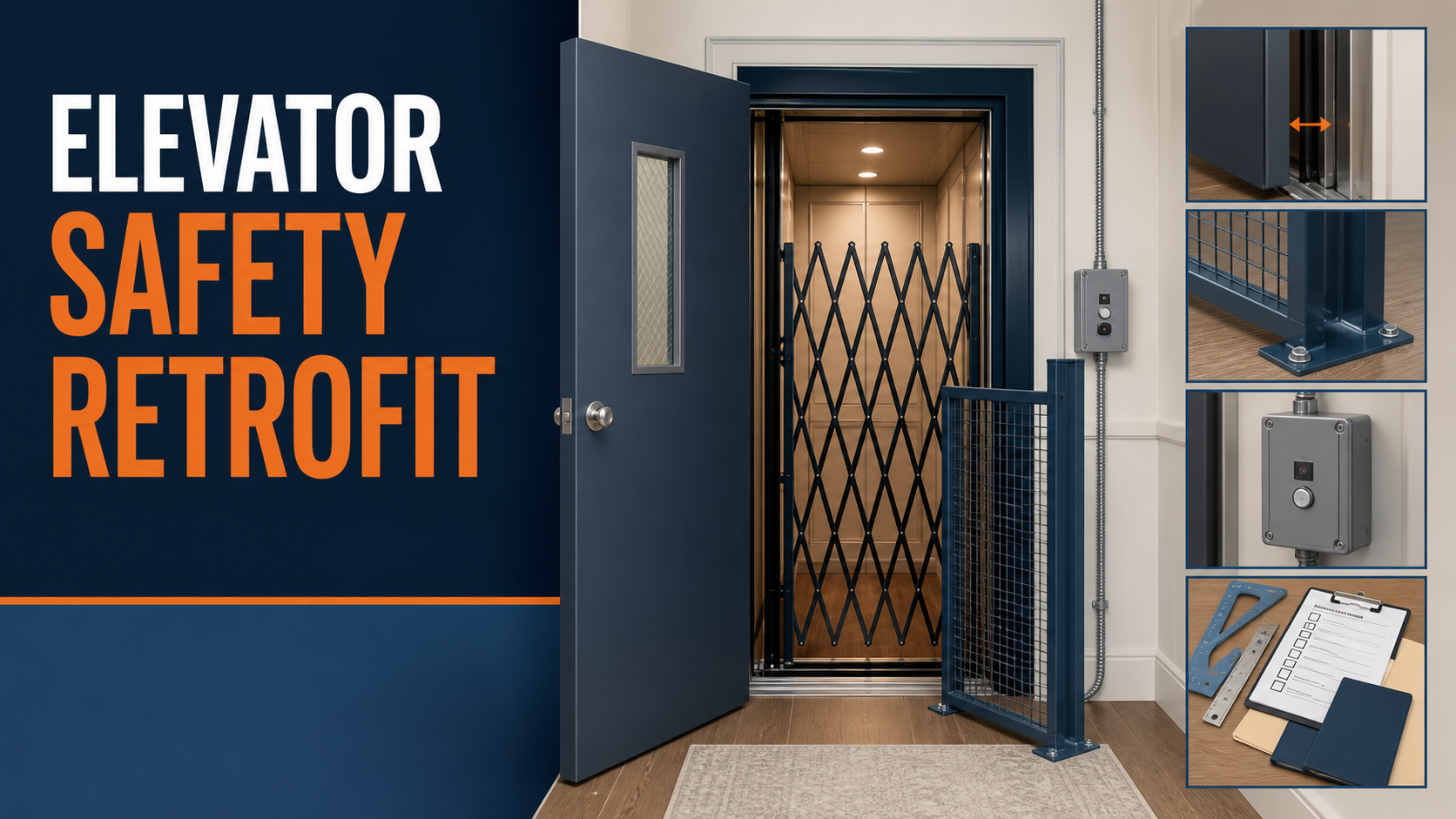
Home elevator work is not a cosmetic door adjustment. CPSC has repeatedly warned that children can be trapped between an exterior hoistway door and the interior car door or gate when the space is too deep. The agency recommends qualified inspection and identifies space guards or electronic monitoring as possible remedies. A bid therefore needs measured conditions and a code-based correction plan, not a generic service allowance.
Do not compare proposals until each contractor has evaluated the same landings, doors, gap geometry, interlocks, controller, recalls, permits, and test requirements. A low bid that covers one door or installs an unverified filler may leave the actual entrapment or fall hazard in place.
Start With A Landing-By-Landing Safety Survey
Require an inventory of the elevator manufacturer, model, serial number, installation year, controller, car gate, hoistway doors, locks, and number of landings. Each landing should have its own photographs and measurements because the gap, door swing, sill, trim, and hardware can differ by floor.
The survey should record the horizontal and three-dimensional space between the closed hoistway door and the farthest point of the closed car door or gate. It should also identify deflection, loose trim, damaged gates, missing guards, misalignment, and any condition that changes the usable space.
Check Recalls And Applicable Safety Requirements
Ask the contractor to check the manufacturer, model, serial number, door locks, interlocks, and control components against current CPSC recalls and warnings. A recall remedy may be different from ordinary paid retrofit work, so the quote should state what has been confirmed with the manufacturer.
The proposal should cite the locally adopted elevator code, permit requirement, inspection authority, and standard edition used for the evaluation. CPSC guidance references ASME elevator safety standards, but the authority having jurisdiction determines the enforceable local path.
Define The Door-Gap Remedy By Landing
For each affected landing, identify the exact rigid space guard, door modification, gate replacement, electronic monitoring device, or other approved remedy. Provide material, thickness, fastening, clearances, finish, and compatibility with door movement and locking hardware.
The remedy should eliminate access to the hazardous space without interfering with door closure, latching, emergency access, or the elevator's intended operation. A blanket statement such as install guards where needed is not enough for bid comparison or final inspection.
Include Interlocks, Controls, And Wiring
A door-gap retrofit may reveal separate problems with hoistway-door locks, car-gate contacts, wiring, controller inputs, or bypassed safety circuits. The quote should identify the exact devices being tested or replaced and separate base work from optional repairs.
No safety device should be bypassed to make the elevator run. Require listed or manufacturer-approved components, documented settings, wire identification, protection of penetrations, and an updated controller or wiring record when the work changes the safety circuit.
Control Access During The Work
The proposal should explain how the elevator and every landing will be secured before work, during disassembly, and until final acceptance. This matters in homes, rentals, and vacation properties where children or visitors may not understand that the unit is out of service.
Require lockout procedures, physical access control, warning notices, housekeeping, and protection of finished floors and door surfaces. If the contractor discovers an immediate hazard, the bid should define who can place the unit out of service and who may return it to operation.
Require Independent Inspection And Functional Testing
Acceptance should include door-gap remeasurement at every landing, verification of guards and fasteners, door closure and latching, car-gate operation, interlock function, leveling, emergency stop and alarm checks, normal calls from each floor, and confirmation that the car cannot move with an unsafe door condition.
Assign responsibility for the permit, inspection appointment, access, correction of failed items, and reinspection. Final payment should follow signed acceptance evidence rather than the contractor's statement that the elevator appears to work.
Collect A Durable Owner Record
The closeout package should contain before-and-after photographs, measurements, component data, recall correspondence, permit and inspection records, test results, operating restrictions, maintenance instructions, warranty terms, and the next inspection date.
For a rental or multi-owner property, require a simple notice explaining safe use, child-access precautions, how to disable the elevator, and whom to call if a door, gate, or lock behaves abnormally. Safety information should remain with the property when ownership or management changes.
Normalize Elevator Retrofit Proposals
Normalize Existing Conditions
Use One Landing Inventory
Give every bidder the same manufacturer data, number of landings, door types, photos, and known service history.
Use One Measurement Record
Compare the same closed-door gap geometry, deflection, trim, gate, sill, and lock conditions at every floor.
Normalize The Remedy
Name Each Device
Record the exact guard, monitor, gate, interlock, or control component proposed for each landing.
Separate Discovered Repairs
Place controller, wiring, door, finish, and obsolete-component work into explicit allowances or alternates.
Normalize Acceptance
Use One Functional Test
Require remeasurement, door and gate operation, interlocks, calls, leveling, alarms, and unsafe-condition shutdown checks.
Use One Closeout Package
Collect permits, inspection approval, photos, measurements, component data, test results, instructions, and warranty.
Residential Elevator Retrofit Quote Comparison Table
| Quote area | What to confirm | Why it matters |
|---|---|---|
| Elevator identity | Make, model, serial, age, controller, landings | Supports recall and compatibility checks |
| Door survey | Gap geometry, deflection, doors, gates, sills, locks | Defines the actual hazard at each landing |
| Recall check | Elevator and component recall status, manufacturer response | Avoids paying for or conflicting with a recall remedy |
| Retrofit | Exact guard, monitor, gate, door, or approved device by landing | Makes the corrective scope measurable |
| Safety circuit | Interlocks, contacts, wiring, controller inputs, no bypasses | Prevents movement with an unsafe opening |
| Access control | Out-of-service lockout, landing protection, notices | Protects occupants during incomplete work |
| Approval | Code basis, permit, qualified inspector, failed-item corrections | Provides an independent acceptance gate |
| Testing | Remeasurement, doors, gates, calls, locks, leveling, alarms | Proves the remedy works at every floor |
| Records | Photos, measurements, parts, inspection, instructions, warranty | Preserves safety information for future owners |
Questions To Ask Before Approval
- What manufacturer, model, serial number, controller, and door configuration does this elevator use?
- What are the measured door-gap conditions at each landing?
- Did you check the elevator and its interlocks or locks against current recalls?
- Which code edition and local inspection requirements govern this retrofit?
- What exact corrective device will be installed at each landing?
- Are all components listed or approved for this elevator and controller?
- How will the unit and landings be secured until acceptance?
- Does the scope include interlock, contact, wiring, and controller tests?
- Who obtains permits and schedules the qualified inspection?
- What happens if the inspector rejects a device or installation detail?
- Which functional tests and remeasurements will be witnessed?
- What photos, records, instructions, and warranties are delivered?
Red Flags In This Quote
The contractor prices one generic filler without measuring every landing and door configuration.
The proposal ignores recall status or cannot identify the elevator and safety components.
A lock, contact, or other safety circuit will be bypassed to restore operation.
The elevator will remain accessible before the hazardous condition is inspected and corrected.
There is no permit, qualified inspection, landing-by-landing test, or written closeout evidence.
Primary References & Homeowner Resources
- CPSC: Protect Children From A Deadly Home Elevator Door Gap
- CPSC: Residential Elevator Child Entrapment Recall
- CPSC: Waupaca Residential Elevator Safety Warning
- ICC: 2024 IBC Chapter 30 Elevators And Conveying Systems
FAQ
Why is the space between home elevator doors dangerous?
A child can enter a deep space between the exterior hoistway door and interior car door or gate, become trapped when the exterior door closes, and be crushed or pinned if the car moves.
Can a simple wood strip fix an elevator door gap?
Only a remedy evaluated and accepted for the specific elevator, door movement, locking system, and local requirements should be used. The quote should identify approved materials, fasteners, clearances, and inspection.
Should the elevator stay in use while bids are collected?
If a hazardous gap, unreliable door lock, or other serious condition is suspected, restrict access and follow CPSC guidance while a qualified elevator professional or inspector evaluates the unit.
What is a space guard?
It is a rigid device installed to reduce or eliminate accessible space behind a hoistway door. Its design and installation must not interfere with door closure, locks, emergency access, or safe elevator operation.
Why must every landing be measured?
Door construction, trim, gaps, deflection, sills, and hardware can vary by floor. One compliant landing does not prove that every entrance is safe.
What should final acceptance include?
It should include landing-by-landing remeasurement, door and gate operation, interlock and control tests, normal calls, leveling and alarm checks, permit or inspection approval, photos, records, and owner instructions.
Related Contractor Guides
- Home Accessibility Lift Installation Quote
- Structural Opening Modification Quote
- Home Electrical Safety Inspection Quote
- Permit And Inspection Allowance In Contractor Quotes
A residential elevator retrofit is complete only when every landing is measured, every safety device works without bypasses, and a qualified inspection confirms the unit can return to service.