
Before approving an insulation removal quote, confirm whether hazard testing is required, what material is being removed, how dust and contaminated insulation will be contained, how disposal is handled, what cleanup standard applies, and whether air sealing, ventilation, and new insulation prep are included.
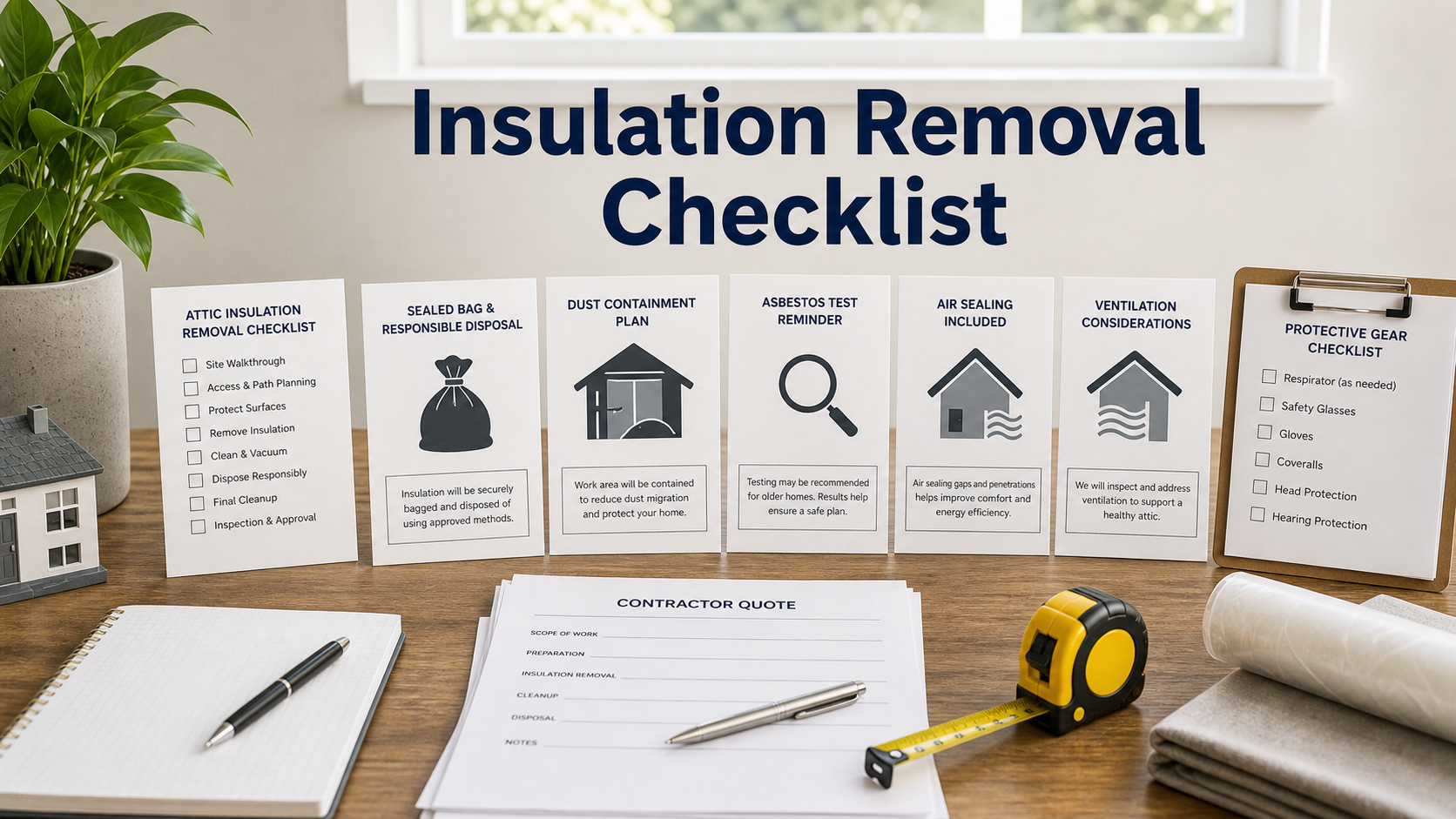
Insulation removal can be simple attic cleanup or a controlled remediation-adjacent project depending on age, moisture, pests, fire damage, vermiculite, or suspected asbestos. A quote that only lists bags removed or square footage may leave the most important risk items unstated.
The low quote can become the costly one if it excludes asbestos screening, rodent contamination protocols, access protection, disposal fees, final vacuuming, air sealing, baffle work, or preparing the space for replacement insulation.
Identify The Material And Hazard Questions First
Ask the contractor what insulation type they believe is present and whether testing is needed before disturbance. EPA and CPSC asbestos guidance is clear that asbestos-containing material should not be handled casually, so older insulation, vermiculite, pipe wrap, or suspicious material deserves a written screening plan.
If the quote says testing is not included, ask who is responsible for it and what happens if suspect material is found after the crew arrives. That decision tree should be written before the start date.
Separate Removal From Containment
Removal is the act of taking material out; containment is how the contractor prevents dust, fibers, odor, or contaminated debris from spreading through the home. Ask about access path protection, attic hatch sealing, negative air equipment if applicable, bagging, and whether occupied areas are isolated.
For pest-contaminated or water-damaged insulation, ask whether disinfecting, deodorizing, and source correction are included. Removing dirty insulation without fixing the leak or entry point can make the project repeat itself.
Clarify Disposal And Cleanup Standards
The quote should describe how removed insulation is bagged, carried out, transported, and disposed of. Disposal costs can vary depending on material condition, local rules, and whether hazardous material is involved.
Ask what the finished space will look like after cleanup: rough removal only, HEPA vacuuming, debris pickup, odor treatment, photo documentation, or readiness for new insulation. Without a cleanup standard, the final result is subjective.
Check Air Sealing And Ventilation Prep
ENERGY STAR guidance commonly pairs air sealing with insulation improvements because air leaks reduce performance. If new insulation will be installed later, ask whether the removal quote includes locating air leaks, sealing penetrations, and preserving soffit ventilation paths with baffles.
If the contractor only removes insulation, request a note explaining what must be completed before replacement insulation is blown or placed. This prevents paying twice for attic access and prep.
Protect The Home During Access
Attic insulation removal often means hoses, bags, ladders, and crew movement through finished rooms. The quote should include floor protection, wall protection, hatch protection, daily cleanup, work hours, and whether furniture must be moved before arrival.
Ask for photo documentation before and after removal. Photos help confirm the stated scope, especially when the work happens in spaces you cannot comfortably inspect yourself.
Insulation Removal Quote Items To Confirm
| Quote area | What to confirm | Why it matters |
|---|---|---|
| Material type | Fiberglass, cellulose, vermiculite, foam, or unknown material identified | Material type affects hazard review, equipment, and disposal. |
| Hazard testing | Asbestos or contamination screening responsibility stated | Suspect material should be handled through an appropriate process before disturbance. |
| Containment | Access path, dust control, isolation, and bagging method described | Dust and debris should not spread into living areas. |
| Removal scope | Area, depth, damaged sections, and hidden spaces listed | Square footage alone may not capture difficult attic pockets or wall cavities. |
| Disposal | Bagging, hauling, disposal fees, and hazardous-material exclusions listed | Disposal can change price and legal handling requirements. |
| Cleanup | Vacuuming, debris removal, odor treatment, and photo documentation defined | Cleanup expectations need a measurable finish line. |
| Prep for new insulation | Air sealing, baffles, ventilation, leak correction, and pest entry notes included or excluded | Replacement insulation performs poorly if prep work is skipped. |
| Home protection | Floors, walls, hatch, furniture, and daily cleanup covered | Access damage can become a separate dispute. |
Questions To Ask Before Approval
- What insulation material is being removed, and is any hazard testing required before work starts?
- How will dust, debris, odor, and contaminated material be contained during removal?
- Are disposal fees, bagging, hauling, and local handling requirements included?
- What cleanup standard will the attic or wall cavity meet when the crew leaves?
- Does the quote include air sealing, baffles, ventilation prep, or only removal?
- What happens if the crew discovers suspected asbestos, mold, pests, or water damage?
Red Flags In This Quote
The contractor will disturb old or unknown insulation without any hazard screening discussion.
The quote says removal but does not mention containment, access protection, disposal, or cleanup standard.
Pest or water contamination is visible, but the quote does not address source correction or sanitation scope.
New insulation is planned immediately, but air sealing and ventilation paths are not discussed.
Codes, Agencies & Technical Sources
- EPA asbestos information for homeowners
- OSHA asbestos safety and health topics
- ENERGY STAR sealing and insulating guidance
FAQ
Should insulation removal quotes mention asbestos?
If the material is old, unknown, vermiculite-like, or near other suspect building materials, the quote should state how hazard screening will be handled before disturbance.
Is cleanup included in insulation removal?
Only if the quote says so. Ask whether cleanup means rough debris pickup, HEPA vacuuming, odor treatment, photo documentation, or readiness for new insulation.
Do I need air sealing before new insulation?
Often, yes. Air sealing can improve insulation performance, so ask whether it is included in this quote or should be scheduled before replacement insulation.
What if pests or moisture caused the insulation damage?
The quote should identify whether entry points, leaks, sanitation, deodorizing, and replacement prep are included or excluded. Removal alone may not solve the source problem.
How should disposal be priced?
Ask for bagging, hauling, disposal fees, and exclusions for hazardous or contaminated material. Disposal should not be a vague after-the-fact charge.
Can I compare insulation removal by square foot only?
Square footage helps, but it is not enough. Compare access difficulty, material type, containment, cleanup, disposal, and prep work for replacement insulation.
Related Contractor Scope Guides
- Fireplace Insert Installation Quote Checklist Before Permit
- Window Replacement Quote Checklist Before Ordering
- Floor Joist Repair Quote Checklist Before Approval
A safe insulation removal quote should tell you what material is being disturbed, how the home is protected, how debris is disposed of, and what condition the space will be left in before new insulation is added.