
Short answer: Approve a historic wood window restoration quote only after every opening is inventoried and graded, repair and replacement thresholds are defined, historic glass and hardware are tracked, lead-safe and occupied-home controls are included, sash, frame, sill, joints, weights, cords, glazing, weatherstripping, paint, storms and screens are specified, sample repairs are approved, and closeout verifies smooth operation, drainage, air and water details, finish quality, records, and warranty.
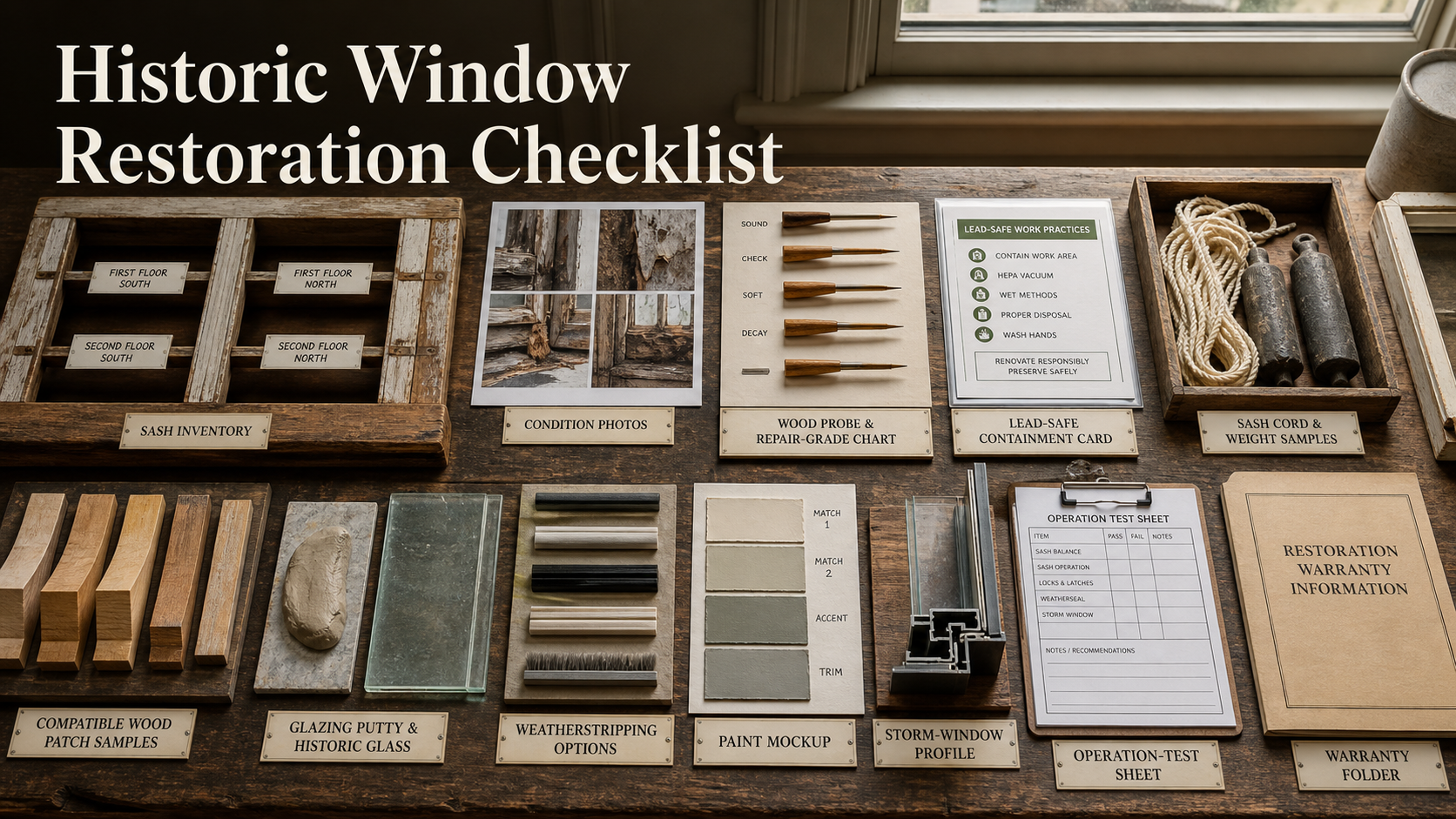
Old windows are assemblies of wood, glass, putty, joints, hardware, weights, cords, finishes, flashing, and surrounding trim. Condition can vary from sash to sash, so a single price per window often hides the difference between routine service, localized consolidation, major joinery repair, and selective replacement.
Compare bids using the same opening schedule and repair grades. One contractor may include removal, lead containment, glass labeling, frame and sill work, cords, pulleys, weatherstripping, storms, paint, interior touch-up, and reinstall while another prices only bench work on the sash.
Create An Opening-By-Opening Inventory
Assign each window an elevation, room, opening, sash, and component identifier. Photograph interior and exterior conditions and record wood decay, failed joints, loose glazing, cracked or historic glass, peeling paint, hardware, cords and weights, frame and sill drainage, air leakage, previous repairs, and safe operation.
NPS Preservation Brief 9 begins with condition evaluation and provides a methodology for repair versus replacement. Require repair grades and unit prices so discoveries are handled consistently rather than renegotiated at the scaffold.
Define Preservation And Replacement Thresholds
State which wood, glass, hardware, profiles, muntins, parting beads, stops, and finishes are retained. Define localized dutchman or splice repair, consolidation, joinery rebuilding, full component replication, and the evidence needed before original material is discarded.
If a sash or frame is proposed for replacement, require dimensions, profiles, species, grain, joinery, glazing pattern, finish, and approval. Store removed historic parts until the owner accepts replacements and the inventory is reconciled.
Control Lead, Glass, And Occupied-Home Risk
For pre-1978 paint, determine whether federal, state, or local lead-safe requirements apply and identify the certified firm, containment, dust control, prohibited practices, cleaning, verification, waste, and occupant protection included. Separate testing assumptions from confirmed results.
Describe sash removal, temporary closure, security, weather protection, broken-glass handling, labeled storage racks, transport, shop conditions, daily openings, pets and furnishings, and interior access. Historic glass should be individually tracked, not pooled without records.
Specify Wood, Glazing, Hardware, And Weatherstripping
List drying and paint removal limits, compatible repair wood, joinery, consolidant or filler use, primer, back-bedding, glazing putty, glass retention, fasteners, sash cords or chains, weights, pulleys, locks, lifts, stops, balances, and frame repairs. Add sample acceptance for visible profiles and patches.
Map weatherstripping type and location, sash clearances, meeting-rail alignment, perimeter caulk boundaries, sill and subsill drainage, flashing, and exterior joints. Avoid sealing designed drainage paths or painting sash shut.
Coordinate Finish And Thermal Upgrades
Define surface preparation, paint removal, primer, number and type of coats, color, sheen, interior and exterior boundaries, glass cleanup, and protection of adjacent masonry and trim. Set a sample area for paint and repaired wood appearance.
If storm windows, interior panels, screens, or insulating glass are proposed, record profile, ventilation or weep details, attachment, reversibility, condensation strategy, egress and operation, maintenance access, and visual impact. NPS weatherization guidance supports repair and compatible window and door upgrades.
Inspect Operation And Close Out Each Opening
Before final payment, operate both sash where designed, verify locks, balances, clearances, meeting rails, weatherstripping contact, glass and putty, frame and sill drainage, paint coverage, clean glass, interior touch-up, screens or storms, and correction of rattles or binding.
Collect the final window schedule, repair grades, approved substitutions, photographs, retained-glass and hardware inventory, lead-safe records, product data, paint colors, storm or screen data, maintenance instructions, punch list, and warranty by repair type.
Historic Wood Window Restoration Scope Comparison
| Quote area | What to confirm | Why it matters |
|---|---|---|
| Inventory | Opening IDs, elevations, rooms, sash, wood, glass, hardware, paint, frame, sill, operation, photos, and repair grade | Makes different conditions and bid assumptions comparable |
| Retention and repair | Original material retained, consolidation, splices, joinery, replication thresholds, species, profiles, and sample repairs | Protects serviceable historic fabric from unnecessary replacement |
| Lead and handling | Applicable rules, certified firm, containment, dust, verification, waste, temporary closure, glass labels, storage, security, and weather | Controls the highest occupied-home and inventory risks |
| Assembly work | Wood, joints, cords, weights, pulleys, locks, glass, putty, weatherstripping, caulk boundaries, flashing, and drainage | Restores the window as an operating weather assembly |
| Finish and upgrades | Preparation, primer, coats, colors, interior and exterior boundaries, storms, screens, condensation, egress, and appearance | Defines visible quality and optional thermal work |
| Closeout | Operation, alignment, locks, glass, putty, drainage, paint, cleaning, schedule, photos, lead records, maintenance, and warranty | Closes every numbered opening with evidence |
Questions To Ask Before Approval
- Can I see the numbered condition inventory and repair grade for every opening?
- Which original wood, glass, hardware, profiles, and finishes will be retained?
- What evidence and approval are required before any component is replaced?
- Which lead-safe, containment, cleaning, waste, temporary closure, security, and storage controls apply?
- How are wood repair, glazing, cords, weights, hardware, weatherstripping, flashing, and drainage specified?
- What paint sample, storm or screen details, egress, condensation, and interior touch-up are included?
- How will operation, inventory reconciliation, photographs, records, maintenance, and warranty be closed per opening?
Red Flags In This Quote
A uniform replace-all recommendation without a condition inventory or repair threshold can discard serviceable historic material and erase bid comparability.
Unlabeled removal of sash, glass, weights, and hardware creates preventable loss and mismatched reinstallation.
Sanding or scraping old paint in an occupied home without applicable lead-safe controls, containment, cleaning, and verification creates avoidable exposure.
Source Links
- NPS Preservation Brief 9: Repair of Historic Wooden Windows
- NPS weatherization guidance for windows and doors
- EPA Renovation, Repair and Painting Program
FAQ
Can badly weathered wood windows still be repaired?
Often portions can be retained and repaired, but condition varies. The quote should grade decay, joints, profiles, glass, frame, sill, and operation before choosing consolidation, splices, replication, or replacement.
Should historic glass be reused?
If safe and feasible, specify which panes are retained, how they are labeled and protected, what happens if they break, and what replacement glass is acceptable.
Does restoration include weatherstripping?
Only if written. Specify material, location, sash clearances, meeting rails, perimeter boundaries, operation, and how drainage remains open.
What about lead paint?
For pre-1978 homes, determine applicable federal, state, and local requirements. The quote should name certifications, containment, dust control, cleaning verification, waste handling, and occupant protection.
Can storm windows improve performance?
They can be part of a compatible upgrade. Review profile, attachment, ventilation and weeps, condensation, operation, egress, maintenance, visual impact, and finish before approval.
Related Contractor Quote Guide Guides
- Window replacement quote checklist
- Lead paint removal quote checklist
- Masonry foundation repointing quote checklist
A historic window restoration quote is complete when every opening, retained part, repair grade, lead control, weather detail, operation test, record, and exception is traceable.