
Short answer: Compare a cool roof coating or roofing quote by requiring a climate and building-use assessment, confirmation that the existing roof is dry and structurally serviceable, slope and drainage mapping, repairs before coating, a product system compatible with the substrate, documented initial and aged solar reflectance and thermal emittance where applicable, manufacturer-required primer and preparation, application rate and finished dry-film target, reinforced seams and penetrations, edge and flashing details, weather windows, adhesion and thickness quality control, permits, maintenance, cleaning, warranty exclusions, and a separate alternative when restoration is not suitable. Reflectivity does not repair saturated insulation, failed flashings, poor drainage, or an exhausted roof membrane.
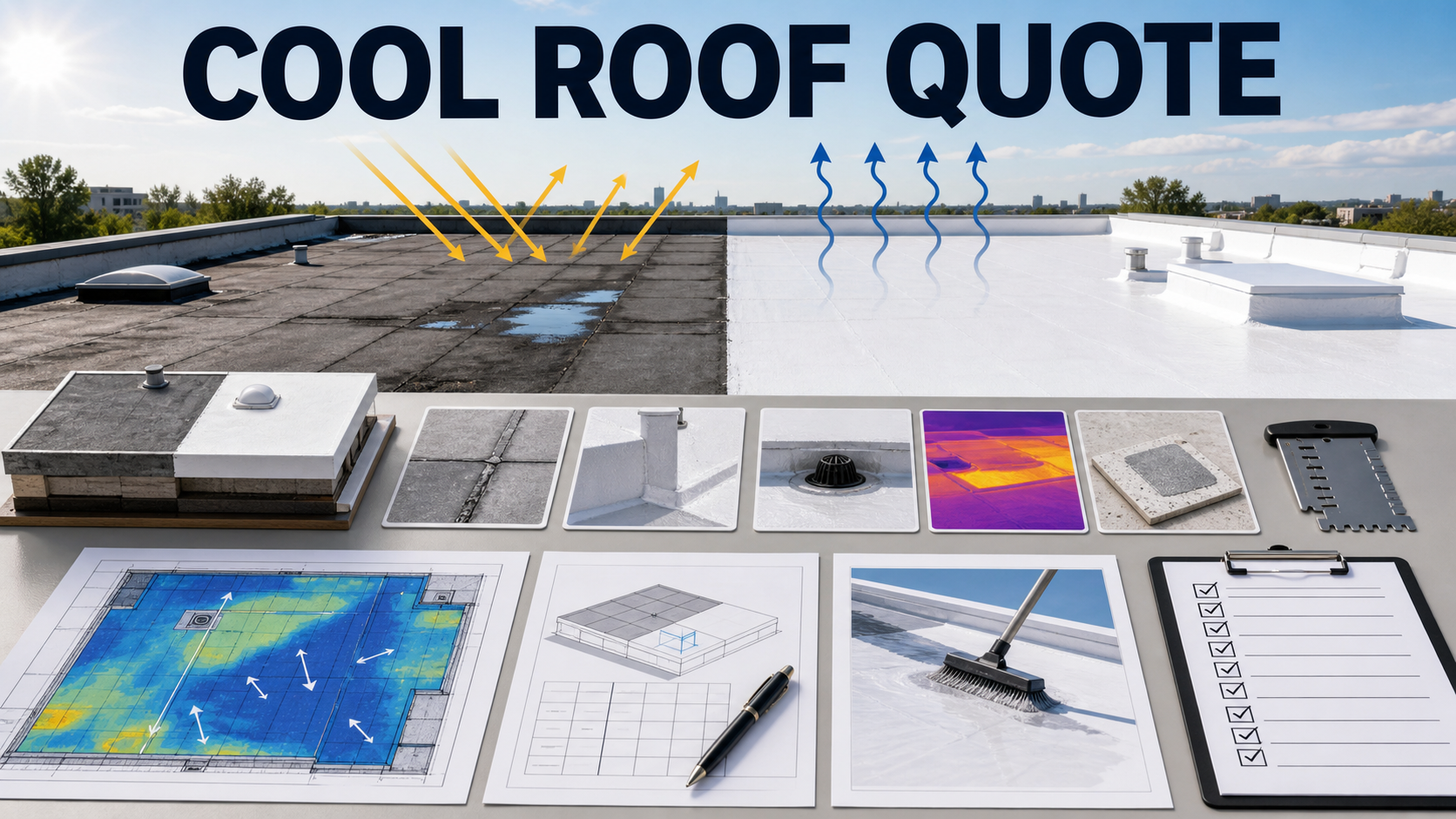
Cool roof can mean reflective shingles, metal, tile, membrane, aggregate, or a liquid-applied coating. These systems have different waterproofing functions, preparation requirements, ratings, service lives, and warranty terms, so a proposal must identify the roof assembly and whether the project is a new roof, recover, maintenance coating, or restoration system.
Do not compare proposals by color or a single reflectance number. EPA and DOE distinguish solar reflectance from thermal emittance and note that climate, insulation, roof type, heating and cooling loads, aging, and maintenance affect the result. The installed waterproofing system remains the first requirement.
Decide Whether A Cool Roof Fits The Building
Record climate, sun exposure, tree and neighboring-building shade, roof slope, orientation, attic or roof insulation, air sealing, HVAC type and condition, cooling and heating use, occupancy, top-floor comfort, utility history, snow, dirt, biological growth, and local code or incentive rules. State the intended outcome: lower surface temperature, comfort, heat-island reduction, roof restoration, or full replacement.
EPA notes that cool roofs are most beneficial in warm sunny conditions and can create a winter heating tradeoff in colder climates. The quote should explain the building-specific case rather than promise a universal savings percentage.
Document The Existing Roof Assembly
Identify deck, vapor retarder, insulation layers, cover board, membrane or roofing, coatings, surfacing, fasteners, adhesives, parapets, curbs, drains, scuppers, gutters, penetrations, rooftop equipment, age, repair history, leaks, warranties, and core-cut or record evidence. Verify ownership of existing warranties before altering the surface.
Map cracks, blisters, open seams, exposed reinforcement, rust, fastener back-out, failed laps, wet insulation, soft deck, biological growth, coating chalk, incompatible patch materials, ponding, and traffic damage. Distinguish visual inspection from moisture scanning, probing, and destructive testing.
Prove Restoration Is Appropriate
State the maximum wet or damaged area the contractor will repair before coating, how moisture is located, and when findings trigger removal, replacement, or a new proposal. A coating should not bridge active deck movement, widespread saturation, failed attachment, unsafe structure, or drainage defects without engineered corrective work.
Require a repair schedule for membrane, seams, flashings, curbs, penetrations, drains, scuppers, metal, fasteners, pitch pockets, skylights, transitions, parapets, and edges. Price unknown substrate repair by an agreed unit or documented authorization process.
Compare Rated Performance And Compatibility
List system manufacturer, product, chemistry, substrate approval, primer, reinforcement, base coat, finish coat, color, solar reflectance, aged reflectance, thermal emittance, weathering data, fire and wind classifications, ponding-water limitations, traffic rules, and required accessories. Use the data that applies to the installed system and local requirement.
DOE identifies solar reflectance, endurance of reflectance, and thermal emittance as important properties. High initial reflectance alone does not establish adhesion, waterproofing, dirt resistance, or long-term performance on this roof.
Specify Cleaning, Preparation, And Adhesion
Define debris removal, pressure and method of washing, detergents, biological treatment, rinse, dry time, rust treatment, loose-coating removal, scarification, crack and seam repair, fastener treatment, primer, substrate moisture limit, contamination control, and protection of drains, walls, landscaping, vehicles, air intakes, and neighboring property.
Require representative adhesion tests after preparation and primer, with location, cure, method, result, and acceptance rule. A small successful test on a clean patch does not excuse incompatible areas elsewhere; the roof should be divided into conditions and sampled accordingly.
Control Coverage, Thickness, And Weather
State roof area, waste, product solids, gallons or units, coat count, color changes between coats if used, wet-film target, expected dry-film target, application method, reinforcement, cure interval, temperature, humidity, dew point, rain-free window, wind, surface temperature, and overnight conditions. Tie invoices and empty-container counts to the coverage calculation.
Use wet-film measurements during each coat and a documented final thickness or consumption reconciliation. Thin spots at texture peaks, drains, seams, vertical surfaces, and equipment zones should be corrected before the system is called complete.
Detail Drainage, Edges, And Penetrations
Map slope, ponding areas, drains, scuppers, gutters, overflow paths, crickets, saddles, and debris patterns. State whether drainage correction is included and how coating is terminated so outlets remain open and serviceable. Coating should not be used to create slope unless the specified system is designed for that purpose.
Provide details for parapets, counterflashings, copings, roof edges, membrane transitions, pipes, curbs, supports, ducts, skylights, solar mounts, walk pads, pitch pockets, and future service penetrations. Identify which accessory sealants and reinforcements remain compatible with the field coating.
Plan Safety, Access, And Occupied-Building Protection
Specify roof access, fall protection, fragile surfaces, edge control, staging, material storage, deck load, occupant notices, odor and ventilation, air-intake shutdown, parking and landscaping protection, overspray control, fire safety, weather shutdown, daily watertightness, debris, and emergency leak response.
Coordinate antennas, solar, HVAC service, satellite equipment, and other trades before coating. Items temporarily moved must be reinstalled without puncturing or contaminating the finished system and with their own warranty and commissioning preserved.
Inspect, Maintain, And Read The Warranty
Require substrate-repair signoff, adhesion results, batch records, weather log, wet-film readings, product quantities, photographs, drainage check, punch list, final inspection, permits, manufacturer inspection if required, and a roof plan showing repairs and details. Keep sample labels and safety data with the closeout package.
Read labor and manufacturer warranties separately. Record term, coverage, exclusions for ponding, substrate, movement, foot traffic, contamination, pressure washing, repairs by others, inspections, cleaning, recoating, transfer, leak notification, access, and who pays diagnostic or maintenance work.
Review The Quote From Roof Condition To Aged Reflectance
Prove The Roof Can Accept The System
Separate Restoration From Replacement
Document wet insulation, deck, attachment, membrane, drainage, flashings, prior coatings, warranties, repairs, and the findings that force a different roofing solution.
Lock Product Compatibility
Match substrate, primer, reinforcement, coating chemistry, ratings, ponding limits, fire and wind classifications, and accessory details to one tested system.
Prove The Installed Film Matches The Proposal
Measure Preparation And Thickness
Record cleaning, dryness, adhesion samples, weather, batches, area, product quantity, wet-film readings, dry-film or consumption reconciliation, and corrections.
Preserve Reflectance And Waterproofing
Deliver drain and detail maps, cleaning and inspection intervals, traffic rules, repair compatibility, recoating triggers, warranty notices, and transfer terms.
Cool Roof Quote Comparison
| Quote area | What to confirm | Why it matters |
|---|---|---|
| Building fit | Climate, shade, slope, insulation, air sealing, HVAC, heating and cooling use, comfort, snow, dirt, code, incentive, and objective | Prevents a generic reflectivity promise |
| Existing roof | Deck, insulation, membrane, coating, moisture, attachment, seams, flashings, drains, ponding, repairs, warranties, and destructive-test limits | Determines whether coating or replacement is appropriate |
| System data | Chemistry, substrate approval, primer, reinforcement, coats, color, initial and aged reflectance, emittance, fire, wind, traffic, and ponding limits | Makes product claims traceable to the installed assembly |
| Application control | Cleaning, repair, moisture, adhesion, area, quantity, wet and dry film, coat interval, weather, protection, batches, and measurements | Shows whether the required film was actually installed |
| Details and access | Slope, drains, scuppers, edges, parapets, curbs, pipes, supports, skylights, solar, HVAC, walk pads, fall protection, odors, and overspray | Protects waterproofing at the highest-risk locations |
| Closeout | Repair map, test and weather logs, quantities, thickness, photos, inspections, maintenance, cleaning, traffic, recoating, labor and manufacturer warranties | Keeps both performance and coverage enforceable |
Questions To Ask Before Approval
- Why is a cool roof appropriate for this climate, insulation level, HVAC system, roof type, and building-use pattern?
- What evidence shows the deck, insulation, attachment, membrane, flashings, and drainage are suitable for restoration?
- Which exact product system, substrate approval, primer, reinforcement, ratings, ponding limits, and accessories are specified?
- Which cleaning, drying, repair, moisture, and adhesion tests must pass before coating?
- What roof area, product quantity, coat count, wet-film and dry-film targets, weather limits, and measurement records are included?
- How are drains, ponding, edges, parapets, curbs, penetrations, supports, walkways, solar, and HVAC detailed?
- How are occupants, air intakes, landscaping, vehicles, neighboring property, falls, odors, and overspray protected?
- Which inspection, maintenance, cleaning, repair, recoating, transfer, and warranty obligations remain after completion?
Red Flags In This Quote
A reflective coating sold as a leak cure without moisture, deck, membrane, flashing, and drainage assessment can conceal rather than solve roof failure.
A quote that lists pails but not roof area, solids, coat count, wet-film readings, final consumption, and weather records cannot prove required thickness.
An initial reflectance claim without aged performance, climate context, maintenance, and waterproofing details is not a complete cool roof specification.
Source Links
- U.S. EPA guide to using cool roofs
- U.S. Department of Energy cool roof purchasing guidance
- ENERGY STAR cool roofs overview
- U.S. Department of Energy Guide to Cool Roofs PDF
FAQ
Is a cool roof always a coating?
No. Cool roof options include reflective shingles, metal, tile, membranes, aggregates, and coatings. The roof slope, assembly, condition, climate, and project type determine the system.
Will a reflective coating stop an active leak?
Not by itself. Leaks, wet insulation, failed seams and flashings, damaged deck, poor attachment, and drainage defects require diagnosis and repair before a compatible coating system.
What is the difference between solar reflectance and thermal emittance?
Solar reflectance describes how much solar energy is reflected, while thermal emittance describes how effectively absorbed heat is released. Both affect roof temperature.
Why does aged reflectance matter?
Dirt, weathering, and biological growth can change surface performance. Aged ratings and the cleaning plan are more useful than a fresh-surface claim alone.
How is coating thickness verified?
Use roof area and product quantity calculations, wet-film measurements during application, batch and weather logs, and a final dry-film or consumption reconciliation required by the system.
Can a cool roof increase winter heating use?
It can reduce beneficial winter solar heat in some climates. The effect depends on climate, snow, insulation, building use, and heating and cooling loads, so assess the specific building.
Related Contractor Quote Guide Guides
- Roof replacement quote checklist
- Roof leak repair quote checklist
- Whole-home air sealing quote checks
A cool roof quote is ready when the building fit, existing assembly, compatible rated system, preparation, thickness, details, drainage, quality records, maintenance, and warranty can all be verified.