
Approve an air duct cleaning quote only after it shows why cleaning is needed, defines the full HVAC scope, explains containment and vacuum method, lists access-panel work, separates mold or pest remediation, avoids unsupported health promises, and includes before-and-after documentation.
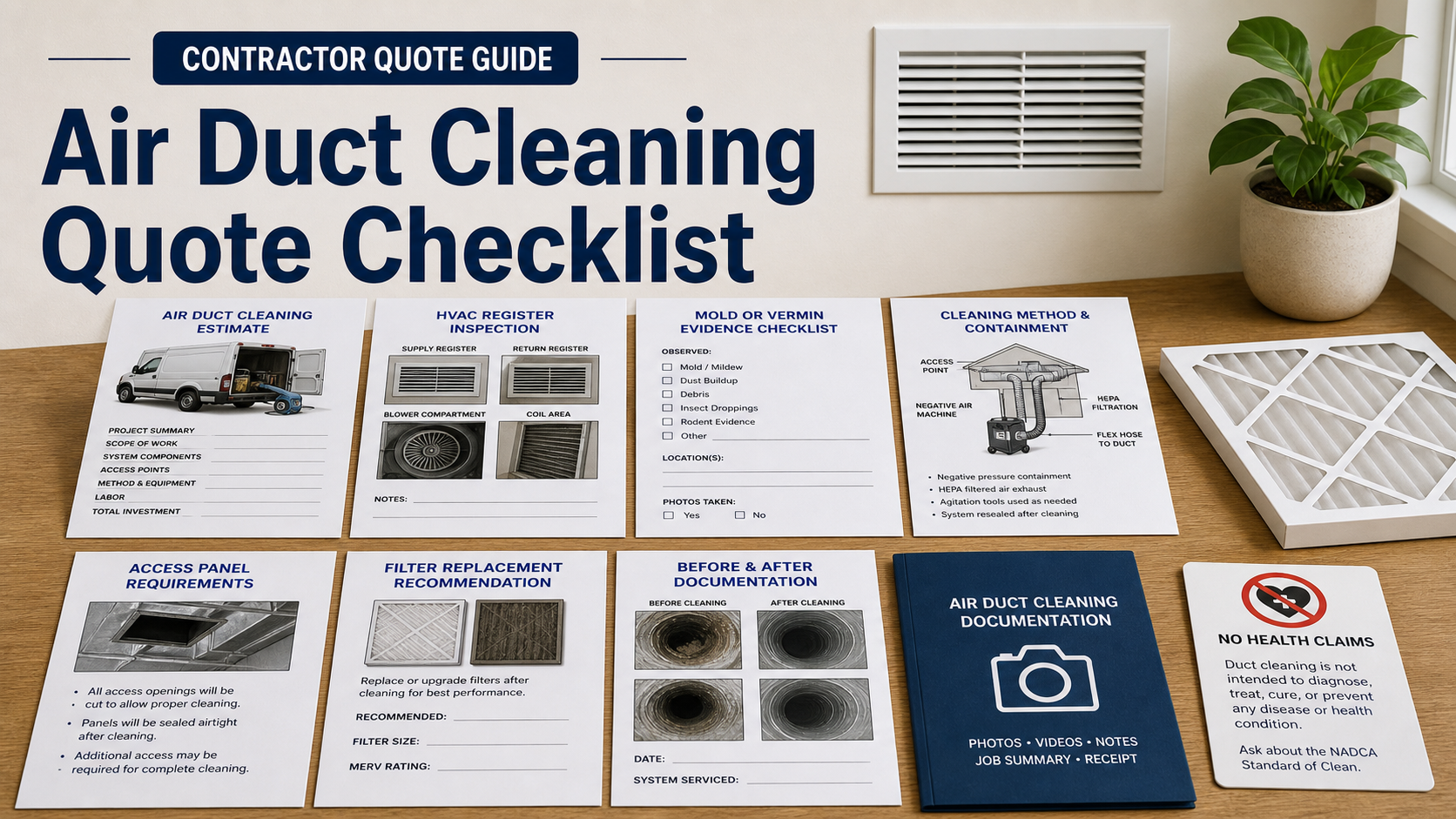
Air duct cleaning is easy to oversell. EPA guidance does not recommend routine duct cleaning for every home, but it does describe situations where cleaning may be appropriate, such as visible mold growth, vermin infestation, or ducts clogged with excessive dust and debris that releases into the home.
That means the best estimate starts with inspection evidence. A low coupon price is not useful if it does not say what will be cleaned, what equipment will be used, and how the contractor will protect the HVAC system and living areas.
Start With Evidence Of Need
The quote should include photos or notes from registers, return ducts, supply ducts, air handler, blower compartment, coil area if accessible, and filter rack. Ask whether the contractor saw visible dust release, suspected mold, pest evidence, construction debris, or water damage.
If the contractor uses scare language without showing the actual condition, ask for documentation before scheduling.
Define The HVAC Scope
A duct cleaning quote should say whether it includes supply ducts, return ducts, registers, grilles, diffusers, trunk lines, plenums, blower compartment, evaporator coil area, drain pan, and air handler cabinet. It should also say what cannot be accessed.
Do not assume the air handler is included. Cleaning only visible registers while leaving the blower area dirty may not solve the issue that triggered the call.
Review Containment And Access Method
The estimate should explain vacuum equipment, negative pressure, agitation tools, dust containment, floor protection, access panel creation and sealing, and whether the HVAC system will be protected from debris during the process.
Ask how access openings will be closed afterward. Poorly sealed access panels can create air leakage, noise, or future service issues.
Separate Mold, Moisture, And Pest Problems
Cleaning ducts does not fix a moisture source, pest entry point, or contaminated insulation. If mold is suspected, the quote should describe whether testing, moisture repair, contaminated material removal, or separate remediation is needed.
EPA mold guidance emphasizes moisture control. If water intrusion or condensation created the duct problem, the estimate should identify the repair path instead of only cleaning the visible surface.
Air Duct Cleaning Quote Review Table
| Quote area | What to confirm | Why it matters |
|---|---|---|
| Evidence | Photos, inspection notes, dust release, mold, pests, debris | Cleaning should respond to a documented condition. |
| Scope | Supply, return, registers, grilles, plenums, blower, cabinet | Partial cleaning can leave the real source untouched. |
| Method | Vacuum, agitation, containment, access panel work, sealing | The process should avoid spreading dust indoors. |
| Related repairs | Moisture, mold, pest entry, filter rack, duct leakage | Cleaning alone may not fix the cause. |
| Documentation | Before-and-after photos, work summary, exclusions, recommendations | Records help verify what was actually cleaned. |
Questions To Ask Before Hiring
- What evidence shows duct cleaning is needed in this home?
- Which parts of the HVAC system are included and excluded?
- Will the blower compartment, return side, and supply side be addressed?
- What vacuum and agitation method will be used?
- How will living spaces be protected from dust release?
- Will access panels be created, and how will they be sealed?
- Is suspected mold, moisture, or pest contamination handled separately?
- Are filters, filter rack gaps, or duct leaks included in the recommendation?
- Will you receive before-and-after photos?
Red Flags In An Air Duct Cleaning Estimate
- The salesperson claims every home needs annual duct cleaning.
- The quote promises medical or allergy results without evidence.
- The price covers only vents, not the duct system or air handler.
- The contractor will not show photos or explain the observed problem.
- Mold is mentioned but moisture control is not discussed.
- Access holes and sealing are ignored.
Quote check: a good duct cleaning estimate should prove the reason, define the HVAC components, and document the result.
Codes, Agencies & Technical Sources
- EPA: Should You Have the Air Ducts in Your Home Cleaned?
- EPA: A Brief Guide to Mold, Moisture and Your Home
- EPA: Introduction to Indoor Air Quality
- Department of Energy: Maintaining Your Air Conditioner
- NADCA: Why Hire a NADCA Member
FAQ
Does every home need air duct cleaning?
No. EPA does not recommend routine duct cleaning for every home. Ask for evidence that cleaning is needed in your system.
Can duct cleaning remove mold?
It may be part of a response, but suspected mold requires moisture-source review and may require separate remediation or testing.
Should the air handler be included?
The quote should say. If the blower compartment or cabinet is dirty, cleaning only registers may leave the problem in place.
Are health claims a warning sign?
Yes. Be cautious of quotes that promise medical results or guaranteed allergy relief without evidence.
What proof should I receive after duct cleaning?
Ask for before-and-after photos, a list of cleaned components, access-panel notes, filter recommendations, and any excluded repairs.