
Short answer: A range hood make-up air quote should match the canopy and airflow to the range and cooking pattern, document hood dimensions and mounting height, specify a smooth correctly sized exhaust duct with limited elbows and an exterior termination, provide accessible grease filtration and acceptable sound, measure actual exhaust airflow, assess house tightness and all exhaust devices, inventory natural-draft combustion appliances, perform worst-case depressurization and combustion-safety testing, size and locate make-up air, filtration, tempering and distribution, interlock the outdoor-air damper with the hood, prevent freezing and condensation, obtain permits, balance the system, and deliver airflow, pressure, safety and control records.
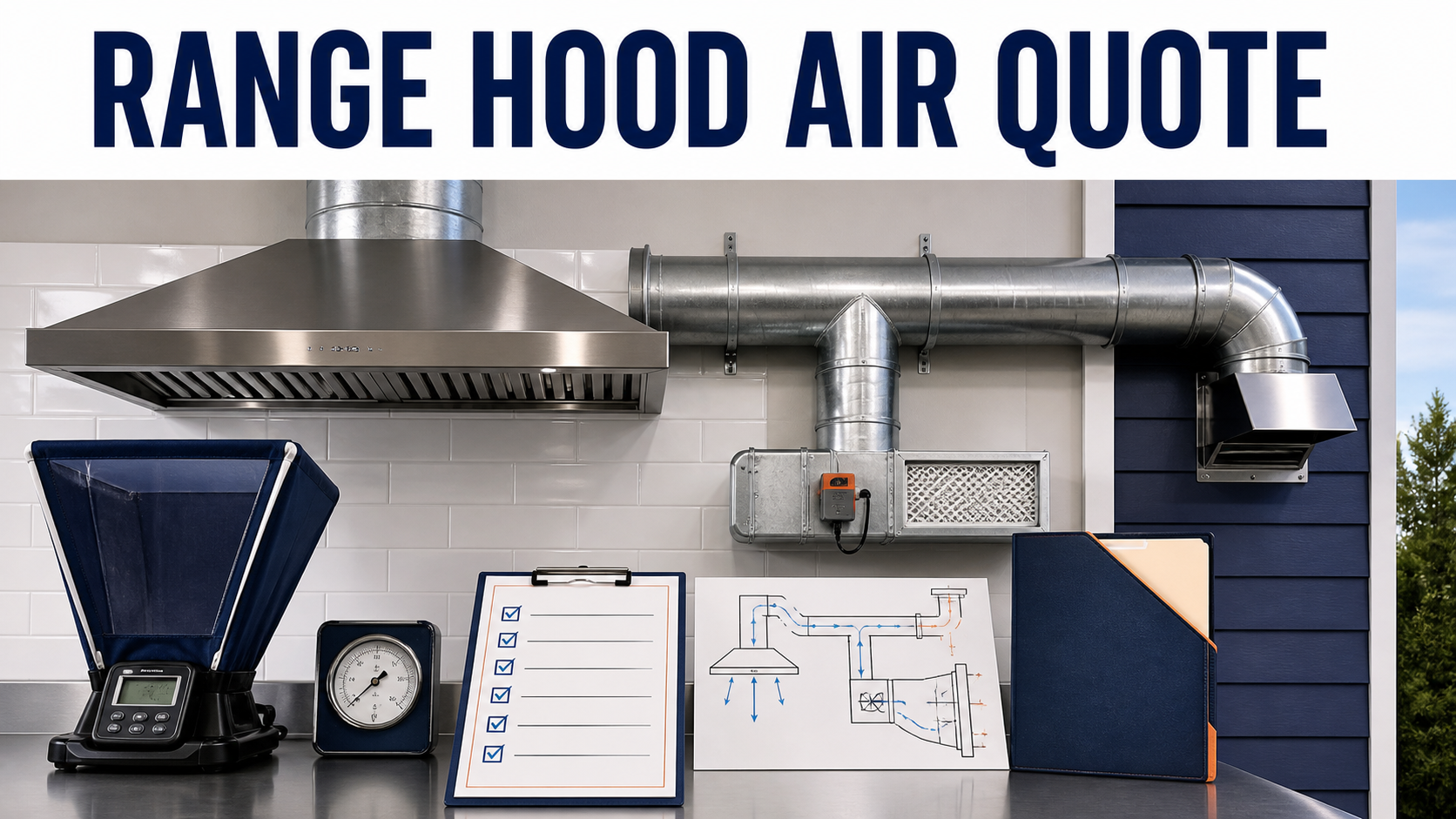
EPA recommends a hood that captures cooking pollutants and vents outdoors. The agency also warns that high-airflow exhaust can backdraft natural-draft furnaces or water heaters when replacement air is inadequate. A successful bid therefore covers capture, duct loss, house pressure and combustion safety rather than listing hood CFM alone.
Normalize appliance type, cooking duty, hood dimensions and height, rated and measured airflow, duct route, all exhaust fans, house pressure boundary, combustion equipment, make-up air rate, delivery location, filtration, tempering, noise, controls, permits and testing. Fan ratings measured without the installed duct are not comparable to delivered airflow.
Design For Capture Before Chasing CFM
Record range width and depth, fuel, burner arrangement, oven exhaust, wall or island location, cabinet constraints and cooking pattern. Hood width, depth, front overhang, mounting height and side containment affect whether the plume enters the hood.
State blower location, speed settings, rated airflow and sound, filter type, light and control functions. A quieter remote or inline blower may encourage use, but its duct, service and vibration details must still be complete.
Specify The Entire Exhaust Duct
List duct diameter or dimensions, smooth metal material, developed length, elbows, transitions, backdraft damper, support, fire and clearance requirements, access for cleaning, air sealing, insulation through unconditioned space and roof or wall penetration flashing.
The termination should discharge outdoors away from openings and other intakes and should not dump into an attic, soffit, crawlspace or garage. Identify cap free area, damper, pest screen where allowed, weather protection and responsibility for siding or roofing repairs.
Test House Pressure And Combustion Appliances
Inventory fireplaces, wood appliances, natural-draft furnaces, boilers and water heaters, their venting and combustion-air sources, plus dryers, bath fans and other large exhaust. Test worst-case operation with interior doors in relevant positions.
The quote should identify the depressurization and spillage criteria, instruments, baseline, test sequence and corrective action. If unsafe backdrafting occurs, do not solve it with occupant instructions alone; reduce exhaust, add designed replacement air or correct the combustion system.
Design Make-Up Air As A Controlled System
State required outdoor-air flow, calculation or local threshold, intake location, weather hood, pest protection, filter, motorized damper, duct, insulation, balancing damper, silencer, fan if needed, and delivery location. Air should not create a cold draft, disturb hood capture or pressurize one closed room.
Where climate or airflow requires tempering, identify heater or HVAC integration, capacity, freeze protection, controls, condensate if any, electrical or fuel load and service access. Passive openings should not be assumed to deliver a fixed flow under every wind and pressure condition.
Interlock Controls And Protect The Envelope
Show how hood operation opens the make-up air damper and starts any supply fan or tempering device at appropriate speeds. Include proof of position or fault indication where required, low-temperature limits and a clear manual override or service sequence.
Seal and flash exhaust and intake penetrations, air-seal duct joints, insulate cold surfaces, manage condensation, preserve fire assemblies and provide accessible filters and dampers. Coordinate with balanced ventilation so systems do not fight each other.
Measure Performance At Acceptance
Acceptance should include hood capture observation, airflow at each speed or test condition, make-up air flow, kitchen and house pressure, door effects, combustion spillage and draft under worst-case exhaust, damper and interlock operation, temperature protection, noise and vibration.
Collect equipment data, duct route photos before concealment, balancing settings, measured airflow and pressures, combustion-safety form, permits, instructions, filter sizes, cleaning schedule, service access, warranties and retest guidance if appliances or exhaust systems change.
Normalize Kitchen Ventilation Proposals
Normalize Capture
Use One Cooking Profile
Compare the same range, fuel, duty, wall or island location, hood size, mounting height and controls.
Use One Duct Route
Record material, size, length, elbows, termination, insulation, sealing, access and flashing.
Normalize Pressure
Use One Appliance Inventory
Include combustion equipment, fireplaces, dryer, bath fans, ventilation and door conditions.
Use One Make-Up Air Basis
Compare airflow, intake, filter, damper, fan, distribution, tempering and interlock.
Normalize Acceptance
Use One Measurement Plan
Require exhaust and supply airflow, house pressure, capture, noise and controls.
Use One Safety Test
Document worst-case spillage, draft, corrective action and retest after balancing.
Range Hood Make-Up Air Quote Comparison Table
| Quote area | What to confirm | Why it matters |
|---|---|---|
| Capture | Range, hood width and depth, height, location, speeds | Determines whether emissions enter the hood |
| Exhaust | Duct size, material, route, elbows, damper, termination | Controls delivered airflow and fire risk |
| House pressure | Tightness, other fans, doors, baseline, worst case | Reveals depressurization risk |
| Combustion | Appliances, venting, spillage, draft, corrective action | Protects against backdrafted combustion products |
| Make-up air | Flow, intake, filter, damper, duct, delivery, fan | Replaces exhausted air predictably |
| Tempering | Heat, cooling integration, freeze, condensate, controls | Maintains comfort and reliable winter operation |
| Testing | Airflows, pressure, capture, safety, interlock, noise | Proves the installed system works |
| Handoff | Routes, settings, filters, cleaning, permits, warranty | Supports safe daily use and maintenance |
Questions To Ask Before Approval
- How do hood size and mounting height match the range and cooking pattern?
- What delivered airflow is expected after duct losses?
- What duct size, route, elbows, termination and cleaning access are included?
- Which other exhaust fans and combustion appliances are included in worst-case testing?
- What depressurization and spillage criteria define acceptance?
- How much make-up air is supplied and how was it sized?
- Where does outdoor air enter and how is it filtered and distributed?
- Is tempering or freeze protection needed in this climate?
- How are damper, fan and tempering controls interlocked with hood speed?
- Who seals and flashes wall or roof penetrations?
- Which airflow, pressure, noise and safety measurements are documented?
- What cleaning, filter, service and retest instructions are delivered?
Red Flags In This Quote
The proposal sells maximum fan CFM without canopy dimensions or installed-airflow testing.
Flexible or undersized duct, excessive elbows, or an attic or soffit discharge is proposed.
Natural-draft combustion equipment is present but no worst-case pressure and spillage test is included.
Make-up air is an uncontrolled hole with no measured flow, filter, distribution, tempering or interlock.
The contractor will not balance exhaust and supply or document house pressure at acceptance.
Source Links
- EPA: Sources Of Indoor Particulate Matter And Range Hood Guidance
- EPA: Remodeling Your Home And Kitchen Ventilation
- EPA: Addressing Indoor Environmental Concerns During Remodeling
- EPA: Strategies For Improving Indoor Air While Cooking
FAQ
Why should a range hood vent outdoors?
Outdoor exhaust removes cooking particles, moisture, odors and combustion products from the home. Recirculating hoods filter some material but do not provide the same source removal.
When is make-up air needed?
Requirements vary with hood airflow, house tightness, other exhaust, combustion appliances and local code. Testing and calculation should determine the solution rather than fan rating alone.
Can a powerful hood backdraft a water heater?
Yes. Excessive house depressurization can reverse a natural-draft vent and draw combustion products indoors. Worst-case testing and designed replacement air are important.
Where should make-up air enter?
It should enter through an approved outdoor intake and be filtered, distributed and tempered as needed without disrupting hood capture, creating drafts or short-circuiting directly to exhaust.
Why measure installed airflow?
Duct size, length, elbows, filters, caps and pressure affect delivered airflow. Nameplate CFM does not prove what the installed hood exhausts.
What should final testing include?
Measure exhaust and make-up air, house pressure, capture, controls, noise and combustion safety under worst-case exhaust and door conditions, then record balancing settings and corrections.
Related Contractor Guides
- Range Hood Installation Quote Checklist
- Kitchen Exhaust Duct Quote
- Whole-House Ventilation Quote
- Combustion Safety Inspection Quote
A high-airflow hood is safe and useful only when the installed duct delivers capture, the house receives controlled replacement air, and worst-case testing protects every combustion appliance.