
Approve a geothermal heat pump quote only when it documents the building load, selected loop type and sizing basis, drilling or trenching scope, underground utility and water protections, permits, loop piping and fluid, indoor equipment, distribution changes, commissioning tests, site restoration, and separate warranties for the loop and mechanical system.
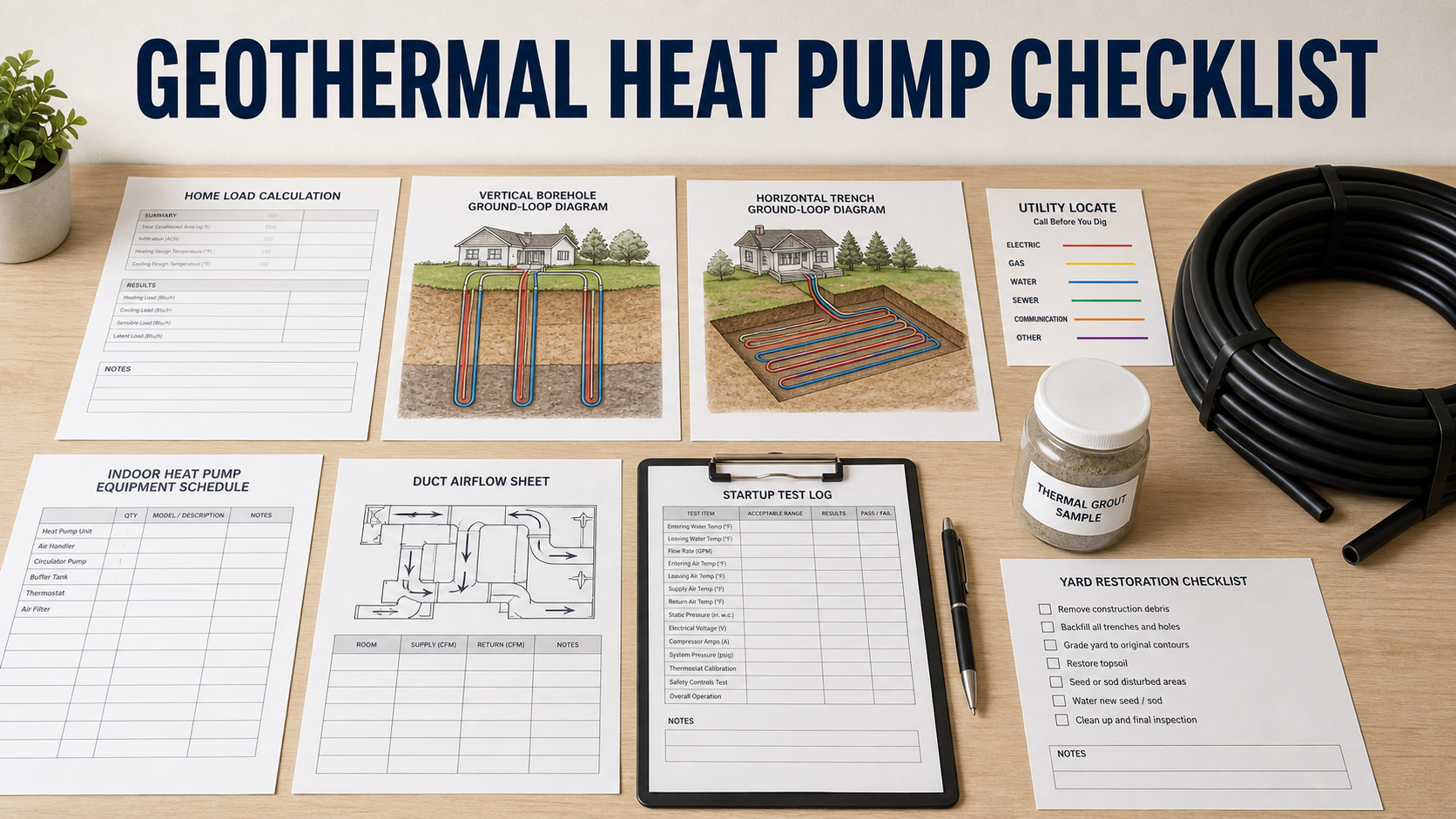
A geothermal system is more than an indoor heat pump. Department of Energy guidance describes an underground heat collector, a heat pump, and a distribution subsystem, so the quote must coordinate buried work, mechanical work, controls, and the home's ducts or hydronic system.
Do not compare bids until they use the same design load and loop assumptions. A lower proposal may rely on a shorter loop, exclude difficult drilling, reuse inadequate ductwork, omit electrical upgrades, or leave landscaping and spoil removal to the homeowner.
Start With The Building Load And Design Conditions
Ask for the room or building load calculation, indoor design temperatures, local climate assumptions, existing system data, and any planned envelope improvements. Equipment capacity should follow the documented load instead of the size of the old furnace or air conditioner.
The quote should explain auxiliary heat, hot-water options if offered, zoning, and how the system will behave during design weather. DOE recommends involving a geothermal designer or qualified professional when assessing site suitability.
Compare Ground-Loop Options On The Actual Site
The scope should identify closed or open loop and horizontal, vertical, pond, or other configuration, then explain why it fits the lot, soil or rock, groundwater, access, and building load. A diagram should show boreholes or trenches, headers, entry point, setbacks, and known utilities.
Ask who carries subsurface risk such as difficult rock, drilling water, lost circulation, inaccessible equipment routes, or inadequate well yield. Each condition needs a measurable price or written change-order gate.
Define Permits And Environmental Protections
Rules can involve well construction, drilling, groundwater, antifreeze, erosion, utility location, mechanical, electrical, and building permits. The quote should name the authorities, included fees, inspection duties, and required records.
EPA material on geothermal systems highlights groundwater protection, loop-fluid choice, backfill, and separation from wells or pollution sources. Require the approved fluid, pipe, grout, pressure rating, and borehole or trench closure method in writing.
Price The Indoor System And Distribution Work
List the indoor unit, pumps, flow center, heat exchanger arrangement, auxiliary heat, controls, condensate, electrical circuit, disconnect, pads, vibration control, and removal of old equipment. Model numbers can be confirmed before ordering without turning the article into a brand ranking.
Confirm duct leakage, airflow, return paths, hydronic compatibility, and room comfort problems. A high-efficiency ground loop cannot correct an undersized return, disconnected duct, poor zoning, or unsuitable emitters by itself.
Require Loop Testing And System Commissioning
The contract should include pipe fusion records where used, flushing, purging, pressure testing, flow measurements, fluid concentration, pump operation, refrigerant and electrical checks, thermostat setup, and measured air or water temperatures.
Ask for a startup report that can be compared with future service data. A system described only as running does not prove that the loop flow, distribution airflow, controls, and auxiliary heat operate as designed.
Separate Restoration And Long-Term Warranties
Define spoil hauling, trench settlement, grading, seeding or sod, driveway or walkway repair, irrigation repair, indoor wall or floor patches, and the final condition around the building entry. Underground work can leave major restoration outside a mechanical-only quote.
Separate warranties for buried loop piping, bore or trench work, circulation components, heat pump equipment, controls, labor, and ground settlement. Record leak-response access, transfer terms, registration, maintenance duties, and who owns the loop drawing and commissioning data.
Geothermal Heat Pump Scope Comparison
| Quote area | What to confirm | Why it matters |
|---|---|---|
| Design | Load calculation, climate assumptions, capacity, auxiliary heat, and zoning | Connects equipment and loop size to the building |
| Ground loop | Configuration, length or bore depth, layout, geology assumptions, headers, and entry | Shows the buried heat exchanger being purchased |
| Permits and protection | Well or drilling rules, utilities, setbacks, loop fluid, grout, erosion, and inspections | Protects groundwater, underground systems, and permit compliance |
| Indoor work | Heat pump, pumps, controls, ducts or hydronics, electrical, condensate, and removal | Prevents a loop-only price from hiding building-side work |
| Commissioning | Pressure, flush, flow, fluid, temperature, electrical, control, and airflow records | Proves the installed system operates as designed |
| Restoration and warranty | Spoils, grading, surfaces, settlement, loop warranty, equipment warranty, and labor | Defines the finished property and long-term responsibility |
Questions To Ask Before Approval
- What load calculation and design weather conditions size the system?
- Why is this loop configuration appropriate for the lot and geology?
- What bore depth or trench length and subsurface assumptions are included?
- Which permits, setbacks, fluids, pipe, grout, and inspection records apply?
- What duct, hydronic, electrical, control, and old-equipment work is included?
- Which loop and startup measurements will be delivered?
- How are yard restoration, settlement, loop leaks, equipment, and labor covered?
Red Flags In This Quote
A geothermal quote with no load calculation or loop-sizing basis is selling equipment before defining the heat source and sink.
A drilling allowance with no geology assumptions, notice threshold, or unit basis can become an uncontrolled change order after equipment arrives.
A single system warranty that does not separate underground loop, drilling, circulation, heat pump, controls, labor, and site restoration hides who responds to a failure.
Official Standards & References Reviewed
- Department of Energy geothermal heat pump overview
- Department of Energy geothermal FAQs
- EPA manual on environmental issues for geothermal heat pump systems
FAQ
What are the main parts of a geothermal heat pump system?
DOE describes an underground heat collector, the heat pump, and a heat-distribution subsystem. The quote should price and coordinate all three.
Is a horizontal loop always cheaper than vertical drilling?
Not necessarily. Available land, soil, rock, access, trench length, restoration, groundwater, and local contractor capability affect the practical design. Compare site-specific scopes, not a generic rule.
Do geothermal loops need permits?
Requirements vary. Drilling, well, groundwater, mechanical, electrical, building, or erosion rules may apply, so the contractor should identify the governing authorities before work.
Can existing ducts be reused?
They may be reusable if airflow, leakage, return paths, zoning, and condition support the designed equipment. Require testing or documented assumptions rather than automatic reuse.
What records should I receive at startup?
Keep the load calculation, loop drawing, bore or trench record, pipe and fluid data, pressure and flow tests, commissioning readings, permits, inspection approvals, manuals, registrations, and warranties.
Related Homeowner Project Checklists
- Heat pump installation quote checklist
- Duct sealing quote checklist
- Home energy audit quote checklist
A geothermal quote is complete when one design connects the building load, buried loop, indoor equipment, distribution system, permits, commissioning evidence, restored site, and long-term warranties.