
Approve a fireplace insert installation quote only after it confirms appliance type, chimney condition, liner scope, clearance and hearth requirements, permit and inspection duties, carbon-monoxide safety assumptions, finish repair, cleanup, and warranty coverage.
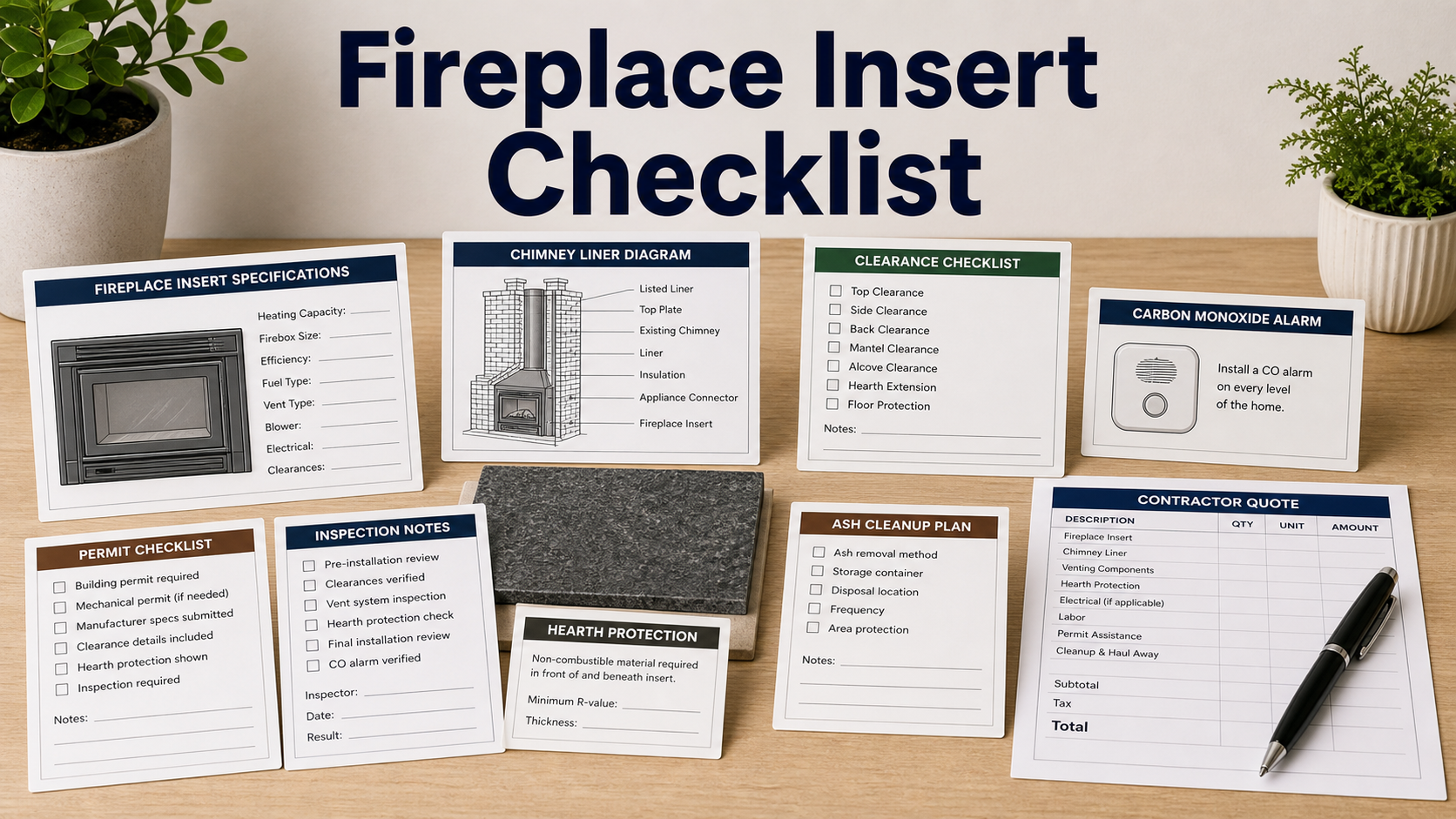
A fireplace insert is not only a box placed into an old fireplace. The existing chimney, flue liner, hearth, clearances, fuel type, and inspection path determine whether the job is ready to approve.
Do not compare quotes only by the insert model. One bid may include chimney inspection, liner, permits, trim kit, hearth work, and closeout, while another may only include setting the unit.
Confirm Existing Fireplace And Chimney Condition
The quote should say what inspection was performed before pricing. Ask whether the chimney, firebox, damper, flue, masonry, cap, and previous repairs affect the installation.
If inspection is excluded, get the inspection step priced or assigned before ordering an insert. Hidden chimney defects can change the job after the product arrives.
Review Liner, Venting, And Clearance Scope
The bid should identify liner type, size assumptions, connection method, termination, clearances, and whether manufacturer instructions are included in the scope. Avoid vague language such as standard liner kit without detail.
Ask whether the installer handles hearth extension, surround trim, mantel clearance, floor protection, and adjacent combustible materials.
Check Fuel, Electrical, And Appliance Duties
Wood, gas, and electric inserts create different scopes. Gas may involve piping and appliance startup, while electric may involve circuit capacity. The quote should define which trade responsibilities are included.
If another contractor handles gas or electrical work, the quote should identify the handoff point and inspection responsibility.
Clarify Permit, Inspection, And Safety Closeout
The quote should say who pulls permits, schedules inspections, and provides closeout documents. It should also state what carbon-monoxide alarm or smoke-alarm assumptions are part of the work.
Ask for owner manuals, warranty documents, startup instructions, and cleaning guidance after installation.
Define Finish Repair And Cleanup
Surround trim, masonry touchups, paint, flooring protection, ash cleanup, old component removal, and debris hauling should be included or excluded clearly.
If the fireplace opening must be modified, ask how dust, soot, and finished-room protection are handled.
Fireplace Insert Quote Items To Confirm
| Quote area | What to confirm | Why it matters |
|---|---|---|
| Inspection | Chimney, firebox, flue, damper, cap, and prior repairs | Existing conditions can change install scope |
| Venting | Liner, connection, termination, clearances, and manufacturer instructions | Shows how the appliance will be safely vented |
| Fuel | Gas, electric, or wood scope and trade handoffs | Different fuel types require different responsibilities |
| Permit | Permit, inspection, startup, manuals, and closeout documents | Creates an inspected and documented finish |
| Finish | Surround, hearth, masonry, paint, cleanup, and disposal | Prevents unfinished room repairs after install |
Questions To Ask Before Approval
- What inspection supports this quote?
- Is a chimney liner included, and what type is specified?
- Are clearances and hearth protection included?
- Who handles gas or electrical work if needed?
- Who pulls permits and schedules inspection?
- Are CO alarm and owner safety instructions addressed?
- What trim, masonry, paint, and cleanup are included?
Red Flags In This Quote
A fireplace insert quote without chimney or liner detail is not ready for approval.
A bid that leaves permit and inspection duties vague can create closeout problems after installation.
A contractor who ignores CO safety and owner instructions is treating a combustion appliance like ordinary trim work.
Official Standards & References Reviewed
- EPA Burn Wise fireplace and wood-burning information
- CPSC carbon monoxide information center
- USFA home fire safety information
FAQ
Should a fireplace insert quote include chimney inspection?
It should either include inspection findings or clearly assign inspection as a separate pre-install step. Existing chimney condition can change the scope.
Is a liner always included?
Not always. The quote should state whether a liner is included, what type or size assumption is used, and how it connects to the insert.
What closeout documents should I ask for?
Ask for permit or inspection records, owner manuals, warranty details, startup instructions, photos if useful, and cleaning or maintenance guidance.
Can finish repair be excluded?
Yes. Surround trim, hearth work, masonry touchups, paint, flooring protection, and cleanup should be spelled out so exclusions are visible.
Why ask about carbon monoxide alarms?
Fuel-burning appliances can create CO risk if installation, venting, or maintenance is wrong. The contractor should define what safety checks and owner instructions are included.
Related Homeowner Project Checklists
- Chimney liner replacement quote checklist
- Chimney repair quote checklist
- Gas line installation quote checklist
A fireplace insert quote is complete when the chimney, liner, appliance, permit, safety closeout, and room finish are all in the same scope.
Pre-Work Verification and Closeout Packet for Fireplace Insert Installation
Before authorizing mobilization or releasing an upfront deposit on a fireplace insert installation proposal, align both contractors on the exact field conditions covered under Confirm Existing Fireplace And Chimney Condition and Review Liner, Venting, And Clearance Scope. Verbal assurances made during a walkthrough rarely survive crew handoffs unless they are written into the contract schedule and priced as explicit line items.
- Site-specific scope alignment: Confirm how each bid addresses confirm existing fireplace and chimney condition and what written unit rates apply if hidden substrate or utility conditions surface.
- Execution and protection checkpoints: Verify who supervises review liner, venting, and clearance scope, daily site protection, and inspection sign-offs before progress payments are due.
- Closeout deliverables: Require final permit sign-off, manufacturer registration details, and the completion evidence described under check fuel, electrical, and appliance duties before releasing final retainage.
To model how excluded prep work, allowance gaps, and a 10% homeowner contingency affect the bottom line between two bids, run your numbers through our interactive contractor quote comparison calculator before signing.