
Short answer: A generator transfer switch quote should identify the generator type and output, the listed transfer equipment or panel-specific interlock, essential circuits and measured or calculated loads, inlet and cable ratings, neutral and grounding treatment, utility isolation, wiring and panel changes, outdoor generator operating location, permits, labels, operating instructions, and a witnessed test under generator power. It should never rely on a male-to-male cord or any other backfeeding method.
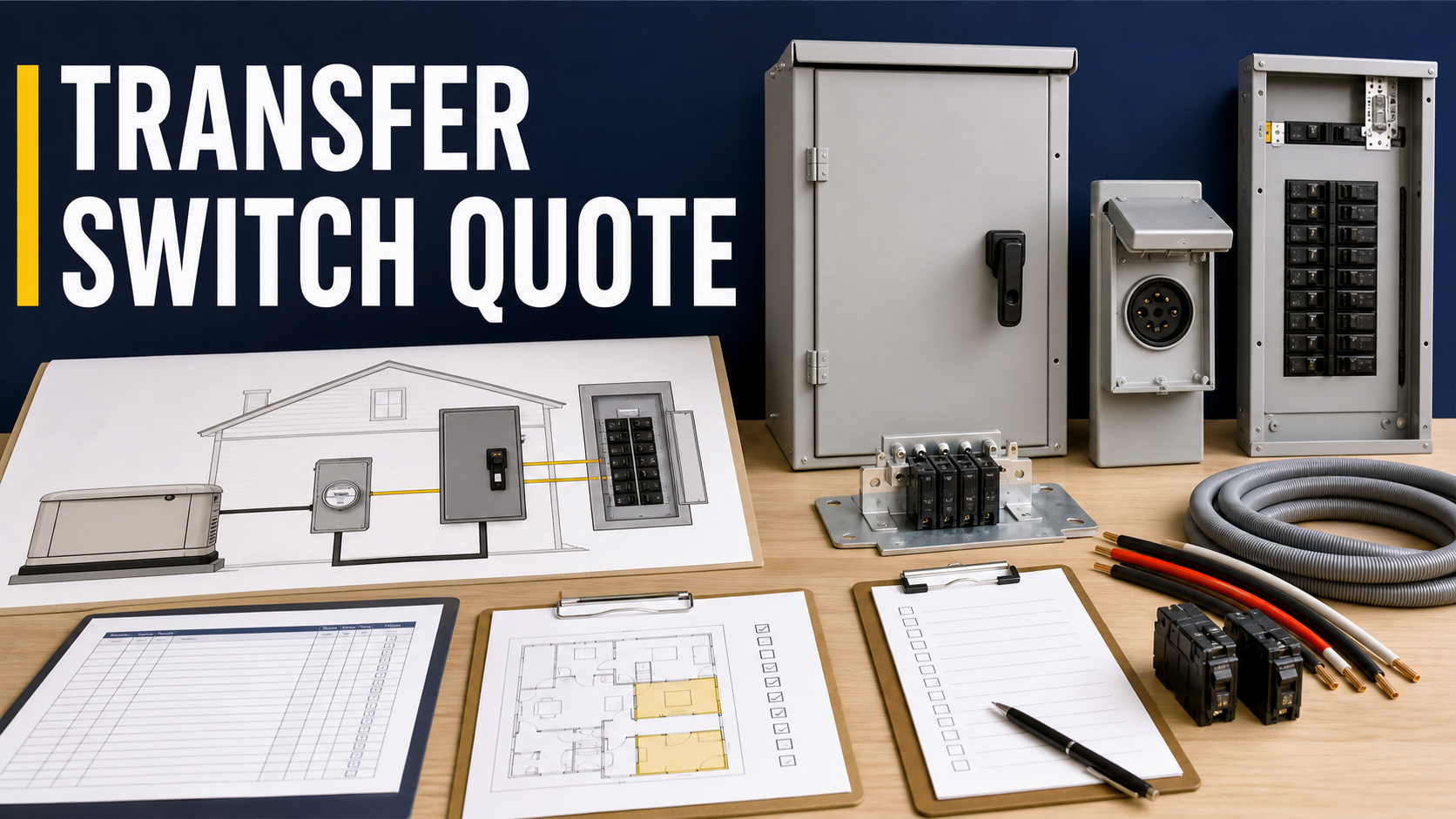
A transfer device has one core safety job: prevent a generator from backfeeding the utility system while supplying selected household loads. FEMA and CPSC materials describe manual transfer switches, subpanels, and mechanical interlocks as controlled ways to separate sources. The quote must match one approved arrangement to the actual panel, generator, and load plan.
Do not compare bids by switch amp rating alone. Normalize generator output, voltage, neutral configuration, selected loads, service and panel condition, inlet location, cable length, surge and motor-starting assumptions, permits, and testing. An oversized switch does not make an undersized generator or incompatible panel safe.
Define The Backup Power Goal And Generator
List the loads that must operate during an outage, their running demand, motor or compressor starting demand, and which combinations are allowed. Separate true essentials from convenience circuits so the proposal can choose either a dedicated transfer subpanel or a whole-panel interlock with a written load-management procedure.
Identify the exact portable or standby generator output, voltage, receptacle, overcurrent protection, neutral arrangement, and cable requirements. If the generator has not been selected, require the electrician to state the electrical assumptions that must be met before connection.
Choose A Listed Isolation Method For The Actual Panel
The quote should identify a listed manual transfer switch, listed transfer panel, or panel-specific listed interlock and explain how it prevents utility and generator sources from being connected together. Generic sheet-metal devices or field-made interlocks should not be treated as equivalent.
If the existing panel lacks space, has damage, uses incompatible breakers, or requires a service upgrade, the proposal should separate that work from the transfer equipment. State whether a subpanel, panel replacement, breaker relocation, or circuit extension is included.
Document Neutral, Grounding, And Overcurrent Decisions
Ask the electrician to document whether the transfer equipment switches the neutral and how that choice matches the generator's neutral and bonding configuration. The homeowner does not need to design the system, but the bid should assign responsibility and avoid leaving a critical compatibility question for installation day.
List breaker sizes, conductor types and lengths, equipment grounding path, inlet rating, cable rating, and any surge protection or load-shedding equipment. All components should match the permitted design and the manufacturer's instructions.
Put The Inlet Where Safe Generator Operation Is Possible
CPSC warns that portable generators must run outdoors and far from doors, windows, vents, garages, basements, and crawlspaces because carbon monoxide can kill quickly. The inlet location and cable route should support that safe outdoor placement without creating a trip hazard or encouraging operation near an opening.
The quote should address weather resistance, mounting surface, penetration sealing, cable storage, and the path from generator to inlet. It should not imply that an electrical installation makes an unsafe generator location acceptable.
Include Permits, Utility Rules, Labels, And Instructions
Assign responsibility for the electrical permit, utility notification if required, panel access, inspection, and correction of any failed item. The finished installation should have clear source, inlet, breaker, and operating labels that match the approved equipment.
Provide a concise operating sequence for utility outage, generator startup, load selection, transfer, utility restoration, cooldown, and shutdown. For an interlock arrangement, the instructions should identify circuits that must remain off when generator capacity is limited.
Test The System Under Realistic Loads
The acceptance test should demonstrate that utility and generator sources cannot connect simultaneously, the inlet and cable work correctly, selected circuits energize, voltage remains acceptable, and large loads start only as planned. Include a return-to-utility test and check that no unintended circuit remains energized.
Test alarms and safety devices associated with the backup plan, including working carbon monoxide alarms. Record the generator, transfer equipment, circuit schedule, breaker settings, labels, permit approval, test results, instructions, and warranty before final payment.
Keep Fuel And Maintenance Outside The Electrical Assumption
A transfer switch does not solve fuel storage, generator weather protection, exhaust clearance, maintenance, or safe operation. The proposal should clearly limit the electrician's scope while pointing the owner to the generator manufacturer's safety and maintenance instructions.
If the system includes an automatic standby generator, treat it as a different project with starting controls, fuel supply, placement, service, and maintenance requirements. Do not let a manual portable-generator quote quietly expand into an incomplete standby installation.
Normalize Transfer Switch Proposals
Normalize Loads And Generator Assumptions
Use One Essential-Circuit List
Give each electrician the same appliances, starting loads, and allowed simultaneous combinations.
Use One Generator Interface
Compare bids using the same output, receptacle, neutral arrangement, inlet, and cable assumptions.
Normalize Equipment And Panel Work
Confirm Listed Compatibility
Record the exact transfer device or panel-specific interlock and compatible breakers.
Separate Panel Repairs
Move space, damage, service, subpanel, or obsolete-equipment work into clear base or alternate lines.
Normalize Testing And Handoff
Use One Witness Test
Require source isolation, selected circuits, load startup, return to utility, and label verification.
Use One Owner Package
Collect circuit schedule, operating steps, permits, equipment data, test results, and warranty.
Generator Transfer Switch Quote Comparison Table
| Quote area | What to confirm | Why it matters |
|---|---|---|
| Backup goal | Essential circuits, running loads, starting loads, combinations | Matches the system to real outage needs |
| Generator | Output, voltage, receptacle, breaker, neutral, cable | Prevents interface and capacity mismatch |
| Isolation | Listed transfer device or panel-specific interlock | Prevents dangerous utility backfeed |
| Panel work | Space, compatible breakers, subpanel, relocation, repairs | Exposes work hidden by an equipment-only price |
| Wiring | Conductors, breaker sizes, grounding, neutral, surge or shedding | Defines the permitted electrical path |
| Inlet | Outdoor location, weather rating, cable path, penetration sealing | Supports safe generator placement and use |
| Permit | Application, inspection, utility rule, correction responsibility | Creates an independent safety check |
| Test | Isolation, circuits, motor starts, voltage, return to utility | Proves operation before an outage |
| Handoff | Labels, circuit schedule, instructions, records, warranty | Reduces operating mistakes later |
Questions To Ask Before Approval
- Which exact circuits and starting loads are included in the backup plan?
- What generator output, receptacle, neutral, and cable assumptions does the design use?
- What listed transfer device or panel-specific interlock will be installed?
- How does the equipment prevent utility and generator power from connecting together?
- Does the panel need a subpanel, breaker relocation, repair, or replacement?
- How are neutral, grounding, breaker, and conductor requirements documented?
- Does the inlet location support safe outdoor generator operation away from openings?
- Who obtains permits and handles inspection corrections?
- What labels and operating instructions are included?
- Will the test include motor starting and realistic simultaneous loads?
- How is return to utility power tested?
- Which equipment, wiring, workmanship, and weather-sealing warranties apply?
Red Flags In This Quote
The proposal suggests a male-to-male cord or another method of energizing a receptacle to backfeed the panel.
The interlock is generic and not documented as compatible with the actual panel.
No load list or motor-starting review supports the selected generator and circuits.
The inlet location encourages generator operation in a garage, basement, shed, or near a door, window, or vent.
The contractor will not demonstrate source isolation and selected loads before final payment.
Source Links
- CPSC: Warning Against Male-to-Male Cords and Backfeeding
- CPSC: Portable Generator Transfer Switch Diagram and Analysis
- FEMA: Generator Technical Review Job Aid
- CPSC: Generators and Engine-Driven Tools Safety
FAQ
Why is a transfer switch or interlock needed?
It separates generator power from utility power so the home cannot backfeed utility lines. Backfeeding can create electrocution and fire hazards and endanger line workers.
Is a panel interlock the same as a transfer switch?
It is a different arrangement that can provide source isolation when it is listed and compatible with the specific panel. The quote should identify the exact approved device and load-management procedure.
Can I power the house through a dryer outlet?
No. Improvised backfeeding and male-to-male cords create severe shock, electrocution, and fire risks. Use a permitted, listed generator connection and transfer arrangement installed by a qualified electrician.
Should I back up the whole panel or only essential circuits?
That depends on generator capacity, starting loads, panel compatibility, and the owner's ability to manage circuits. The bid should use a load plan instead of assuming every circuit can operate together.
Where should the generator inlet be installed?
The inlet and cable route should support outdoor generator operation far from doors, windows, vents, garages, basements, and crawlspaces, following the generator manufacturer's safety instructions.
What should the final test demonstrate?
It should prove source isolation, correct inlet and cable operation, selected circuit power, planned motor starts and load combinations, return to utility power, labels, and the owner's operating sequence.
Related Contractor Guides
- Whole-House Generator Installation Quote Checklist
- Home Electrical Load Management System Quote
- Electrical Panel Upgrade Quote Checklist
- Whole-House Surge Protection Installation Quote
A transfer switch quote is complete only when it prevents backfeed, fits the generator, fits the loads, and gives the owner a tested operating procedure.